

We’re publishing a guest post by blogger “Eugyppius”, where he reviews Bill Gates’s new book, How to Prevent the Next Pandemic. This post was originally published on Eugyppius’s Substack account, which you can subscribe to here.
For days now, I’ve been fighting my way through Bill Gates’s disturbing new book on How to Prevent the Next Pandemic, and I’ve found myself wondering about one question above all:
How are we to explain Gates, exactly?
I know that for many of you he is a calculating conspiratorial goon. Pretend for a moment that he’s not, though. Imagine, for the sake of argument, that he’s every inch the obtuse, naïve and self-important former software developer that he seems to be. How did he get this way, what does he even think he is doing, and what can it mean?
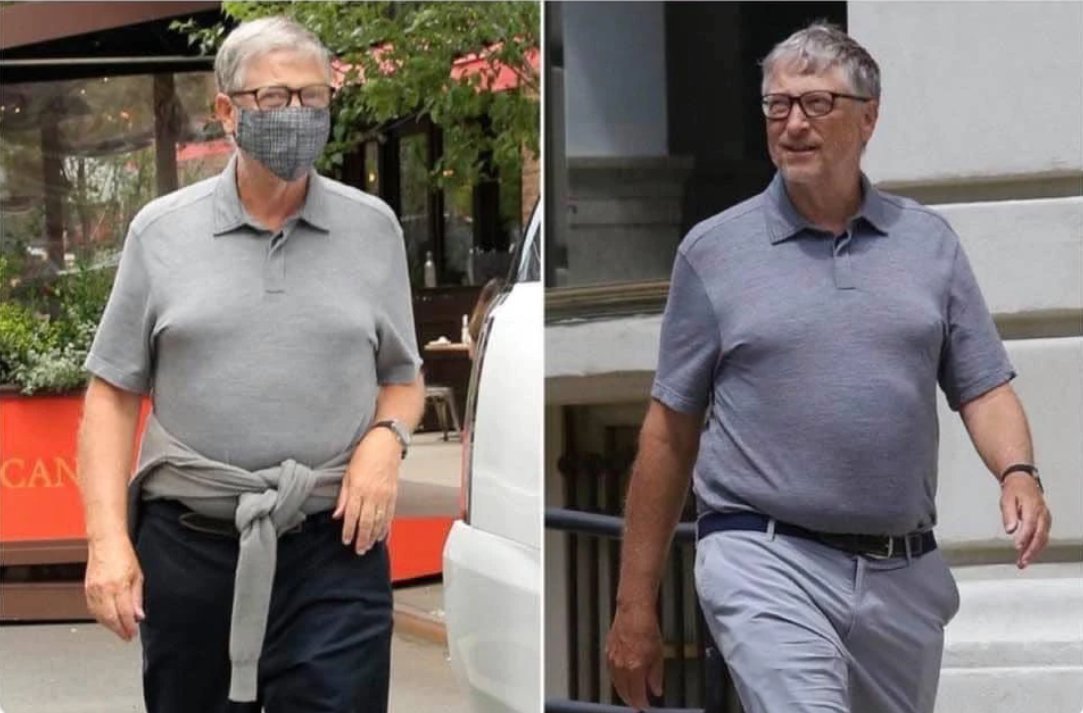
Remember that this man has billions of dollars. A whole world of unusual vices stands open to him: He could hire a mercenary army to invade some country and proclaim himself god-emperor for life. He could retire to a tropical island with his favourite mind-altering substances and a harem of nubile young women. He could do both at once, and other things besides. Instead, he has chosen the path of moral vanity, perhaps the least interesting vice of all, founding a ponderous grantmaking foundation and pooping around the globe in manboobs and ill-fitting polo shirts, pronouncing to all and sundry on subjects he hardly understands.
A commenter points me to Jeffrey Tucker, who, as it turns out, has done critical work towards developing a Theory of Gates. At Microsoft, Gates oversaw the development of poorly secured software overrun by computer viruses. Afterwards, Tucker notes, he
… started dabbling in other areas, as newly rich people tend to do. They often imagine themselves especially competent at taking on challenges that others have failed at simply because of their professional successes. Also by this point in his career, he was only surrounded by sycophants who would not interrupt his descent into crankiness.
And what subject did he pounce on? He would do to the world of pathogens what he did at Microsoft: he would stamp them out! He began with malaria and other issues and eventually decided to take on them all. And what was his solution? Of course: antivirus software. What is that? It is vaccines. Your body is the hard drive that he would save with his software-style solution.
At the beginning of the pandemic, I noted that Gates was pushing hard for lockdowns. His foundation was now funding research labs the world over with billions of dollars, plus universities and direct grants to scientists. He was also investing heavily in vaccine companies.
Early on in the pandemic, to get a sense of Gates’s views, I watched his TED talks. I began to realise something astonishing. He knew much less than anyone could discover by reading a book on cell biology from Amazon. He couldn’t even give a basic ninth-grade-level explanation of viruses and their interaction with the human body. And yet here he was lecturing the world about the coming pathogen and what should be done about it. His answer is always the same: more surveillance, more control, more technology.
Once you understand the simplicity of his core confusions, everything else he says makes sense from his point of view. He seems forever stuck in the fallacy that the human being is a cog in a massive machine called society that cries out for his managerial and technological leadership to improve to the point of operational perfection.
There’s a lot to recommend this view of Gates. It explains specific things, like Gates’s fondness for mRNA vaccines, a genetic equivalent of computer code. More than that, though, it elucidates Gates’s failure to appreciate the essential intractability of many ancient human problems. Gates dreams of saving mankind from disease and poverty – things that are so much a part of what it means to be human, that it seems an error to call them problems in the first place. We are mortal beings; not all of us can be wealthy; we’ll all die of something. Gates the software developer has no experience of problems like that.
The fundamental message of How to Prevent the Next Pandemic is that we can stop future pandemic events by doing all of the things that did not stop the last pandemic event, only more, faster and harder.
Gates can’t get enough of the World Health Organisation. He proposes expanding it with a 3,000-strong division of pandemic shock troops called the Global Epidemic Response and Mobilisation team. That is not a joke; he actually wants to call it GERM. He says it’ll be comprised of epidemiologists, geneticists, pharmaceutical experts, data systems people, diplomats, rapid responders, modellers and heaven knows who else. These people will jet around the world ensuring that an identical response is propagated instantly everywhere, so we can all endure the same catastrophic mistakes at the same time. A Corona tsar for every country, distributed from the same central depot.
Mass testing is another thing that is ‘great’ and that we need more of. Gates wants cheap home tests everywhere, “to make it easier for everyone to get tested and get results fast” (p. 64). He also wants central databases to log all these precious test results. Antigen tests are great, but more accurate rapid testing technologies are even better. And of course we need more genetic sequencing to understand the progress of outbreaks and identify who is doing the spreading. It’s a scene straight out of Brazil: You wake up in the morning, send your mandatory swab through the vacuum tube for testing at the Ministry of Health, and the virus police are kicking down your door while you’re waiting for the coffee to boil.
Probably the strangest moment in this extended paean to the collection and management of disease statistics is the praise Gates reserves for modellers. He thinks pandemic modelling “will eventually do better than the weather forecast” (p. 78), and he thinks modellers have been unfairly maligned by the press. He defends Neil Ferguson in particular:
In March 2020, Neil Ferguson, a highly respected epidemiologist at Imperial College, predicted that there could be more than 500,000 Covid deaths in the U.K. and more than 2 million in the U.S. over the course of the pandemic. That caused quite a stir in the press, but few reporters mentioned a key point that Ferguson had been very clear about: The scenario of his that made all the headlines assumed that people wouldn’t change their behaviour – that no one would wear masks or shelter in place, for instance – but of course that wouldn’t be the case in reality. (p. 80)
It’s hard to imagine that Gates has ever even seen Ferguson’s paper. The Imperial College team were wrong about everything. They were especially wrong about the mitigating effects different interventions would have, which was the whole point of bothering with lockdown-justifying models in the first place.
In another absurd moment, Gates pleads that “the level of uncertainty” in pandemic modelling “can be quite high.” He recalls one modeller’s estimate, from February 2020, that there were “570 cases in Washington state, with a 90% certainty that it was between 80 and 1,500. Any report that omitted the range of possibilities left out some pretty important context” (p. 80). You have to rub your eyes, reading stupid stuff like this. What use is a model that predicts that there might be not that many cases out there, or there might be quite a lot, and how is it any better than just guessing? The open secret about modelling, of course, is that it’s not even a serious attempt at prediction. Modellers are just clients of the containment regime, tasked with developing fancy scientific equations that justify intrusive NPIs. Gates even seems intermittently aware of this, at one moment conceding that Ferguson’s goal was “to show how high the stakes were” (p. 80) (but somehow “not [to] drive everyone into a panic”).
“Help People Protect Themselves Right Away” is the title of Chapter 4, where Gates lays out the case for keeping lockdowns and other containment measures in the pandemicist repertoire. He throws in that vile Fauci quote – “If it looks like you’re overreacting, you’re probably doing the right thing” – and indulges in what is by now one of the most tired arguments in the world:
The irony of NPIs is that the better they work, the easier it is to criticise the people who put them in place. If a city or state adopts them early enough, the case numbers will stay low, and critics will find it easy to say they weren’t necessary. (p. 86)
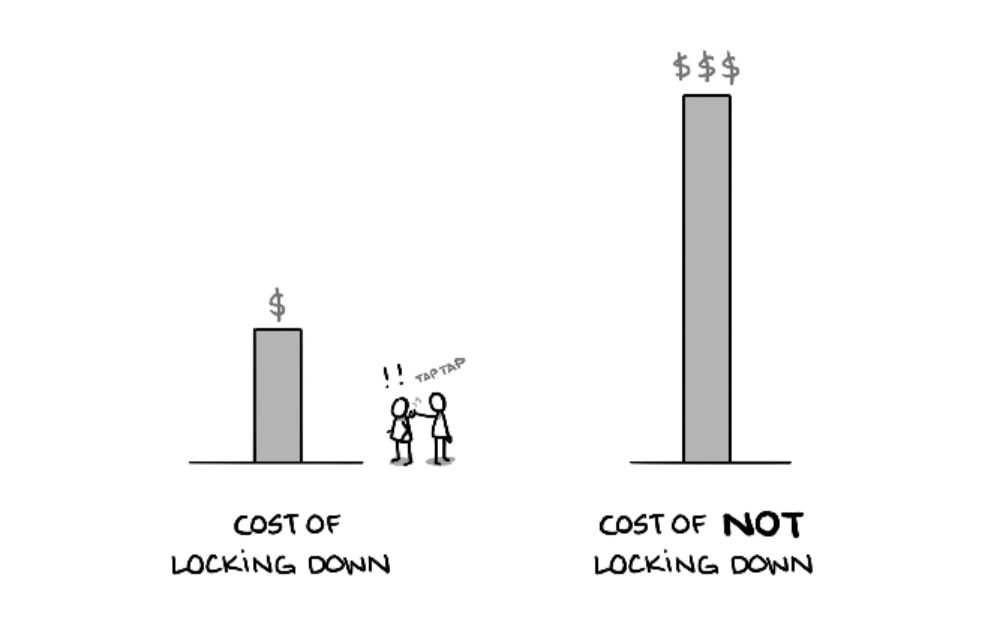
These pages are the most reprehensible in the whole book. Lockdowns have been an unmitigated disaster; they have ruined millions of lives and wrought untold economic destruction, and yet Gates, who lives in a 6,000 square-metre house and flies around the globe in private jets, waves away these costs with fake graphs and empty assurances that “lockdowns have clear benefits for public health” (p. 88).
Elsewhere, Gates vents his frustration that rich countries hoarded vaccine doses at the expense of the third world, but so great is his myopia that he fails to draw the obvious connection – that it was precisely his precious destructive lockdowns that drove the mad vaccination frenzy of 2021.
No, the costs of lockdowns remain beyond Gates, and in this he is no different than all the other oblivious well-off retirees, who have never thought twice about putting their neighbours out of business or condemning young children to eight hours of enforced masking every day. Climate lockdowns may have been a passing fantasy, but influenza lockdowns are something Gates remains deeply interested in. He even wonders if NPIs could be “paired with vaccines” to “eventually eradicate every strain of flu” (p. 96). Apparently, nobody has told the man that influenza has substantial animal reservoirs, from which it repeatedly jumps to humans.
In this formulaic endorsement of all the crazy policies that have been inflicted on humanity since 2020, two curiosities stand out. The first is Gates’s quiet but clear disillusionment with mRNA vaccines. The best thing he can find to say about them is that they were developed quickly; otherwise, he damns them with faint praise, at one point even writing that masks have been more effective. He dreams of new, better vaccines, indeed “universal vaccines” that can target multiple pathogens and that will provide “total protection” (p. 177) after a single dose. He also wonders about vaccines that can be delivered as a nasal spray, like the “imaginary vaccine for the hypothetical virus depicted in the movie Contagion” (p. 174), and that don’t have to be kept cold. Despite all of Gates’s software geek mRNA enthusiasm, these lines show he’s wondering if another approach wouldn’t have been better. The mRNA molecules decay quickly at normal temperatures, and technology for an mRNA nasal spray vaccine is years away.
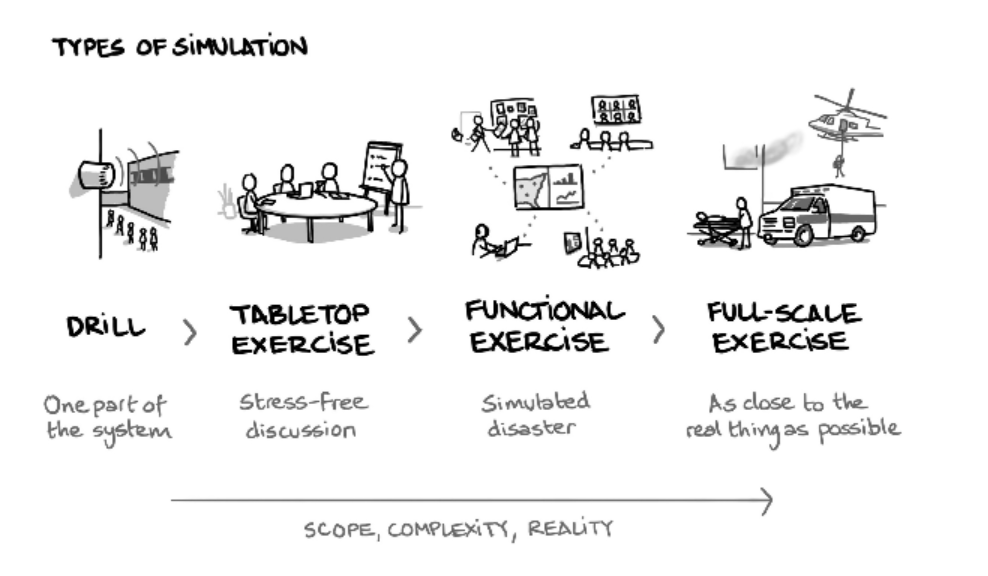
The second eccentric moment, is Gates’s seventh chapter, called “Practice, practice, practice”, where he fantasises about all the pandemic war-games we need to have. Table-top exercises are great; “functional exercises” with “simulated disaster[s]” are better; the absolute best is the “full-scale exercise” complete with crisis actors and helicopters.
Gates knows that he’s widely disliked, and that his inability to shut up has something to do with it:
One side effect of speaking out … is that it has provoked more of the criticisms of the Gates Foundation’s work that I’ve been hearing for years. … Bill Gates is an unelected billionaire – who is he to set the agenda on health or anything else? Three corollaries of this criticism are that the Gates Foundation has too much influence, that I have too much faith in the private sector as an engine of change, and that I’m a technophile who thinks new inventions will solve all our problems. (p. 16)
Gates has no real answer to these charges, pleading only that his foundation doesn’t work “in secret,” that they consult “outside experts”. As for technophilia, he is unapologetic:
Innovation is my hammer, and I try to use it on every nail I see. As a founder of a successful technology company, I am a great believer in the power of the private sector to drive innovation. But innovation doesn’t have to be just a new machine or a vaccine, as important as those are. It can be a different way of doing things, a new policy, or a clever scheme for financing a public good. (p. 17)
Innovation, in Gatesland, always works the same way: In the beginning there is a grave problem, which for some reason nobody has noticed or cared about before. Then, there appears an Innovator, very often a woman or a racial minority. This blessed Innovator proposes a simple and obvious solution, which requires mainly grant funding. Thereafter, the problem is no more, and the world is better.
Thus we have the story of Bernard Olayo, who solved the problem of oxygen:
Oxygen is an important component in any health system … and … low- and middle-income countries have struggled [to supply it]. Bernard Olayo, a health specialist at the World Bank, is trying to do something about it … In 2014, Olayo created an organisation called Hewatele – the Swahili word for “abundant air” … With funding from local and international investors, Hewatele built oxygen plants at several of the busiest hospitals in the country … It devised a milkman model: Oxygen cylinders would regularly be dropped off at remote hospitals and clinics, and empty cylinders returned for a refill. Using this new approach, Hewatele cut the market price for oxygen in Kenya by 50% and reached some 35,000 patients. (p. 119)
Or the story of Stephaun Wallace, who is solving the problem of demographically uniform trial participants by recruiting “a diverse pool of volunteers from different genders, communities, races, ethnicities and age groups” (p. 169). Or the story of Sister Astridah Banda, who “is not a doctor but … is passionate about public health” (p. 175), and who is helping to combat Corona misinformation in Zambia by translating English advisories into local languages.

Gates likes to wrap up his anecdotes with statistics that sound good but don’t actually say very much about the success of his blessed innovations: “Her show now reaches more than 1.5 million people” (p. 176), he says.
Problem, innovation, solution, happy: This is how everything works according to Gates. It’s how Maurice Hilleman invented the mumps vaccine, it’s how Katalin Karikó developed mRNA technology, it’s how James Lind discovered a cure for scurvy:
In May 1747, a physician named James Lind was serving as a ship’s surgeon … He was horrified by the number of sailors who were suffering from scurvy. No one knew at the time what caused scurvy, but Lind wanted a cure, so he decided to try various options and compare the results … The citrus treatment won out. … Although the British navy wouldn’t make citrus a required part of a sailor’s diet for nearly fifty years, Lind had found the first real evidence of a cure for scurvy. He had also run what is widely regarded as the first controlled clinical trial of the modern era. (p. 125)
If you look a little deeper, though, you’ll find that almost nothing ever works like Gates claims it does. Lind is a great example. The knowledge that scurvy was diet-related, and that fresh fruits or vegetables could cure it, had been around for centuries. Lind presented the results of his experiment only in passing; he never promoted citrus as the primary remedy, and scurvy continued to plague sailors until well into the twentieth century. It wasn’t poor nutritional discipline that caused scurvy outbreaks, but the logistical problem of maintaining fresh food stores on long voyages. And proving the citrus fruit cure wasn’t enough; without a deeper understanding of Vitamin C, Lind’s solution was incomplete and unstable, doomed to be disputed, forgotten and rediscovered over and over.
Simple, straightforward problems, of the sort that can be rectified through the genius of an innovator and the beneficence of the Bill and Melinda Gates Foundation, are so rare that that there aren’t enough to stock even Gates’s carefully chosen catalogue of innovationist parables. Most of what faces us are complex, difficult and multilayered problems, solutions to which will require developments across multiple fields and new cultural and social understandings. The empowered innovator is a convenient myth, and this persistent belief that we are just One Cool Trick away from solving things like viruses is a dangerous, destructive illusion.
Gates, the retired software engineer who can’t distinguish between digital and biological viruses, is one, specific theory of the man. In reading How to Prevent the Next Pandemic, though, I’ve come to formulate another, more general theory. This is simply that, far from being a conspiratorial and calculating agenda-setter, Gates is a follower. He spends his days chasing down bureaucrats and politicians and scientists, pestering them for meetings, currying favour, asking them what to think and eagerly repeating everything they tell him in childish, oversimplified prose to anybody who will listen.
He loves dropping names. Barely has he started writing, than he’s telling us about his “first call with Anthony Fauci,” a man he’s “lucky to have known… for years… long before he was on the cover of pop-culture magazines”. Gates “wanted to hear what he was thinking”; he “wanted to understand what he was saying publicly… so” he “could help by echoing the same points” (p. 15). You can see Gates now, the strange bespectacled boy at the front of the class, begging teacher for the answer.
In another unguarded moment, Gates mentions attending a meeting in March 2020 while feeling sick; masking would’ve been the obvious thing to do, given his faith in them, but “the CDC hadn’t recommended masks yet” (p. 110), so he didn’t bother. Elsewhere, Gates lectures his readers on the virtuous and hardworking nature of medical bureaucrats; he calls them “unsung heroes” and warns against anyone who might be “bad-mouthing” them (p. 160). And in a bizarre Afterword on his hopes for a “digital future”, Gates enthuses about how much easier our newfound reliance on screens has made it for him to stay in touch with “political leaders”. “Pre-pandemic,” he worried that asking for a video call “would have been seen as less respectful than meeting in person” (p. 238), but now videoconferencing is the norm, so he feels better about pinging them whenever he wants their attention.
Gates-as-follower explains the most obtrusive aspect of How to Prevent the Next Pandemic, namely the total absence from its pages of any original thought. Gates doesn’t know anything except what his small clique of court experts tells him. That masks don’t work, that pandemic modelling has been a laughable failure, that it is the human immune system and not technology that places the ultimate constraints on vaccine potential, that corona and influenza viruses have massive animal reservoirs – he has no idea about any of this. Gates is part of an ominous development, a new breed of low-brow elite who present themselves as leaders, while eagerly following every source of celebrity and authority they know. Thus modern society is increasingly caught in dangerous, self-reinforcing feedback loops, a massive ant-wheel, a world of dogs chasing their tails, with nobody in charge. A Davos-directed conspiracy would be some comfort, but our car is heading for the cliff and absolutely nobody is driving. That’s much, much worse.


Discussion
Comments
This week across the site:
To join in with the discussion please make a donation to the Daily Sceptic.
Profanity and abuse will be removed and may lead to a permanent ban.
Bill Gates has been captured by the deep state. There are many pictures on the net with him hanging out with Epstein. He tried to explain it away by saying that Epstein had a lot of contacts with charities. Right. He will do ANYTHING that his CIA handlers tell him to do.If he doesn’t he will lose his freedom, probably for the rest of his life.
If you want to know all about Gates and how he became successful based on other people’s hard work and the way he acted to undermine any opposition, do some research. He wasn’t even a good programmer. The story of Gates is enough for any one to know it doesn’t take hard work or excellence to be succesful, you just need to be an a***hole.
A very dangerous man who lives by the motto, one rule for me and another for the rest of you. Flying around the world with his family on a private jet. Friend of Jeff Epstein, wife divorcing him because….something smells. So very many disturbing stories about this man should stop everyone in their tracks. Read vaccination outcomes, in third world countries, that were “sponsored” by the bill and melinda g foundation. A very disturbing, very disturbing story!
I’m definitely not taking health advice on vaccines or anything else from a pregnant chap sporting moobs.
He usually goes for the pastel pink jumper to make you think he’s a harmless geek.
His book is a desperate, damage control response to JFK junior’s Real Anthony Fauci.
They are losing their grip and they know it, but that only makes them more dangerous and ready to pull the next big scam. Food shortages are going to be part of it, but they absolutely want another pandemic, because it’s their best way for a world government to become reality.
Gates is no software engineer. The original Microsoft product was programmed by Paul Allen and marketed by a company founded by Allen and Gates. The product that was to make Microsoft a hugely successful company, namely MS/PC-DOS was something he (Gates) bought from the person who developed it and the so-called success of Mircosoft was nothing but riding on the coat tails of IBM. PC-DOS was the operating system for the IBM PC. Hence, everybody who wanted to use one had to pay a sort of tax to Microsoft. Technically, DOS was even poor for the standards of the day and users of PCs continued to be held back by technically sup-par Microsoft software not even remotely capable of making use of the full features of the hardware it was running on for almost the next 20 years. Gates is a parasite who made loads of money from other people’s work and fortunate contracts with companies who actually produced innovative products.
I have no current information the operations of his foundation but its historic modus operandi was that it engaged in stuff Gates profited from (eg, handing out free Windows licenses in so-called third-world countries) which was then marketed as… Read more »
The story of MS/DOS is also a story of outright contract fraud by Microsoft. MS/DOS a.k.a Q/DOS was written by Tim Patterson for Seattle Computer Products down in Renton. MS sold a Z-80 card for the Apple II and bundled QDOS with the card. Standard bundle licence. Bulk discount, no 3’rd party distribution rights.
IBM had been blown off by Digital Research (who made CP/M 86) for very good legal reasons so IBM who had already licensed MS Basic for the IBM PC asked MS about an OS. MS said – we just happen to have one – and then tried to get an unlimited 3’rd party distribution licence from SCP without disclosing they had already signed a contract with IBM. MS said it was for one of their own hardware products. SCP said no, returned the contract with that part struck out. MS kept sending a new contract over with the 3’rd party distribution clause stuck in somewhere new.
On the sixth or seventh round trip for the contract it was a Friday evening and the CEO of SCP Rodney Brock asked the MS guy was the new contract the same as the one Brock had returned… Read more »
I am astonished that noone posted this here BTL yet.
It really is the only response needed to this book.
One of the most dangerous men alive?
He has always been a follower like it says. Windows idea stolen from Apple. It’s a desire to be held in awe that drives him. Not really the best type to dictate policy..
“a world of dogs chasing their tails, with nobody in charge. A Davos-directed conspiracy would be some comfort, but our car is heading for the cliff and absolutely nobody is driving. That’s much, much worse.”
That’s not true. The claim that no one is in charge is also made by Klaus Schwab as he wants a world government and Gates etc. are busily taking control of this world. The sovereign individual is the best bet for all and the resulting natural co-operation has produced all of the best human advances, while the worst have all come from unnatural and forced collectivism. Except the sovereign individual is the biggest threat to those that want world government. The whole Covid debacle is about controlling the individual and nation states.
‘The concept of national sovereignty has been immutable, indeed a sacred principle of international relations. It is a principle which will yield only slowly and reluctantly to the new imperatives of global environmental cooperation.‘ UN’s Commission on Global Governance:
”….it was precisely his precious destructive lockdowns that drove the mad vaccination frenzy of 2021.”
Surely, that was to his advantage, and nothing to do with ”his myopia”?
After two years of blasting out pretty much whatever they feel like blasting out, I have completely shut off the media – and never more so than when Billy Boy comes on. The guy comes across as a blandly vacuous schoolboy with a nasty streak whose only talent lies in ripping off others. And as such he is a perfect front man for The Company. He kind of fits certain theological conceptions of The Devil i.e. incapable of creating and therefore addicted to stealing.
Here’s one example:
One list that seems to be ubiquitous on the net is “11 Rules of Life (and Management?) by Bill Gates” (the “managment” bit is optional) – as in:
http://homepages.se.edu/cvonbergen/files/2013/01/11-Rules-of-Life-by-Bill-Gates.pdf
Very macho, eh? … except that our Bill never came up with it. It was one Charlie Sykes:
https://web.mst.edu/~adekock/Sykes-11-rules.html
All of which is deeply ironic considering the contents of the list.
It is the corruptness at the heart of US politics that has created Bill Gates meddling in these affairs. Microsoft, Amazon et al should have been broken up years ago. These people are no different to the robber barons that Roosevelt put on a leash more than a century ago.
Cross out ‘preventing’ and add ‘causing’ and in my view, you’ve nailed it, Eugyppius…
What we need saving from is geeks with Aspergers.
We must find a way to prevent Bill Gates.
The Bulgarians seem to love him – all their road vehicles have BG at the back.
Excellent takedown.
And of course he’s one of Schwab’s Young Global Leaders of the WEF.
The man is a deluded megalomaniac, and as for wanting to save the world, it’s not by saving humanity, but carrying on the eugenics plans of his Father. There is nothing altruistic in his plans, the very opposite!
Gates is a multi billionaire geek who demonstrates perfectly the story of the ‘Emperor’s New Clothes’ and the dangers of listening to sycophants. But what is worse is him calling Ferguson an epidemiologist. He’s a physicist who uses some extremely crappy code to make forecasts that are grossly wide of the mark. Everybody on LS/DS were given a superb breakdown of the garbage code back at the start of this nonsense. So if we all knew, how come this self styled software genius didn’t?
“Gates dreams of saving mankind from disease and poverty ” Really? Then why does he support the WEF/UN and their population reduction policy? Will he volunteer to be one of the first to be culled?
Why do people believe the ” philanthropist” BS propaganda about himself he (like Soros) pays so much to have pumped out?
Are these the same people who believe what they are told by BBC news? I think they are.
Interesting take on Gates. I must say, prior to this I always considered the guy super intelligent but reading some of his musings here -I hope they aren’t quoted out of context – reveal him to be a bit of a dullard, no different to the other gobshites with access to enhanced social media profiles. Interesting and if all this is true, he really needs to be put back in his box so he can do what he does best which seems to be designing and writing crappy software.
My recollection from being involved in the industry back in the early 80s was that Gates struck incredibly lucky when IBM (the major computer manufacturer at the time) agreed to use his MS-DOS operating system on their about to be launched PC without buying the full rights to the code. So he kept all that and made his millions as a result. I’m not sure how much he was the brains behind MS-DOS, there were two founders of Microsoft, him and Paul Allen.
Perhaps BG has always been the useful idiot.
I recently switched from Mirosoft laptops to Apple lap tops.
Pro’s and con’s really except that my MacBook only has an update once every few months rather than almost daily.
It does have one glitch, giant arrow syndrome. Seriously, every now and then, and just for a microsecond, the mouse arrow ‘blips’ to about ten times it’s size.
Doesn’t half distract you from searching for Dominator Tractors.
Giant arrow syndrome is annoying, but you can disable it (“Shake mouse pointer to locate” in System Preferences, Accessibility, Display).
The point here is that Gates gave us never-ending-update-syndrome that fixes one problem and creates ten more, eventually killing the computer. Now he wants to do the same with his damned “vaccines”.
Win 11
“It’s so cold in the tent today our breath is freezing to the fabric. We have lost many on this interminable trek to the pole and I fear we may never reach it. Supplies are running low but we still receive our daily update to our Gates Operating System. An hour or so huddled round a screen watching “please do not switch off your computer” with a little circle thing going round and round is at least an amusing distraction from our inevitable fate.”
“FUKK! The damn thing crashed again”
“I’m going outside, I may be gone some time, and when I get back that damn thing better be working or I’m feeding it to the next passing Polar Bear – up it’s arse!”
God help us!
Because this thick nerd with a god complex will destroy us.
Calm down dear. He’s a con man with a Ponzi scheme.
If only that were true . Wait until Johnson signs over our Bodily Autonomy to the Gates run WHO, to allow it to force Gates’ vaccines onto us through mandates!
in the book Accidental Empires , the definitive book on the early days of the PC software business, Gates was characterized as a psychopath. The book had many unflattering stories about Gates. All true. I’ve worked in the business since the early 1980’s so heard all the stories and a lot more beside,
By an odd coincidence I had this psychopath characterization confirmed first hand by someone outside the business. By someone had known Bill and his mother since Bill was a baby. I lent my copy of the book to the mother of a friend in the early 1990’s. Who lived in Bellevue, Washington. I discovered later the book had been further lent to the Gates family friend. Who was interested to read what it said. The book was return with a simple comment – Yes, that’s Bill. Thats exactly how he is.
Gates has little technical ability. Even in the Altair 8800, pre Apple II days, he and Allen were considered a bit of a joke. Allen was the more technical. Which was not hard. Gates was always a predatory rich kid criminal psychopath. Which Microsoft very long history of lost court cases show. They always settled out… Read more »
That doesn’t sound a million miles from what I heard in the 80’s.
”Deserves nothing but contempt”? I can think of a few things he deserves – besides contempt.
Ferguson is not an epidimiologist. In fact he’s very boastful of the fact that he doesn’t even have O level biology. Just another bare fact Gatea has got wrong.
‘I made a fortune. I am a genius in all matters.’ A common phenomenon.
Gates may be some kind of genius, but genius usually operates within fairly well defined boundaries. Einstein could get lost going home. Beethoven wrote beautiful music but had a ferocious temper.
Eugyppius credits Gates with far too much expertise. He’s not a software engineer, he was a self educated coding geek. Probably working on a Sinclair.
He was a Harvard dropout, not that there’s anything wrong with dropping out of university, but when Daddy is wealthy enough to send him to Harvard then he could undoubtedly afford to waste his money and leave.
Another celebrated man of the people and ‘self made’ billionaire from a ‘modest’ background was Richard Branson, whose father was also comfortably wealthy.
Nice when you know you can take wild risks with your future secure that you can fall back on a nice inheritance. The rest of us have to work every day to put food on the table.
Gate’s business was built on MS DOS (Microsoft Disk Operating System) which was basically an operating system that IBM dropped because it was so bad.
He was a software salesman, not that there’s anything wrong with being a salesman, but it doesn’t take much to learn how to be one.
He did spot the opportunity to sell cheap, crappy software to computer manufacturers for use by consumers. But it was bad. No GUI (Graphical User Interface) not even… Read more »
Gates has enormous power through money, is a Eugenicist and a “partner” of Fauci, controls the WHO, which he funds and he talks about nothing more than using ‘vaccines’ to control world population – don’t people listen?
That seems pretty scary to me!
https://www.zerohedge.com/geopolitical/taliban-orders-all-afghan-women-cover-faces-public-taking-country-back-pre-2001
Afghan women ordered into lockdown – may only leave home for essential purposes. When they do leave home they must wear a face-covering at all times.
Well done Biden. I hope you’re proud of yourself.
Be fair. He doesn’t know whether he is or not!
in those pics above of gates it just shows we are ruled by the weakest among us.