

Political Betting is a weekly column by Mark Littlewood aimed at people who like gambling on politics.
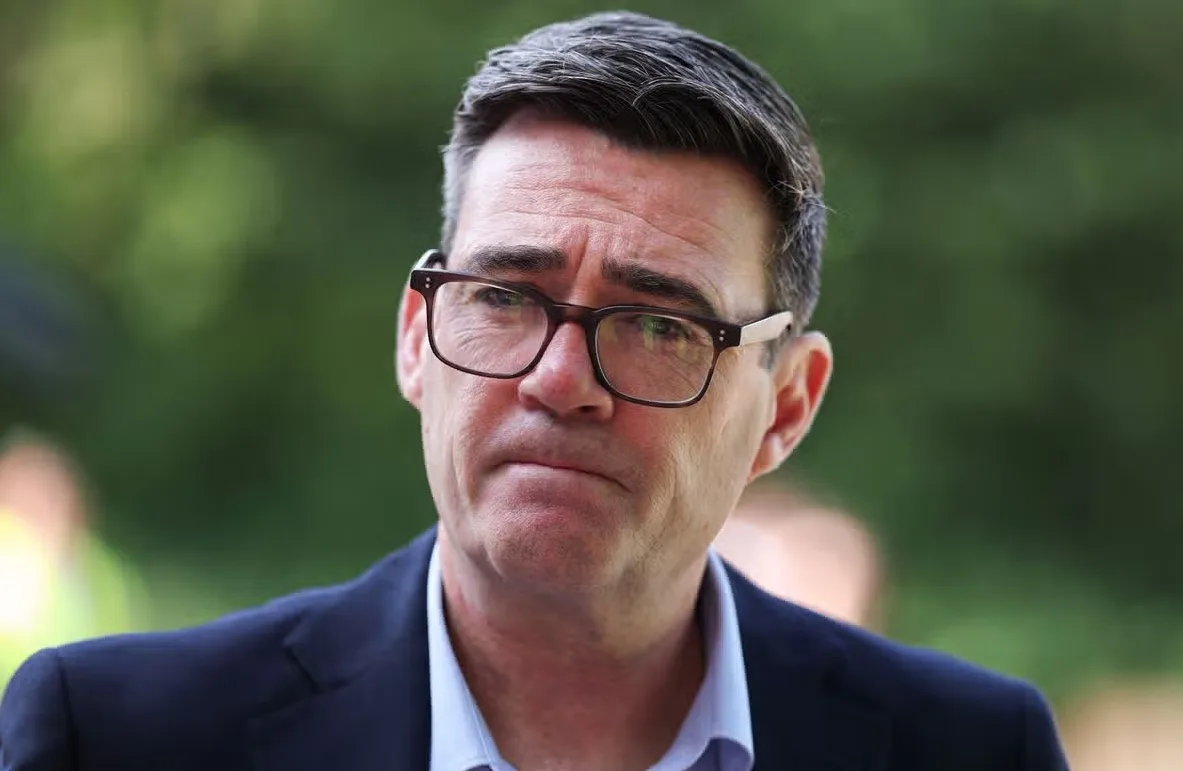
Despite some evidence of a second Burnham bounce following Labour’s conference, an early election (at least one this year) seems off the table.
A batch of recent polls suggests Labour is in the high 20s, with the most recent survey even suggesting that the party may be as high as 30%. These are the sort of numbers which could lead to an overall Labour majority depending on how the vote splits amongst the other parties and – crucially – where the vote splits. In the new multi-party model of politics, we still don’t really know whether the Reform vote is rising proportionately across the country or is becoming more efficiently concentrated in seats it might actually win.
Similarly, the Conservatives still find themselves a few points behind their tally of 24% at the last election. But if this is consolidated in, say, the LibDem-Tory battlegrounds in the South, it is just about possible Kemi Badenoch could make gains even without any major boost in vote share.
The entropic nature of Britain’s new party system means there are a vast range of possible electoral outcomes and a huge amount of unpredictability. These are optimal conditions for the brave gambler.
My first key observation is that the earlier the election comes, the better this will be for Labour. This isn’t just because I expect the glow around Andy Burnham to fade rapidly. Rather, it is because the timing of the next General Election and the chances of a Labour victory are in no way independent events. Indeed, they are closely connected.
There is little chance that Burnham will fire the starting pistol unless he is very confident that he will win. Such confidence might then turn out to be misplaced (as was Theresa May’s in 2017 when she assumed that a landslide was a near certainty and she ended up limping on with no majority at all). However, all things equal, if I knew for certain now that there’d be an election in 2027 rather than 2029, I’d be strongly inclined to bet on Labour winning (or at least emerging as the largest party).
On the betting exchanges, Labour are about 7/4 to emerge with the highest number of MPs when the next election is called, with Reform at 5/2 and the Tories a little shy of 4/1. All are long odds against to win a majority as a hung Parliament remains a 4/6 shot.
Typically, I scour the markets for attractive long odds bets. However, I find myself tempted by the odds of Labour failing to emerge as the largest cohort in the Commons even though it offers a return of barely 50% on my stake.
My first hunch is that Burnham will never secure a large enough poll lead to go to the electorate early. This is closely associated to my feeling that underlying factors in the economy – immigration control, economic growth, public services and security amongst them – will worsen (and the public perception could become even worse than the objective facts). So, my mid-point prediction is that Labour will go all the way to 2029 with its public support deteriorating as the months unfold.
This might make backing Reform winning the most seats seem the attractive bet, but I think the Tory-Reform battle is the most unpredictable element of modern British electoral politics (as is whether it ends up in a war to the death or some sort of truce).
I am also starting to gather some evidence that tactical voting (often assumed to be the secret weapon of the Left) could be a greater factor amongst Right voters than is generally assumed.
In some opinion polls, a strong reluctance can be found (particularly amongst Conservative voters) to switch to the better-placed party on the Right-of-centre. This also finds some echoes in a cluster of local council by-elections where a split between Reform and the Tories (and sometimes Restore) has led to a Left-leaning candidate emerging victorious.
In contrast, Parliamentary contests paint a rather different picture. Including the Caerphilly by-election (for the Welsh Senate), there have been six of these since the last General Election. They aren’t perfectly representative of the wider country as a whole and there are all sorts of riders about why mapping by-election voting behaviour onto a general election is fraught with risk.
Nevertheless, they do seem to indicate a keen propensity amongst Right-leaning voters to coalesce around whichever of the Tory or Reform candidate has the best prospect of victory. Putting aside Restore (who only fielded a candidate in one of these six seats), in total, 84% of the combined Conservative-Reform vote rallied around the candidate with the best chance of winning, with only 16% being ‘wasted’ on the party with no realistic prospects of success. If you strip out the by-election in Arbroath (where it was not at all clear whether the Tories or Reform were best placed to win and thus tactical voting was nearly impossible), the numbers become starker still. Across the other five seats, nearly 90% of the Conservative-Reform vote coalesced around the better placed of the two Right-leaning candidates and only 10% went for the weaker of the two parties.
If, in a General Election, voters of this ilk are willing to lend their vote to whoever is best placed to snatch the seat, it might be that the divide on the Right-of-centre ends up being less punishing that most current models suggest. This becomes doubly true if, by 2029, the 40-45% of the public currently in the combined Conservative-Reform column see ‘kicking Labour out’ as their overwhelming priority.
All of this seems to mount up to a very plausible scenario in which Labour comes second or worse in terms of MPs returned when we next hold Westminster elections. I’m going to have a sizeable nibble at 4/7.
Whilst I’m in the mood to place some short odds bets, I should add I’m keeping a beady eye on Restore who, ludicrously, are about 16/1 to win the largest number of seats. Betting against this yields only a 6% return and potentially ties up your stake for nearly three years. However, if those are still the prevailing odds on the exchanges a few weeks out, I’ll also be snatching up the 1/16 that Restore don’t make that sort of headway.
Mark Littlewood is a former Director of the Institute of Economic Affairs and the Director of PopCon.



Discussion
Comments
This week across the site:
To join in with the discussion please make a donation to the Daily Sceptic.
Profanity and abuse will be removed and may lead to a permanent ban.