News Round-Up

Pubs Could Be Forced to Reintroduce Social Distancing During ‘Covid Surges’ if They Don’t Check Vaccine Passports

Rather than forcing hospitality venues to check vaccine passports later this year, the Government is considering giving pubs and restaurants a ‘choice’: check the vaccination status of customers or reintroduce social distancing (that is, massively reduce profits) during ‘Covid surges’. The Telegraph has the story.

The idea is being looked at as an alternative to changing the law to mandate vaccine passports – a tougher stance that Boris Johnson warned could be adopted next month.

Under the latest proposal, venues with large indoor crowds would not be forced to adopt vaccine passports but would be offered incentives to adopt them instead.

This could include being able to stay open at full capacity, rather than only being allowed to conduct table service and have no punters at bars, if there is another Covid wave.

One adviser to a Cabinet minister said the idea was being discussed, saying that there was now momentum inside the Government behind some form of Covid certification this autumn.

A similar proposal had been considered by a review led by Michael Gove into Covid certification earlier in the year but was dropped as daily cases fell during the spring. …

But Mark Harper, who leads the Covid Recovery Group of lockdown-sceptic Tory MPs, criticised the Government for considering any form of vaccine passport in a domestic setting.

Mr Harper said: “Given our very high uptake of vaccination, especially among the groups vulnerable to Covid, what problem are these disproportionate ideas trying to solve? 

“I’m surprised the Government is even suggesting it – it’s almost like they don’t believe that our vaccines work. Just the suggestion will damage business confidence.

“The case for vaccine passports is not backed up by evidence from the Government’s own events research programme. Ministers would be wise to drop these threats now and focus on continuing to encourage vaccination through positive public health messages.”

Worth reading in full.

PHE Data Confirms That New Infections Peaked and Dropped in the Unvaccinated Before They Did in the Vaccinated

Back in early July I noted that data from the ZOE Covid Symptom Study was showing that new infections in the unvaccinated were peaking and falling while those in the vaccinated were still surging.

This was not a phenomenon noted elsewhere and prompted questions about whether it showed that the vaccines were delaying infection, or whether it was primarily an age-based phenomenon. Unfortunately, before anyone was able to investigate further, within a couple of weeks ZOE had ‘updated‘ their methodology and in their new data the phenomenon had oddly disappeared.

Universities to Continue Holding Online Lectures and Will Tell Students to Wear Face Masks and to Follow Social Distancing

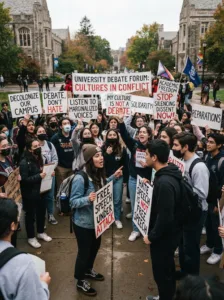
Many students hoping to begin a normal university term this autumn will be disappointed to find that, while the Covid figures give cause for restrictions to be abandoned, very little will actually change from last year.

Almost all of the leading Russel Group universities have indicated that a proportion of their teaching will continue to be held online while students will still be expected to wear face masks on campuses and to continue social distancing. Not to mention the impending introduction of vaccine passports. The Sunday Times has the story.

The universities’ decision coincides with a clear fall in Covid cases. Even normally cautious scientists, such as Professor Neil Ferguson of Imperial College London, said that lockdowns and other restrictive measures were unlikely to be needed again.

Of the leading 24 Russell Group universities, 20 said that a proportion of undergraduate teaching will continue to be held online.

Lord Baker of Dorking, the former Conservative Education Secretary, said the universities stance was “outrageous”, and that they must return to normal as a matter of urgency this autumn. “Pubs, cinemas, theatres and football matches have all opened without restrictions,” he said. “What’s different about universities?”

University College London, the London School of Economics, Imperial College, Cardiff and Leeds all said that lectures would continue to be held online.

Warwick, Nottingham, Manchester, Glasgow and Edinburgh said they would offer “blended learning” – a mix of online and face-to-face teaching for classes, seminars and lectures – but were unable to guarantee how much in-person teaching students would receive. Nottingham said it hoped to restart full face-to-face teaching next year, “subject to the course of the pandemic”.

Demands that free masks and free PCR tests be handed out to students and used are being led by the Universities and Colleges Union, which is also demanding social distancing on campus and that students get double jabbed. …

Cambridge said most teaching would be in person, but that some would be online, with details to be confirmed. Oxford said it planned most learning in person “enhanced by online teaching” and said some exams would continue to be held online next year.

Students at Manchester, Leeds and Liverpool have already launched petitions calling for a full return to “normality in terms of teaching” and demanding fee refunds. At Manchester, where some of the strictest lockdowns took place, nearly 10,000 have signed. Many students are still waiting to hear details of how their degree courses are to be taught when term starts next month. …

The Department for Education said: “Education providers are able to shape their courses without restrictions on face-to-face provision.”

Worth reading in full.

NHS Waiting List Could Hit 14 Million in England by Next Autumn, According to IFS Report

A new report by the Institute of Fiscal Studies (IFS) says that the NHS waiting list in England could reach 14 million by next autumn and could then continue to increase “as the number joining the waiting list exceeds the number being treated”. And this, according to the author of the report, is just the beginning: “Much longer waiting lists [could] be with us for years to come.” Sky News has the story.

Currently, the number of people waiting to start routine hospital treatment is at a record high – 5.3 million, according to latest figures.

But the IFS has warned in its new report that there is a massive backlog of people still to come forward for treatment, largely caused by Covid [what about lockdown?].

Health Secretary Sajid Javid said the number of people on waiting lists could rise to 13 million in the coming months, but the IFS projects that the total could eventually surpass the Health Secretary’s figure.

“In our first scenario, 80% of the approximately seven million ‘missing’ patients return over the next year, the NHS operates at 90% of its 2019 capacity this year and next, and then at 100% capacity from 2023 onwards,” it says.

“Under this scenario, waiting lists would soar to 14 million by the autumn of 2022 and then continue to climb, as the number joining the waiting list exceeds the number being treated.”

The IFS said while it is unlikely all patients will return due to the fact some will have died and others might have had private treatment, most will probably require treatment at some point soon, especially as virus cases decrease and “people are more willing to seek health care”.

Max Warner, the author of the analysis, said: “There is a real risk that if the NHS cannot find effective ways to boost its capacity – a challenge at the best of times, let alone after a major pandemic – then much longer waiting lists will be with us for years to come.”

Worth reading in full.

Alarming Data from PHE Shows the Fatality Rate in the Vaccinated Under-50s is 57% Greater Than in the Unvaccinated

Yesterday I wrote about the new data from Public Health England that allows us to make a (rough) calculation of vaccine efficacy during the Delta surge. Using data from technical briefings 17 and 20 I calculated that vaccine efficacy against infection with the Delta variant in the over-50s was a disappointing 17%. Vaccine efficacy against mortality was a better (if lower than expected) 77%.

The Daily Expose also published a piece looking at the new PHE data and argued that it showed vaccination was actually increasing the risk of hospitalisation and death. Their analysis did not break the results down by age, however, and so did not take into account that most of the infections are in the young, who are less vaccinated, and most of the deaths are in the old, who are much more vaccinated. That’s why my analysis focused on the over-50s, and when you do that you find the vaccines reduced mortality during the Delta surge in that age group by around 77%.

The Daily Expose article helpfully drew attention to the fact that in a recently published document, the Government advisers on SAGE themselves appear to admit that the vaccines do not prevent infection and transmission. In paragraph eight, they write:

While we feel that current vaccines are excellent for reducing the risk of hospital admission and disease, we propose that research be focused on vaccines that also induce high and durable levels of mucosal immunity in order to reduce infection of and transmission from vaccinated individuals. This could also reduce the possibility of variant selection in vaccinated individuals.

This being the case, why is SAGE not advising the Government to cease all aspects of the vaccination programme based on the idea of reducing transmission and protecting others (vaccine passports, the coercion of young people, vaccination of children and so on) as its members clearly don’t believe that these things are backed up by sound scientific evidence?

News Round-Up

The Figures Don’t Match Up To the Fear, a Doctor Writes

There follows a guest post from our in-house doctor, formerly a senior medic in the NHS, who says the widely trailed tsunami of hospitalisations has not only failed to arrive after ‘Freedom Day’, but we seem to be on the downslope of the ‘third wave’.

The philosopher Soren Kierkegaard once remarked: “Life can only be understood backwards, but must be lived forwards.” I have been reflecting on that comment, now we are three weeks since the inappropriately named July 19th ‘Freedom Day’. Readers will remember the cacophony of shrieking from assorted ‘health experts’ prophesying certain doom and a tidal wave of acute Covid admissions that would overwhelm our beleaguered NHS within a fortnight. Representatives from the World Health Organisation described the approach as “epidemiologically stupid”. A letter signed by 1,200 self-defined experts was published in the Lancet predicting imminent catastrophe.

Accordingly, this week I thought I should take a look at how the apocalypse is developing and then make some general observations on the centrality of trust and honesty in medical matters.

Let’s start with daily admissions to hospitals from the community in Graph One. Daily totals on the blue bars, seven-day rolling average on the orange line. Surprisingly the numbers are lower than on July 19th. How can that be?

Perhaps there are more patients stacking up in hospitals – sicker patients tend to stay longer and are hard to discharge, so the overall numbers can build up rather quickly. So, Graph Two shows Covid inpatients up to August 5th. Readers should note that Graph Two includes patients suffering from acute Covid (about 75% of the total) plus patients in hospital for non-Covid related illness, but testing positive for Covid (the remaining 25%). How strange – numbers seem to be falling, not rising. This does not fit with the hypothesis – what might explain this anomalous finding?

Maybe the numbers of patients in ICU might be on the increase – after all, both the Beta variant and the Delta variant were said to be both more transmissible and more deadly than the Alpha variant. Graph Three shows patients in ICU in English Hospitals up to August 5th. It shows a similar pattern to Graph Two – a small fall in overall patient numbers in the last two weeks. I looked into the Intensive Care National Audit and Research Centre ICU audit report up to July 30th. This confirms the overall impression from the top line figures. Older patients do not seem to be getting ill with Covid. Over half the admissions to ICU with Covid have body mass indices over 30. Severe illness is heavily skewed to patients with co-morbidities and the unvaccinated. Generally speaking, the patients have slightly less severe illness, shorter stays and lower mortality so far.

Finally, we look at Covid related deaths since January 1st, 2021, in Graph Four. A barely discernable increase since the beginning of April.

So, whatever is going on with respect to the progress of the pandemic, the widely trailed tsunami of hospitalisations has not arrived yet – in fact, we seem to be on the downslope of the ‘third wave’.

University Attempts to Lure Young Into Getting ‘Jabbed’ With £5,000 Prize

The tactics being employed to persuade young Brits to get vaccinated against Covid are being ramped up, much to the joy of – and, at times, thanks to the work of – the Government. The latest effort comes from the University of Sussex, which is offering fully vaccinated students the chance to win a £5,000 prize. BBC News has the story.

All students are being entered into the draw, with 10 winners able to claim a £5,000 prize each, if they can prove they are double-jabbed or exempt. …

Professor Adam Tickell, the Vice-Chancellor at Sussex, said the prize raffle was worth it if the numbers being vaccinated could be boosted even slightly.

“We know take-up among young people is patchy,” he said. “We know they’re not against the vaccine, they’re just not getting round to it.”

He added the financial cost to the university of the scheme was small compared to the human and social cost of potential disruption to students. 

“We know transmission rates are lower with vaccination, and the risk of serious illness for our staff and students is much lower in people who’ve been vaccinated.”

Vaccination remains voluntary for students, and there has been growing concern about the relatively low take-up by young adults. …

The university says its scheme is designed to provide an incentive for students to have both doses. …

Professor Tickell got the idea after hearing on a BBC programme that universities in the U.S. were offering incentives for vaccination. …

Universities Minister Michelle Donelan said: “Vaccines are the surest way to put Covid behind us and for students to reclaim the freedoms that enrich university life. 

“The department is encouraging universities to look at creative ways to boost uptake, and to discuss the possibility of pop-up centres with local health partners – making it quick and easy for students to grab a jab.” 

Worth reading in full.

The Covid Witch-Hunts

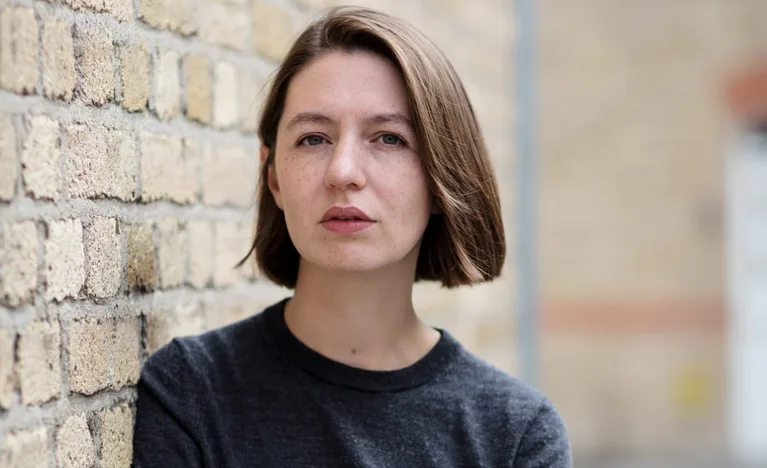
We’re publishing an original article today by Dr Sinéad Murphy, a Research Associate in Philosophy at Newcastle University, about the parallels between the witch-hunts of the 16th and 17th centuries and the move today to discriminate against those who have not been vaccinated against Covid. She begins by denouncing the introduction of vaccine passports in the Republic of Ireland.

In the Republic of Ireland as of July 26th, only those who have accepted two jabs are allowed to go inside the pub – that den of such life and good cheer that there is an Irish Pub to be found in the remotest corners of the globe.

On va à l’Irish? a French friend of mine used to say to his college mates, when they had a free afternoon in Poitiers.

Can this really be happening? Can the people of my native land really be refusing entry at pub doors to friends and neighbours who have not agreed to receive a particular medical treatment? I’ve been gone for over a decade – have things really changed that much?

What of the good-humoured scepticism that used to mitigate every piece of Irish officialdom? I know someone who lost his Irish passport while living and working illegally in the U.S., and who managed to have it replaced via a network of ex-patriots in the police and the passport office there. Years ago, I was stopped by the Gardai for exceeding the speed limit on a stretch of road approaching Cork city – “You were travelling quickly there, do you know that?” asked the garda. “God, I’m sorry,” I said. “Watch yourself next time, girl,” he said. That was it.

And what of the courage that used to lie beneath these soft to-and-fros of Irish life? …

The two have gone hand-in-hand – the courage and the craic, the friendliness and the fight. A verve for life and for people and for talk will tend to draw a person into whatever news is abroad and whatever struggle is afoot.

But now they’ve disappeared hand-in-hand, it looks like. Irish men and women sit well apart from other Irish men and women because their Government has ruled that they must or because they’re afraid of getting sick, or both.

The words of W.B. Yeats resound in my despondency: “Was it for this the wild geese spread? For this that all the blood was shed?”

Worth reading in full.