

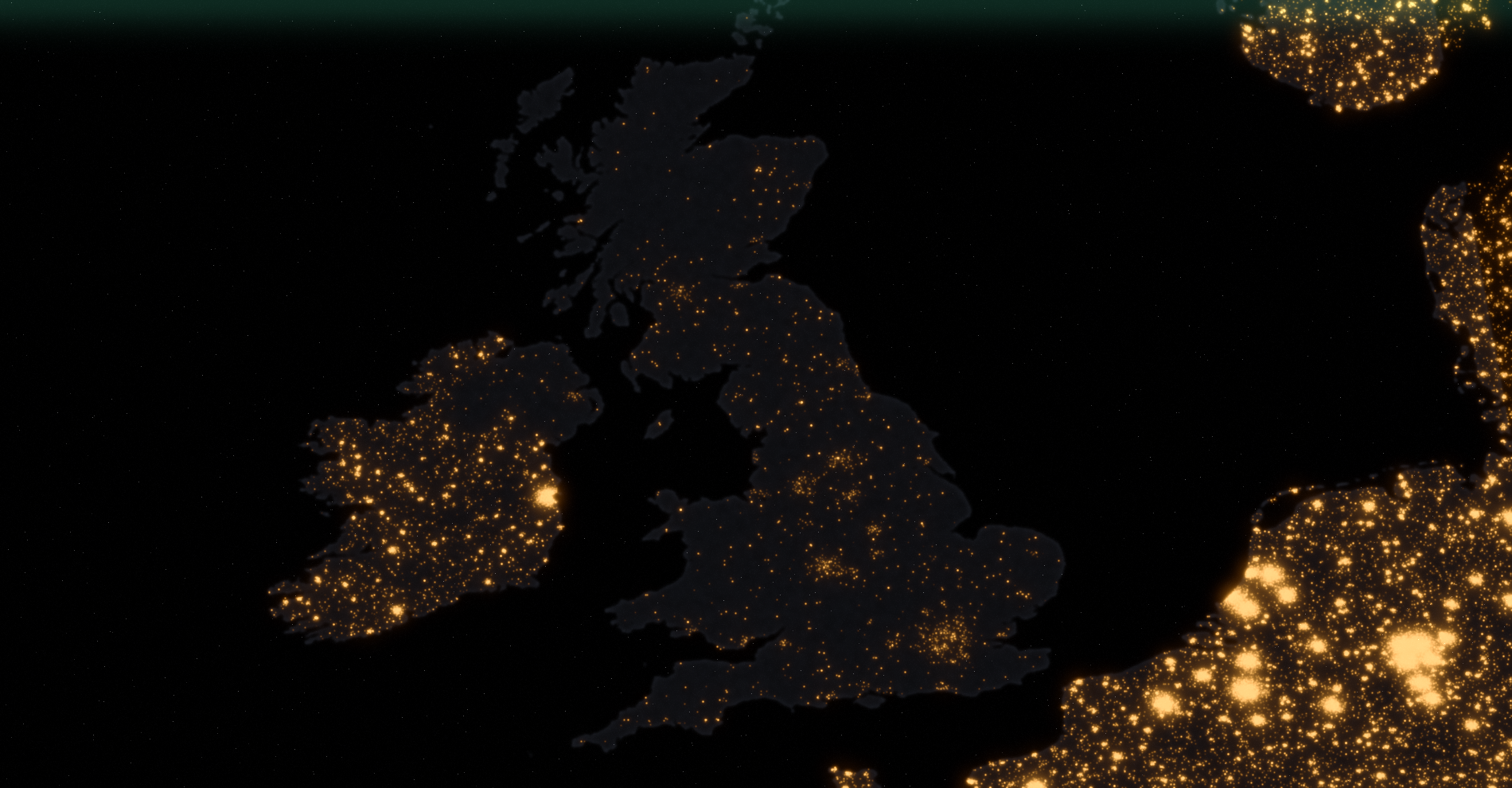
A power cut lasting an hour or two is an inconvenience, but a blackout lasting a week or more in the middle of winter would be something quite different. Engineers have suggested that restoring the grid after a nationwide outage could take as long as two weeks, so what should people do if such a disaster were to strike?
Most British homes are surprisingly dependent on electricity, far more so than in the 1970s when the three-day week saw rolling blackouts across the country. Even if you heat your home with gas, your boiler will almost certainly stop working without electricity for its controls and circulation pump. Electric ignition may prevent some gas appliances working. Broadband will disappear, while mobile networks will fail as their backup power runs out. Shops will be unable to take electronic payments and petrol stations won’t be able to operate pumps.
Even mains water supplies could be disrupted during a prolonged blackout. The Government’s emergency preparedness guidance specifically warns that electricity outages can affect water, mobile phones and other services as well as power itself.
So what should households do?
The first category consists of cheap, simple preparations that almost everybody can make.
Every household should have several torches and a good supply of batteries, kept somewhere you can find them in the dark. For elderly relatives, torches should be kept around the house – e.g. the living room, kitchen, bedroom, bathroom and the top and bottom of the stairs – injuries from falling in the dark will be particularly dangerous in a blackout when calling for help could be difficult.
Head torches are particularly useful because they leave both hands free. Rechargeable torches are fine, but for a prolonged blackout it is sensible to have something that takes ordinary replaceable batteries as well.
Candles and matches are useful backups, but they should be in stable, heat-resistant holders, kept well away from curtains and other combustible material and never left unattended.
A wind-up radio is also worth having. The Government recommends keeping a radio and writing down the frequencies of useful stations, as this is likely to be the only method by which people will be able to receive emergency communications such as information about local food distribution.
Power banks are now cheap enough that every household should have at least one, but it’s important to keep them charged. Larger portable power packs can run laptops, lights and small appliances for far longer, although they become progressively more expensive as their capacity increases. Small solar power chargers are relatively cheap these days and can help operate small devices.
Think about food and water
You don’t need a bunker full of survival rations, but a store cupboard containing food that keeps well and is easy to cook is sensible. Tinned soup, beans, fish and meat, crackers, biscuits, chocolate, nuts and other calorie-dense foods all keep well. If you have a safe means of cooking, pasta, rice, porridge and similar staples are cheap, filling and warming. UHT milk is useful. But don’t forget a manual tin opener.
Water matters even more. The Government recommends at least 2.5-3 litres of drinking water per person per day for survival, with considerably more needed if water is also required for cooking and basic hygiene. Keeping enough bottled water for an entire fortnight may be impractical for many households, but even several days’ supply buys valuable time.
During a blackout, keep fridge and freezer doors shut. The Food Standards Agency says a fridge should remain cold for about four hours, while a full freezer may keep food frozen for around 48 hours and a half-full freezer around 24 hours. In sufficiently cold winter weather, food can also be stored outside in a clean, secure container if the outside temperature remains below 8°C.
Keeping warm is likely to be the biggest challenge
Warm clothes, thermals, thick socks, hats, sleeping bags and plenty of blankets cost relatively little and require no energy at all. Rather than trying to keep an entire house warm, close internal doors and curtains and concentrate everyone in one or two rooms. Hot-water bottles are extremely effective if you retain some means of boiling water. Have several rather than one.
Those fortunate enough to have a working fireplace or wood-burning stove have a major advantage, but only if it’s ready to use. Have chimneys swept and flues inspected, and keep a sensible stock of dry firewood or other approved fuel before winter arrives. A neglected fireplace should not suddenly be pressed into service during an emergency, and only appropriate fuel should be used – don’t decide to burn plastic garden furniture as it will make a mess and may give off toxic fumes.
Blackouts are exactly when people will be tempted to improvise, and some improvisations are deadly. Never use a barbecue or outdoor camping stove inside the house – carbon monoxide is colourless and odourless and can kill without warning. Fuel-burning appliances must only be used in accordance with their instructions and with appropriate ventilation. Every home using a fire, stove or other combustion appliance should have working carbon-monoxide alarms as well as smoke alarms.
But by all means fire up the barbecue outside and use it to cook and boil water for hot-water bottles.
Those able to spend more can provide considerably greater resilience
A large battery pack can keep phones, lights, radios and some other equipment operating for days, particularly if electricity is rationed carefully. Homes with solar panels and batteries may have greater resilience, although owners should check whether their particular installation can actually operate when the grid is down: not every domestic solar system can, and in winter output is limited.
A portable generator provides much more power, but introduces significant risks and should not be an impulse purchase when a crisis has already begun. Generators must be operated outside and well away from doors and windows – current UK public-health guidance recommends at least six metres, because of the risk of carbon-monoxide poisoning.
Anyone wanting a generator capable of supplying household circuits should arrange the necessary installation with a competent electrician in advance. Never improvise a connection to household wiring, although many generators have three-pin sockets and are specifically designed to power individual devices using appropriately rated extension leads. Keep connections dry and take care not to overload either the generator or the extension lead. It’s sensible to check beforehand what your home insurer requires and how fuel can legally and safely be stored.
Starlink systems provide satellite-based communications that would be resilient in the case of a blackout, provided you can power your unit.
There are some less obvious preparations too
Keeping some cash at home may be helpful – while many shops won’t be able to operate tills, some may revert to paper accounts, particularly local businesses which have more flexibility. Keep the car reasonably well fuelled during periods of heightened risk, and maintain stocks of essential prescription medicines where possible.
People dependent on electrically powered medical equipment need a specific contingency plan rather than simply an emergency kit. Those eligible should join the Priority Services Register, which can provide additional support during outages and, where possible, advance warning of planned interruptions.
If you need machines for life-saving functions such as breathing, you probably already have a backup generator – make sure it has been serviced and is working correctly. In last year’s Iberian blackout several fatalities were caused by faulty back-up generators. It may be necessary to be admitted to hospital where backup generation is available, and you should have a plan for this.
Preparation should extend beyond your own front door. Know which neighbours are elderly, disabled or otherwise vulnerable, and get to know each other so you are not trying to build relationships and trust on the hop.
None of this requires panic buying or turning the spare bedroom into a warehouse of survival equipment. Much of it is inexpensive, useful in ordinary life and can be accumulated gradually. Resilience is largely about thinking about these things before you need them.
Finally, be ready for when the power comes back on. Switch off ovens, hobs, electric heaters and other appliances when the blackout begins so they don’t suddenly come back on unattended. Unplug sensitive electronics such as televisions and computers to protect them from possible surges, and reconnect appliances gradually once the supply is stable.
Kathryn Porter is an Independent Energy Consultant. She holds a Master’s degree in Physics and an MBA, and is an associate member of the All-Party Parliamentary Group for Energy Studies executive council. Subscribe to her blog.
Stop Press: This article might strike some readers as unduly alarmist, but London was hit by a major power cut on Monday morning. The Telegraph has more.



Discussion
Comments
This week across the site:
To join in with the discussion please make a donation to the Daily Sceptic.
Profanity and abuse will be removed and may lead to a permanent ban.
Well one thing we don’t need to bet on is power failures. I was expecting some last Winter given how precarious our electricity supply but we got away with it; I cannot see us being so fortunate this year, in fact I suspect electricity failures are baked in alongside petrol and diesel.
Buckle-up time.
Why are we in this stupid and dangerous position? It is totally contrived as we have all the knowledge to not be in this predicament, and yet we are being gradually forbidden to use it. Consider the following written in the 1960s when the global population was a little over 2 billion:
“Take away the energy-distributing networks and the industrial machinery from America, Russia, and all the world’s industrialized countries, and within six months more than two billion swiftly and painfully deteriorating people will starve to death. Take away all the world’s politicians, all the ideologies and their professional protagonists from those same countries, and send them off on a rocket trip around the sun and leave all the countries their present energy networks, industrial machinery, routine production and distribution personnel, and no more humans will starve nor be afflicted in health than at present.
Fortunately, the do-more-with-less invention initiative does not derive from political debate, bureaucratic licensing, or private economic patronage. The license comes only from the blue sky of the inventor’s intellect. No one licensed the inventors of the airplane, telephone, electric light, and radio to go to work. It took only the personally dedicated initiative of five… Read more »