

Young people are frequently told to get better quality sleep, move our bodies, stop doomscrolling and get outside. My therapist’s personal favourite is suggesting I go for a “mental health walk”.
As a graduate living in London who is constantly juggling the usual mix of modern uncertainty, mental health walks have become essential to my routine.
My anxiety seems rather inevitable given that the only jobs in the whole city seem to consist of waiting tables or pouring pints, rent eats into most of my income and the dating scene is entirely based on pixels.
So, I begrudgingly began following my therapist’s advice and take myself for a daily walk, as if I’m some Labrador needing to smell the great outdoors. However, much to my nervous system’s dismay, my walks have begun having the opposite effect of relaxation.
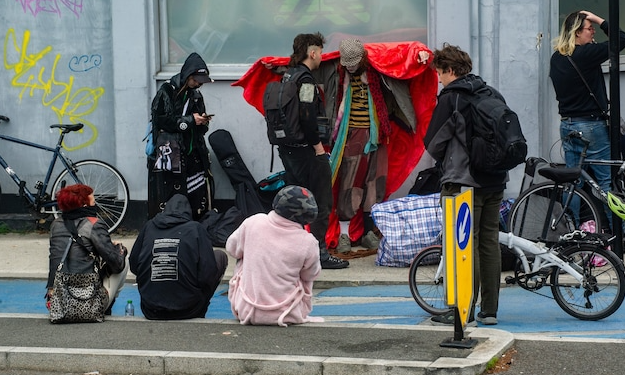
As soon as I leave my overpriced-for-South-London flat, I find overflowing rubbish bins and empty baggies scattered along the pavements. I hear shouting between addicts and notice how the streets look more neglected than the mould in my bathroom grout. But this unpleasantness isn’t merely observational; I also have been yelled at by black-out-drunk strangers and, most dreaded of all by Londoners, had my phone snatched by boys in balaclavas.
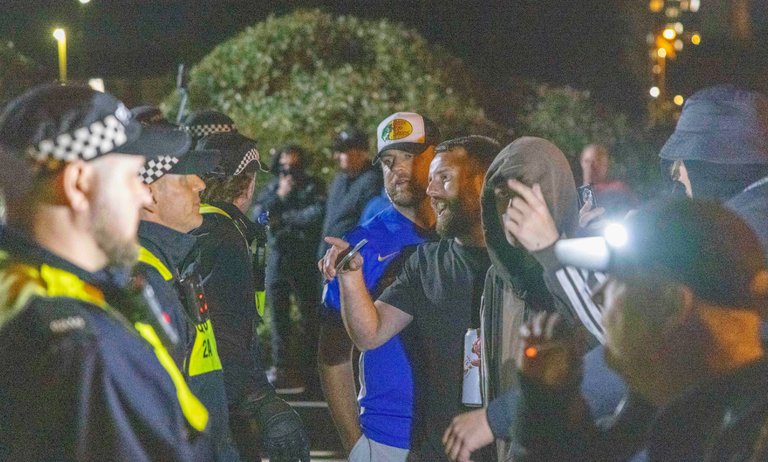
One time, some pro-Palestinian protesters asked me to join the “resistance” and upon declining their offer, I was hit by a wave of verbal abuse about being a government puppet. Protesting is an integral part of democratic life; I myself have participated in plenty. But I’m also entitled to walk down the street without having to declare allegiance to a political cause. Safe to say that area has become a no-go zone for me.
My therapist and I often discuss how mental health is shaped by the world around us, not just the internal cogs of our brain. If my job feels like a pathetic excuse for a career, my rent is completely unaffordable and my street feels hostile, it’s no wonder I’m in therapy in the first place. Perhaps mental health can’t be ‘fixed’ with 10,000 steps if this is a wider societal issue.
When I opened up to my therapist about this, she told me that this feeling is called “anomie”: essentially a sense of disorientation that comes about when social values and standards disintegrate. Not only are we more politically polarised than ever, but so too are we socially. It’s as if we are blindly walking through life, ignoring the importance of “eyes of the street”, as Jane Jacobs famously coined as a term to describe the informal social fabric that helps people feel like public space belongs to everyone.
A healthy, functioning city depends on thousands of silent agreements between strangers every minute: do not steal, do not litter, do not intimidate. It seems like all of these behavioural codes have completely disappeared.
What worries me about London right now is how disconnected we all are and how we’re increasingly scared to remind our neighbours about standards in public life.
In order to keep the peace, we skirt around the issue rather than confronting it. Meditate. Journal. Exercise. Download another wellbeing app. Avoid that street. Don’t take your phone out. Ignore the shouting.
All sensible advice, perhaps. But at some point, resilience starts to sound like another way of asking people to tolerate things that should be improved.
Sometimes improving our state of mind also requires improving the state of our streets. If the Government is going to invest millions in mental health, then perhaps it should ensure that going outside feels like part of the cure, rather than the root cause.
Arthur Ellis is an independent writer with an interest in UK politics, public affairs and accountability.


Discussion
Comments
This week across the site:
To join in with the discussion please make a donation to the Daily Sceptic.
Profanity and abuse will be removed and may lead to a permanent ban.
The only solution is civil war and the forceable removal of every trace of islam from our once beautiful lands.
Yes.
A few weeks ago I had to go to London after a more than 10 year hiatus. (I hasten to add I live less than 50 miles from London.)
It was shocking and it wasn’t even supposed to be a rough area (Tottenham, in case you wonder). Parts of it looked like downtown Mogadishu.
During a 5 minute walk to the underground station, I was offered drugs by some very diverse looking youngsters.
When I questioned my colleagues why I a 50-something looking middle class guy would appear to be interested in drugs they were laughing at my nativity:”oh, a lot of professionals use cocaine”.
I think something has gone seriously, seriously wrong. Living in the countryside I don’t realize it just how bad the cities have become.
Mass immigration has destroyed prepolitical loyalty in society.
Just get out. You couldn’t pay me enough to live in that sprawling, alien mess. There is no job worth putting up with that odious place if you ask me.
And it is cheaper to live almost anywhere else.