

Let me make my position clear from the outset, because it is quite an extreme one.
I would rather give my accountant £2,000 in order to save £1,000 in tax than hand that £1,000 to the Government.
Yes, I know. That makes absolutely no financial sense. That is rather the point.
I have reached the stage where my resentment at handing money to the British state has become greater than my desire to keep it myself. I wasn’t always like this. In fact, I grew up in a decidedly Left-wing household in a relatively poor part of North London. My father was an accountant and my mother was a teacher. She became a teacher at a time when Ken Livingstone, Labour councils and Left-wing politics were very much the prevailing culture in London.
Government wasn’t something I hated. Quite the opposite. The bargain seemed perfectly reasonable to me. You worked, paid your taxes, obeyed the law and contributed to society, and in return the state provided decent public services and a safety net for people who genuinely needed it. That was the deal. I believed in it. I don’t anymore.
Then they came for the pension
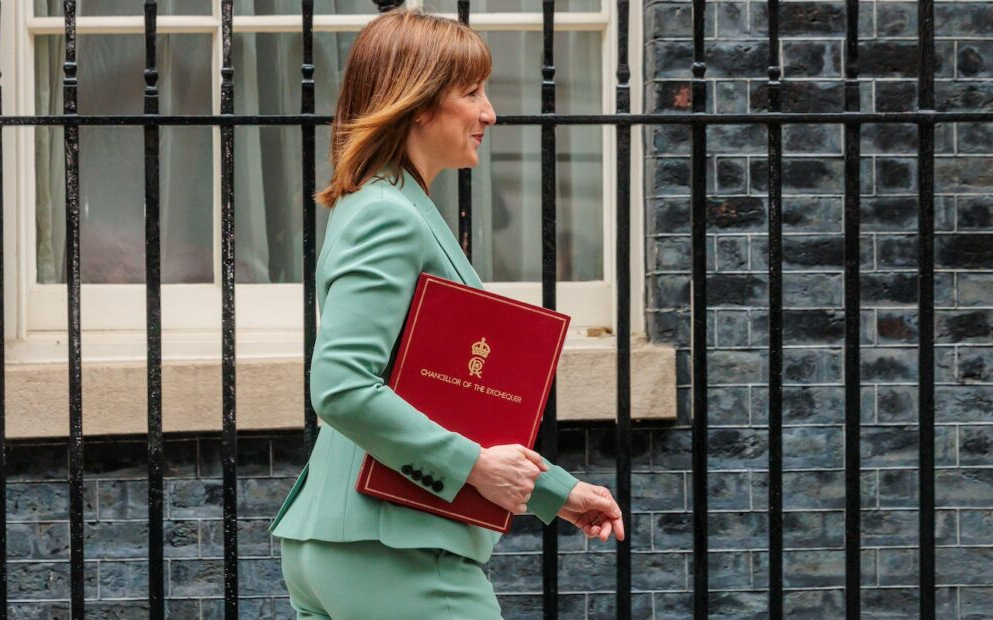
The final straw for me is pensions. From April 6th 2027, most unused pension funds and pension death benefits will be brought into a person’s estate for Inheritance Tax purposes. This isn’t speculation. It isn’t something Rachel Reeves might do at some unspecified point in the future. The change was announced in the 2024 Budget and has subsequently been legislated for. (Here’s HMRC guidance on the April 2027 pension changes.)
HMRC estimates that around 38,500 estates a year will pay more Inheritance Tax as a result, with an average additional liability among affected estates of around £34,000.
I find this extraordinary. I’m in my late 50s. I’ve been a reasonably successful serial entrepreneur. Nothing spectacular; I’m certainly no Richard Branson, but I’ve started companies, employed people and spent decades paying Corporation Tax, VAT, PAYE, National Insurance and all the other taxes and charges associated with trying to run a business in Britain.
I still have two or three little businesses. I have a YouTube channel. Occasionally I even manage to make some money from the stock market. I’ve been lucky. My house is paid off, I don’t have significant liabilities and I’m getting on with my life and, until recently, quite enjoying doing it.
I hadn’t particularly planned to spend my pension. My assumption was that I would draw whatever I needed and leave the rest invested. Perhaps one day I would need a substantial chunk of it to pay for care in old age. (More on that particular racket shortly.) Whatever remained would eventually go to my children.
Now the Government has changed the calculation. The pension accumulated by working, saving and taking risks for decades is another pot of money the state has decided it wants a piece of when I die. Which has left me asking a question I never expected to ask: why am I still trying to accumulate money?
What exactly am I paying for?
The question gets considerably more irritating when I look at what the British state chooses to spend money on. Take asylum accommodation.
The former RAF Wethersfield site in Essex has recreational and sporting facilities, healthcare and taxpayer-funded transport. Reports from the site describe a gym, entertainment room, squash court, table tennis, pool tables, social areas and minibus services.
The Sun describes Wethersfield as being like a holiday camp. The Express has this report from inside the migrant accommodation centre.
I pay for my gym. I pay for my television. I pay for my transport. I pay for my house. I pay enormous amounts of tax. And apparently I need to pay more.
You can argue about whether the facilities at Wethersfield are luxurious. That isn’t really the point. The point is that somebody is paying for them. And that somebody is me. And you.
Then there is social housing
Social housing is another subject where people become incredibly nervous about stating what the figures actually say, so let us state them.
According to the 2021 Census, 47.6% of household reference persons living in social housing in London were born outside the United Kingdom. Call it 48%. Nearly half. The national figure was around 19%.
The Telegraph’s subsequent analysis reported that the effective benefit these households receive through rents below the private market rate amounted to an average discount of roughly £11,600 a year per household. It also reported that around 35% of working-age foreign-born household reference persons living in London’s social housing were unemployed or economically inactive.
I have questions.
What should entitle somebody to a heavily subsidised and exceptionally scarce public asset? Should previous contribution count? Should length of residence count? Should somebody whose family has paid into the British system for generations have any greater claim than somebody whose connection with Britain is much more recent?
Apparently these are questions we are increasingly not supposed to ask. I think we should ask them, because there are young British families whose parents have paid taxes here and whose grandparents paid taxes here who cannot get anywhere near a council property. They sit on waiting lists while nearly half of London’s social-housing households are represented by somebody who was born outside the country.
That is not a racial observation. It is a statement about allocation of a scarce resource. Social housing in London is extraordinarily valuable. If the private equivalent costs thousands of pounds more every year, then the person receiving that subsidised tenancy is receiving something of immense economic value. Taxpayers are entitled to ask how that resource is being allocated.
And before anyone says this is all about immigration, it isn’t. In fact, concentrating entirely on immigration lets an enormous number of British-born people off the hook.
Because while I am being encouraged to keep working into my 60s, paying tax, employing people and building a pension that the Government eventually wants to tax on my death, something else extraordinary has been happening. Britain’s disability-benefits system has exploded.
As of April 2026, four million people in England and Wales were entitled to Personal Independence Payment. Before the pandemic, the combined number entitled to PIP or its predecessor DLA was about 3.5 million. By November 2025 it was 5.3 million. And here is the number that really made me stop: psychiatric disorders are now the primary disabling condition in 39% of ordinary PIP claims. Nearly four in 10. The largest category of all.
Among psychiatric cases assessed over the last five years, the great majority fall into five groups: mixed anxiety and depressive disorders, mood disorders, ADHD-type conditions, autism spectrum disorders and anxiety disorders. In January 2025 there were 587,000 people receiving the PIP daily-living component whose primary condition was anxiety and depression, while another 75,000 had ADHD or ADD.
Obviously serious mental illness exists. Obviously there are people with psychiatric conditions that are absolutely devastating. Schizophrenia exists. Psychosis exists. Severe autism exists. Nobody sensible is suggesting otherwise. Those people need help and they should get it.
But I cannot be the only taxpayer looking at the sheer scale of the increase and wondering what on earth is happening. We have gone from recognising that anxiety, depression and ADHD are genuine conditions to a situation in which psychiatric disorders are the biggest category in a disability-benefits system supporting millions of people. At some point you are allowed to ask whether every incentive in this system is pointing in the right direction.
And then there are the cars
This was the statistic that really caught my attention. At the end of July 2025, 593,700 PIP claimants had an active Motability contract. Of those, 174,700 had a psychiatric disorder recorded as their primary condition. In 2020 the corresponding number was 76,100, so it had more than doubled in five years. And among those Motability users in July 2025 were 10,400 people whose primary recorded condition was ADHD or ADD.
Again, precision matters. They aren’t literally being handed a ‘free car’. Someone receiving the enhanced mobility component of a qualifying disability benefit can use that payment to lease a car through Motability. Insurance, servicing, maintenance and breakdown assistance are normally part of the package. The award isn’t supposed to be based simply on the name of the medical condition. It is based on the functional effect that condition has on the claimant.
Fine. But I am still allowed to look at 174,700 Motability customers with psychiatric disorders recorded as their primary condition and ask whether Britain has got this balance right.
I have to buy my own car. I insure it myself. I service it myself. I put fuel in it. I pay duty and VAT on that fuel. I earn the money used to pay for all this, on which I have already paid tax. Meanwhile, some of that tax is going into a system that can ultimately finance somebody else’s Motability lease because a psychiatric condition has been assessed as sufficiently affecting their mobility.
Perhaps every single award is correct according to the rules. But there is an important distinction here: a system can be operating exactly according to its rules and the rules can still be insane.
This isn’t about accusing everybody of fraud.
PIP is not an unemployment benefit. You can work and receive it. It isn’t means-tested. And having ADHD written on a doctor’s letter does not automatically get you a car (well, maybe). Those distinctions matter.
Nor am I claiming that four million people are fraudsters. They’re not (though I suspect many are). My objection is actually more fundamental than fraud. The question is what sort of behaviour the state encourages.
Stand back and look at the system as a whole. We have millions receiving disability benefits, a dramatic growth in claims involving psychiatric conditions, hundreds of thousands using Motability vehicles, huge numbers economically inactive, employers being charged more money for employing people, employment law becoming more cumbersome, entrepreneurs deciding that taking another risk isn’t worth it, and now a Government looking at the pension pots accumulated by people who spent their lives working and deciding that there is another source of Inheritance Tax sitting there.
Incentives matter. You cannot make economic inactivity steadily more comfortable while making economic activity steadily more expensive and then act mystified when the number of economically inactive people rises.
Then there was my father
This is where the whole thing becomes rather less theoretical for me. My father worked steadily throughout his life. He lived in the same London borough for roughly 50 years. He paid PAYE, National Insurance and council tax. He owned his home. He did precisely what generations of British people were told responsible citizens were supposed to do.
Then he developed dementia. When he became too infirm to look after himself, we discovered just how much all those decades of contribution were worth. Not very much.
Because he had accumulated assets, he had to pay for his own care. And because we didn’t want to put him somewhere resembling a Victorian workhouse, eventually his care was costing us in the region of £2,500 a week. Week after week, his estate disappeared at an astonishing rate.
Had he properly understood what was happening, it would have driven him mad. Everything he had spent his life accumulating , everything he believed he was eventually leaving his family , was being consumed because he had done exactly what society told him to do: work, save, buy your own house and provide for yourself.
The principle remains embedded in the care system today. If you possess assets above the relevant threshold, you generally fund your own residential care. Once your resources have been sufficiently depleted, the state starts paying more.
Think about the incentive. Save and you pay. Accumulate assets and you pay. Own a house and, depending on the circumstances, its value can enter the calculation. Reach old age without substantial resources and the calculation changes.
I am not arguing that some penniless 85 year-old should be dumped on the pavement. Obviously not. I am asking why the person who spent a lifetime being prudent is so often the mug.
My father didn’t suffer from a bit of anxiety about going to work. He had dementia. He genuinely could not look after himself. And when that happened, the state’s answer was essentially: you’ve got money, spend it.
So we did. £2,500 a week. His life’s savings disappeared because he had committed what increasingly seems to be the cardinal error of the British welfare state: he had accumulated something. And that is what I can no longer stomach.
Peter McCormack has noticed it too
I follow the entrepreneur and podcaster Peter McCormack. He is considerably more successful than I am, but he likes starting businesses. So do I. There is something immensely satisfying about creating something that didn’t exist before, employing people and watching an idea turn into a functioning company.
But McCormack recently said something that struck me because I realised I was beginning to feel exactly the same way. In a February 2026 podcast interview, he talked about considering another business before concluding that he “cannot be bothered to start businesses anymore”.
He had been considering opening another business, a pizza restaurant. Then he looked at the capital expenditure, the lease, the cash flow, the state of the economy and all the aggravation that comes with employing people in Britain. He went on to say that Britain had “destroyed ambition and entrepreneurship”.
And this is a man who actually enjoys building businesses. He explained that once you add together higher costs, employment regulation, HR, accounting, taxation and everything else that falls on a small entrepreneur, it becomes increasingly difficult to make the numbers work. At one point he essentially asks: if you take the risk, finally generate the profit and the Government takes so much of it anyway, what is the point?
Exactly. That is precisely where I have arrived.
Death by a thousand cuts
Employer National Insurance went up to 15% in April 2025. At the same time the threshold at which employers begin paying it was slashed from £9,100 to £5,000.
Think about what that means. Government says it wants more employment, then increases the tax on employing somebody. Government says it wants growth, then makes growing a business more expensive. Government says it loves entrepreneurs, then creates another pile of regulation for entrepreneurs to administer.
Every individual measure can be defended. That is how this always works. This tax is only a little higher. This new regulation is reasonable. This employment protection is only fair. This reporting requirement isn’t particularly difficult. This threshold change isn’t enormous. This pension change only affects some estates.
And then one day the person paying all these little amounts stands back, looks at the enormous accumulated pile and asks: why am I doing this?
That is where I am. I have a viable business. I could grow it. I could employ more people. I could start another company. I could work harder. I could continue building investments. I could leave my pension untouched and allow it to compound for another decade.
But why?
If accumulating more money simply makes me a larger target for the state later, perhaps the rational response is to stop accumulating it. Perhaps I should reduce the business, start drawing down the pension, spend the money, travel more, work less, employ fewer people and take fewer risks. Why wouldn’t I?
Governments seem to assume taxpayers are inanimate objects. Turn the tax dial another notch and precisely the same amount of economic activity will continue happening underneath it. But taxpayers are people. We change our behaviour.
HMRC itself has acknowledged potential behavioural responses to changing the tax treatment of pensions. Well, hello. I am one of the behavioural responses.
And it isn’t just Labour
I reserve plenty of anger for the current Government, but blaming Labour alone would be dishonest. The Conservatives had 14 years. They presided over enormous immigration, allowed the state to expand, presided over deteriorating public services and increased the tax burden while continuing to talk about themselves as the party of enterprise.
They had ample opportunity to do something different. They didn’t. Labour has simply accelerated a process that was already well underway.
I hate what this Government is doing, but I have become profoundly sceptical of all of them. This increasingly isn’t Left versus Right. It is the state versus the person who keeps paying for it.
And before somebody inevitably decides this is a racial argument, it isn’t. I grew up in a Left-wing household where racism barely entered the conversation. My mother taught in East London in a school where a huge proportion of pupils didn’t have English as their first language. I don’t care whether somebody is black, white, Asian, brown or purple. I care whether the system is fair.
If somebody moves to Britain, works, starts a company, becomes a nurse, builds houses, employs people and pays taxes, wonderful. Equally, being born in Britain doesn’t give somebody a moral entitlement to spend 40 years living off everyone else. The PIP figures irritate me just as much as the immigration figures.
That’s the point. This isn’t immigrants versus natives. It is contributors versus a system that increasingly seems to take contribution for granted.
The mug finally notices
You can only push that arrangement so far. Tax the businessman and his profits. Tax him for employing somebody. Tax the employee. Tax what they buy. Tax the petrol they use to drive to work. Tax the house they buy. Tax their investments. Make them fund their own care because they accumulated assets. Then bring their remaining pension inside their estate when they die.
Meanwhile, continue expanding the number of people supported by the state.
At some point the mug paying for all of this notices. And this particular mug has noticed.
A very clever friend once said something to me that I have never forgotten: “Your house isn’t the most expensive thing you’ll ever buy. Your government is. So shop around.”
He’s right. Add up the tax you will pay over your entire life: Income Tax, National Insurance, Employer’s National Insurance, VAT, council tax, fuel duty, Insurance Premium Tax, Stamp Duty, Capital Gains Tax, Corporation Tax if you own a business and finally, after spending a lifetime paying all the others, Inheritance Tax when you have the temerity to die with something left over.
Your government may indeed be the most expensive thing you will ever purchase. So what are you getting for the money?
That’s where I increasingly struggle. Try getting through to a government department. Try getting a GP appointment. Try finding NHS dental treatment in parts of the country. Look at the condition of public infrastructure, polluted rivers, energy bills, housing costs and the tax burden.
The state costs more and more while somehow managing to feel less and less competent. And every time something doesn’t work, the proposed solution appears to be another few billion pounds. Your billion pounds, obviously.
So I’m going shopping. I have finally concluded that my friend was right. I am going to shop around. I’m seriously considering leaving Britain.
Not because I hate Britain. Quite the opposite. I hate watching what has happened to it. I don’t particularly want another flag. I don’t particularly want another culture. And I have no desire to become one of those insufferable expatriates explaining at every opportunity how much cleverer he was than everybody who stayed behind.
I simply want a government that offers something approaching value for money, and one that doesn’t regard somebody who has worked, saved, invested, employed people and built businesses for decades as an inexhaustible cash machine.
Increasingly, I tell younger people the same thing. If you’re 25, ambitious, mobile and capable of building an international career, why wouldn’t you look elsewhere? What is the compelling argument for spending the next 40 years accumulating assets in a country that appears determined to become steadily more inventive about taxing them?
Peter Hitchens has been telling young people to leave for years. He’s right.
And that should terrify the Treasury, because entrepreneurs aren’t oil wells. You cannot simply drill a little deeper every year and confidently assume the same quantity will come out. Eventually people stop. They work less. They don’t employ the extra person. They don’t open the second shop. They don’t start the pizza restaurant. They stop investing. They retire early. They spend the pension. They leave. Or, like Peter McCormack, they simply announce that they cannot be bothered to start another business.
That is the real danger of what Britain is doing. It isn’t merely that people resent paying tax. People have always resented paying tax. It’s that eventually the people who create the taxable wealth stop seeing the point in creating it.
For most of my life, I believed working hard, building businesses, saving money, buying your own home, providing for yourself and leaving something behind for your children were obviously sensible things to do. My father believed exactly the same thing. He played by the rules for 50 years and, at the end of his life, discovered what those rules were worth.
I don’t intend to make the same mistake. For the first time in my life, striving increasingly feels irrational.
So I give up.
A. P. Doff-Cashcow is a pseudonym.




Discussion
Comments
This week across the site:
To join in with the discussion please make a donation to the Daily Sceptic.
Profanity and abuse will be removed and may lead to a permanent ban.
This really hits the nail on the head. I too could have carried on working but have cashed out of all three of my businesses not simply because of the Financial implications but the ever increasing regulation. Release the shackles and let entrepreneurs thrive again.
I’m on holiday in France where we met a couple of retired police on the next table. They were struck by the similarity between our countries- huge debts and social costs, regulations, taxes and state employed with pensions. Mass immigration and crime. Unrecognisable cities with lunatic mayor’s.
Next day we went to the lovely town of Ceret, which was bustling with independent shops and cafrs 10 years ago. Half or more businesses had closed and the excellent little restaurant where we had lunch was selling up at the end of August.
I could have written this, but probably not as well. From your description, our backgrounds and life experience are not dissimilar – although I’m probably a bit older & my parents were not ‘professionals’. The benefit of a grammar school education, from the days when they admitted kids from the lower orders, only dawned on me much later in life.
Earlier today I had coffee with someone who was wrestling with the idea of breaking off a long-standing relationship. She had helped out a friend for decades – financially, practically, emotionally & all the rest. It turned out that the erstwhile woman friend had actually been in receipt of generous welfare benefits for years.
My acquaintance had been self-employed most of her life but had just discovered the woman was being paid for fostering her own drug addict sister’s children, had been given an upgraded “council” house (one of the children had been deemed ‘on a spectrum’) to give each child their own room and was driving around in a Range Rover. Apparently, such transport is now essential for any parent of a ‘disabled’ child. She had boasted of many other benefits, too.
We discussed what sort of income the… Read more »
I’d like to use a profane word in my reply, but Toby will object, so…..YES!
Same here, and thank God we’re now in our 80’s and don’t have any offspring to worry about. If the @ss&a! government haven’t had the lot after we’ve paid for any care we might need, our nieces and nephews might get a smidge. Fortunately they’re not on the breadline.
Agreed. Sums it up well. The lessons of the 1970s have been completely forgotten by our goldfish politicians and population, and we are now in an even worse position than we were then. In short, we are stuffed.
The author and anyone really but especially those in a government or council jobs should read Ayn Rand’s “Atlas Shrugged”!
I chuckled at the pseudonym but this brilliant piece is no laughing matter. It made me think the writer should definitely give up work and sip cocktails on a beach – or, seriously, become a politician for the good of the country, the kind we desperately need if anything is going to change.
I seem to remember Dominic Frisby also identifying the cost of government as the biggest expense anyone ever faces, at least any one of the increasingly rare muggins who goes out to earn a living.
Couldn’t agree more. A great article.
Left wing were you?
I started work in 1972.
1970s – what Left wing gave us.
22% inflation.
14% wage inflation.
16% mortgage rates.
52% corporation tax; 42% small companies.
35% increasing in 5% increments in narrow tax bands to 85% income tax – later top rate dropped to 83% as a new 15% supertax was introduced for unearned income.
£50 limit on money you could take abroad.
860 coal mines closed – it wasn’t Thatcher 160 closed during her time.
Daily strikes.
Power cuts.
Underinvested, loss-making, inefficient State-run industries
The “Brain Drain”.
Capital flight.
The rich left.
IMF called in to loan money.
Growing unemployment.
UK known as “The Sick Man of Europe”.
And we joined the EEC in 1973 – the economic marvel that would solve all our problems – it didn’t, it made them worse.
Anyone who was/is Left-wing after the disaster up to the Thatcher era, is clearly mentally ill.
And the 1970s are revisiting us because Andy Capp believed this was our golden era before Thatcher came along and spoiled it all.
All that history sounds accurate, however in the last 10-15 years the Uniparty all appear to be the same…
And fuel rationing.
Yes. I am now, by happy chance, an expat but my plan to return to the UK has evaporated. The rest of the world is far from perfect, but almost all of it is better than the UK. Your excellent article should be a full page opinion piece on every serious news site in the UK.
100% agree, bro !
Exactly what I want to say. thank you.
I think about this a lot. I am in my late 40s and currently plan to work for another 20 years or so. After that, my wife and I would love to travel in our retirement, as much as possible, and would like to live a sort of nomadic lifestyle as far as possible.
Our kids will be out into the world on their own feet by that point, but we will certainly help them as much as possible to get the best start they can. We both fancy Italy as a “base”, or perhaps Cyprus – but definitely not the UK.
We are both accumulating pensions, and will inherit our parents’ houses when the time comes, which we intend to either sell or rent out (we will need to dicuss this with siblings who will also have a share).
I am considering seeking proper financial advice about what might be our best course of action. I’d leave the UK now, but we are probably too old and have kids of 15 and 11 at present.
Proper financial advice will cost you hundreds of pounds and will suggest complicated tax avoidance schemes which will also cost you a great deal of money to set up. Tax law is clear enough, especially with AI to help you. Any long term plans can be changed at the whim of a chancellor. After going down all these routes, my advice is, don’t die.
🤣
Something not widely known is that if you mitigate your IHT liability by gifting a property say, you could be immediately liable for CGT on the hypothetical gain (even though no money has changed hands) and the seven year rule will still apply, so death in that period will add IHT to that as well. It’s like a room without doors or windows – no escape.
Seems that way – screwed for making an effort in life whichever way you look at it.
After reading all this and your comment the image of Edvard Munch’s “The Scream” popped into my head and I don’t think the image is going away any time soon.
Me and my Italian missus will be selling up next year and legging it. I’ll be nearly 60 & she’s only going to be 54. But we both feel the UK’s pretty much ruined. She can’t understand how the country has fallen so far in the 25 odd years she’s been here. It’s time to go.
We’re lucky in that we won’t need to buy or rent a property in Italy as mother in law is happy for us to use her little holiday apartment by the lake (which is nice). That will be our base, but as I’ll be restricted to the old 90 days nonsense we’ll be spending quite a bit of time seeing the world. Which when you look into it, doesn’t have to be expensive.
The Italian tax system isn’t great, as I believe they take 23% of all income, with no personal allowance. Currently looking into my options with my “friendly” advisor as I don’t particularly want anyone like that idiot Reeves getting their hands on my hard earned.
And no, I’m certainly not planning on dying any time soon
What a great analysis of what is wrong with this country. I find it enormously distressing to see the country in this mess, to see the complete inadequacy in the govt and institutions. What are the causes of this? Is it the left liberal agenda solely? Is it deliberate sabotage- slow march through the institutions? Or is it that our elite have been brainwashed by the UN Agenda2030? Until we know the precise causes and heads roll then there is no hope of resolving any of the problems.
It is a long-term plan summarised in the utopian UN Agendas. The aim is to clear the ground and reset. Try reading Patrick M Wood. Wherever you go, it will find you eventually – unless we stand up to it now. It will bury most of the politicians implementing it at the moment as they will discover too late.
How this article resonates with how I feel about working harder and developing my own little business. I totally deplore the compulsion of which software to use for reporting my business earnings – fascism – corporations and state working together.
As for the worsening mental health of people in this country – I have seen this decline for sometime, even before 2020. I see it in adults and hear about it all the time in school age children. Where I saw it before 2020, it was with people who had been working in unethical environments (banking industry) and it finally caused too much internal conflict. 2020, the government unleashed the deliberate use of fear in its propaganda and this has harmed no end of people. Many of the adults that I know that are struggling, would be fantastic employees/small business people, but they cannot operate reliably at full-time hours. They learn to balance their health very finely between work they can do and recovering. The State ‘support’ system, with it’s constant changes, often is a key factor in reducing the capacity of these people.
School is a common place to create disturbed young minds as these are propaganda institutions telling… Read more »
Spot on. As an example, my son and his wife plus child live next door to a woman with 3 daughters and a 3 year old BAME son who is not talking. They dump unwanted items in the garden, smoke weed and make noise. My son and his wife work long hours and are successful but can only afford an 8 year old car. My bird is a senior acad and has a 13 year old Ford. My car is 20 years old. The lady next door now has a £35k new Chinese electric large estate with all running cost included.
In my case my pension to pup was a 4 bedroom house that I bought for 45k 34 years ago. Regulations reduced the number of tenants to 2 which paid about 11k rent net. The new Rental Act has made this too risky to let and so I am renovating it myself but very slowly. I have to pay double council tax which means my income is reduced by 17k. Despite my actual income being about 20k now and living off savings, the HMRC is chasing landlords to register for Making Tax Difficult, requiring their ‘customers’ to buy software… Read more »
They are definitely on a mission to eliminate small private landlords. I have one BtL bought outright with money I inherited and since it is in a relatively low-rent area in the west country I am well below the threshold for Making Tax Digital and will be for several years. At the moment it suits me to keep it, but I’m planning to sell up in a couple of years and to split the proceeds 3 ways – gifting a third to each of my sons.
Welcome to the club.
I was made redundant on very good terms and so had the funds to start contracting which I’d always thought was too risky. Luckily, my IT skillset was in great demand so I started my first contract at a well-known car company in Essex and it was renewed repeatedly though various intermediaries for 10 years. In that time my company contributed close to 7 figures to the Treasury, despite fighting IR35 at the Special Commissioners and winning (IR335 also changed the way I paid myself to reduce the tax/NI contributiion to tht absolute minimum – well done Gordon Brown).
In 2004, at 57yo, my wife and I decided to quit. I positively hated my job and the commute, and we concluded that working until 60 (our original retirement target) would not give us much more pension, but would drastically decrease our time retired.
As our children were both settled away from home, we decided to sell up and move to Italy where we had met and both worked. We finished restoring and extending the rustico we’d bought in 2003 and moved in, early 2005 to a tiny village near Sanremo, with no significant expat community.
We… Read more »
Sounds like you’ve won at the game of life there – lovely…
I empathize and agree with every word written in this fine article, for which thanks. When we hear people like GBN’ “political commentator” Nigel Nelson, who has never had to meet a payroll in his life, as far as I know, say that wealth, not work should be taxed, or British taxpayers actually contribute nothing because they use the welfare state they fund, you know that Socialist thought is well and truly broken. Plus this country slavishly follows the WEF and the utopian UN Agendas 2030 and 2050. Never lose sight of the bigger picture.
I would like to refer to the topic of IHT on pension funds. The public was invited to make contributions to private pensions from gross income; i.e. tax free. Most future drawdowns to be made at their current rate of tax. Deferred tax in other words. The Pension Fund was to be free of IHT, thus enabling beneficiaries in turn to help fund their own social care in old age. As we know, Reeves has made pension funds liable for IHT at the full rate. Changing the terms and conditions of a financial arrangement mid-course seems to be a breach of trust at least, let… Read more »
“Your house is not the most expensive thing you’ll buy, your government is. So shop around.”
That is a brilliant phrase, I will remember it now.
Agree fully with every word. Well expressed. Then again, I am biased as I got to where you are Mr Cashcow at 55 years of age when I closed my second limited company and decided to “waste” my money enjoying myself.
Why Mr Cashcow? Have I missed something?
Cashcow is the pseudonym used by the writer of the article.
Well yes, I can see that, but a cow is female don’t you know and the writer is not gendered. So, why Mr?
I have very little sympathy for a Leftie who has bothered to see what happens to his hard earned money. Very little. Many of his points are well made but this has been visible for yrs and Lefties have screamed blue murder at people who have argued for a low tax, low regulation Govt and low immigration. The Tories are at least as bad but of course every Leftie up and down the land shouted ‘Austerity’ at trying to do something about between 2010 and 2024. Everything that has been achieved today and in the last 50yrs is a result of Thatchers reforms. Major, Blair, Brown etc etc steadily eroded it so we have nothing left. All modern Govts are thieves. You missed the biggest racket they practice….. inflation. That costs you half of your lifetime earnings and you dont notice. Get your champagne out you Socialist and do what all of them do once they get options….. live your life precisely how you been telling others not to live theirs for yrs. Enjoy it whilst it lasts because they will hunt you down (Govt and your Leftie friends).
I gave up my “proper job” ten years ago; relocated; downsized and simplified my life.
I carried on working in my “little part time job” for a year after getting my State Pension but because of my income from other sources, I was being clobbered for tax so I gave it up and retired.
My life is now simple – and organised so that I pay as little tax as I possibly can. I have taken very little from the State all my life and now I contribute as little as I can as well.
I find it very satisfying knowing that by making small lifestyle adjustments I am making a small reduction to the money the Socialists have to squander.
With reference to care home fees. Personal possessions such as jewellery, paintings, antiques, cars and other personal possessions are exempt from assessment, unless the Local Authority believes they were purchased with the intention of deliberately reducing your capital. So you could live in social housing but amassed a collection of Rolex watches and avoid paying (and also avoid capital gains tax on any you sell before needing care because they are classed as diminishing assets !), but someone who bought a house would pay. Also there is a very vague criteria for NHS continuing care, so some dementia cases get fees paid and some do not.
My late mother, who, thanks to a lifetime of hard work and going without, owned her house, developed dementia. State – funded care was initially denied due to an assessment carried out by a nurse who didn’t even know her. Enter my sister, who put her extremely unpleasant personality to good use, challenging the decision and ensuring that our mother’s care was paid for. It seems that should someone choose to live a parasitic life of wall to wall idleness, enabled by the state, then they will be provided for generously, thanks to the hard work of others. I despair.
Even more torture for people (like me) who don’t have the option to leave the country.
Me, too. We are both too old to be leaving now. Both of us have lived useful and productive lives, and my profession would certainly have made me welcome in other countries. Through my job, I saw enough abuse of the system before I retired 15 years ago, to sicken me.
This article reflects exactly what I think. I resent the Government and the State, frankly I would rather set fire to assets than allow the Government to take more. I will not continue to run a business, in fact am in the process of shutting it down. I am trying to leave the Country, and I advise my Son and any ambitious young person to leave. What is the point of building a business/career, being self reliant and responsible when Government then takes that away in order to fritter on the lazy, the feckless and to strive is to be punished.
I am done, and as soon as I can sell my house (another market the Government has destroyed with its greed) I am gone, I refuse to be abused by Government any longer.
Coming out of Sainsbury’s this evening, there was a woman with five children of primary school-ish age. My immediate thought was whether she and her husband (though she may be not the only wife) worked towards the cost of raising those children, or the extent they were provided by means from the state. For those of us who limit their families to what we could provide, we see that we’re being swamped by imported cultures who have no regard for those rules we’ve lived by. Aside from the influx from certain countries, even if immigration were to stop tomorrow, we’d still a changing demographic in the next generation. The London Boroughs with the fastest growing populations follow this trend.
I can guess the religion this woman followed and sadly she probably had no say over how many kids she had, I’m pretty sure a lot of members of this religion don’t agree with contraception.
I’m not sure to what extent second and third generation immigrants start to adopt Western norms in terms of limiting the number of children they have.
Obviously there’s a huge problem with declining birth rates among people of European heritage but I’m not sure the population of the UK should keep increasing so the average number of births per woman should be pretty close to the replacement rate i.e. 2, thankfully very few children/young adults in the UK die before they have the chance to start a family.
One correction – Britain is not doing this. The political establishment is.
I love my country the England I grew up in in the 70s.
Regrettably that has been largely destroyed so I live in Italy and try to recreate that England through my model trains…
Give as much as you can as early as you can to your kids, and spend the rest. That’s what we’re doing.
Why have successive governments in Europe since WW2 been so desperate at all costs to fill the continent with non Europeans despite this not being especially popular with the natives?
and if some of what you spend benefits your children or grandchildren without appearing in their bank accounts, so much the better.
How on earth does ADHD, if it actually exists, affect someone’s mobility apart from making them more mobile at times than they should be? Surely if they’re hyperactive a long walk or bike ride will help them calm down a bit.
If it means they can’t sit still on public transport how the hell are they going to be able to sit still enough to be able to drive safely?
What about the attention deficiency part, is it really a good idea to have 10,000s of people who have difficulty concentrating out on the roads?
I’m saying this as someone who lost their licence, rather than being given a car, due to a serious psychiatric disorder.
The amount of money the NHS spends each year on pills that are claimed to help people with ADHD should be doing some good so these people don’t need to claim PIP.
It always used to be a case of “I can stop fidgetin’ now I’ve had my Ritalin”.
And given they are all on tranquillisers, should they be driving?
Where can we go?
Italy, it cares about the family, the North has great infrastructure, medical, culture, pride in its Country, it does not allow Islam to decide how it works, it does not make Migrants wealthy, and its Inheritance tax is 4% after the 1st million, its cheaper to live there than the UK, and it is a high trust society (in the North).
Or , Hong kong, Singapore, South Korea,Countries that value hard work and enterprise.
Italy is a good choice.
Agreed. When we were first there (see my other btl post here) we paid very little tax on our income. Some utilities are a bit more expensive however.
When we started receiving state pension as well, tax got more expensive, so we made a good saving when we moved back to the UK for health and family reasons (6 agc’s) and inability to cope with a large garden on a steep slope.
You do need Italian though to cope with the bureaucracy. Luckily my wife was very fluent having lived there for 10 years after graduating, and she was very patient in dealing with people too.
The Isle of Man. Italy is not a good choice. It is a foreign country and you really do need to speak Italian if you aren’t going to be an eternal Brit abroad.
I too started businesses and I too tired of it. I came to the Isle of Man. It is Britain from years ago. Friendly neighbours, unlocked doors, children walking to school, beautiful scenery, no traffic and tax less than half Britain’s. And, if you are British, no paperwork. My daughter and her husband decided to come when they saw what it offered them, and, most importantly, their children. Their friends from Dartford have relocated as well. Couldn’t be happier. Her son, who was an ‘ADHD special needs kid’ (lazy teachers, corrupt system), is now just an active little boy.
And my little business here is thriving!
Interesting. I recently came to the conclusion that it’s time to get out of the UK. My adult kids think I’ve lost it, but I keep asking them to; “Imagine that it’s 1937, you live in Berlin & you’re Jewish. What should you do ASAP?”. They roll their eyes . . .
Having looked at various destinations, the IoM came towards the top of my list, so I spent 10 days there right after the TT races. It was simply to see if I thought I could live there. Never having been before, I was struck by how much it reminded me of the Devonshire of my childhood. Not just the landscape – even the insides of the clouds looked familiar. However, having talked to a lot of people there, I came away with several concerns.
The lovely people from whom I rented the cottage were both ‘nth’ generation Manx born & bred. They were both looking to get out of the IoM and were investigating . . . Italy! I’ll be talking to them again, but in the meantime I’d be interested in your own experiences.
Were you there during peak covid insanity? How badly will you be… Read more »
The biggest decision isn’t ‘where can we go?’ It’s shall we leave? Once decided, your systolic BP will drop 20 points as you’ll be away from the hell hole you’ve left, still adore, but weep over what it’s become. We saw what Blair was doing and baled in 2001, never to return. (I served 17 yrs in HM Forces 69-86).