

I happened to bump into a fairly prominent Scottish politician the other week. He’s a personable chap so we ended up having a candid conversation that ventured into my frustrating and futile communications with government ministers over mask wearing and the inhumane treatment of care home residents during the Covid period and beyond. He was sympathetic and honest enough to say that ministers are unlikely to challenge the status quo, particularly around emotive subjects like masks. “Swimming against the tide is hard,” he said, not that I need to be told but didn’t expect to hear it from a respected politician. Is that not what they should be doing?
The conversation left me feeling even more despondent about the ability of government ministers (and leaders of health and social care organisations) to challenge the often misguided status quo; particularly when official guidance on mask wearing has no foundation in sound evidence as revealed in the literature review that accompanies Public Health Scotland’s recently updated infection prevention and control guidance.
As I wrote about here in October 2024, the Scottish Government has finally published the promised update on how respiratory infections are transmitted and how care homes in particular should respond. It’s far from good news. Short term measures implemented in response to the events of 2020 have been normalised and strengthened with new guidance that prioritises the management of respiratory infections over other aspects of care that make life worth living. The (Care Home) National Infection Prevention and Control Manual and associated guidance documents, of which there are many, have become integral to care home life.
It’s important to remember that the majority of deaths in care homes in 2020 have been estimated to have arisen not as as a consequence of COVID-19 but due to profound loneliness and isolation, the removal of access to health care and the use of inappropriate treatment protocols.
Understanding respiratory infections, many of them common, has been made extremely complicated in Scotland. ‘Droplet’ and ‘airborne’ have been replaced with the more generic terms of ‘contact’ and ‘air’. Respiratory infections are now grouped into three categories, R1, R2 and R3, based on severity, transmissibility, available treatment and mask selection. Fluid-resistant surgical masks are now advised for common R1 infections such as flu or where the agent isn’t known and the much dreaded respirator type masks (which require time-consuming fit tests) or even powered hoods, for less common R2 and R3 infections.
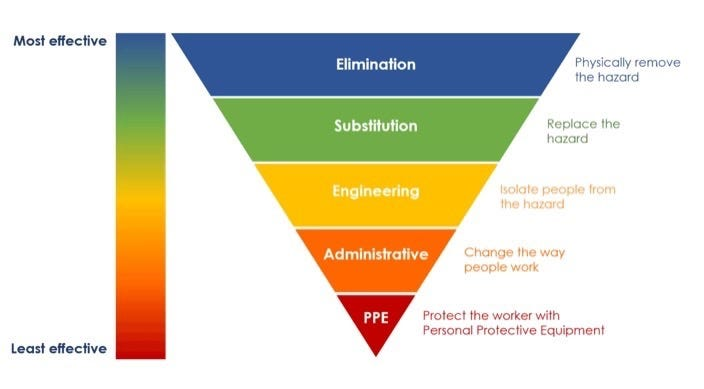
Mask wearing for staff, residents and visitors is a key factor in the guidance so one would expect this to be based on sound evidence, particularly as masks, the most emotive aspect of Personal Protective Equipment (PPE), sits at the bottom of the hierarchy of IPC controls. Simple but effective hand washing, given scant attention, could easily sit at the top of the hierarchy.
Since 2020, government ministers have dismissed my concerns about the negative impact of mask-wearing on people with dementia and other cognitive and sensory impairments and those who care for them. The Scottish Government insists that guidance is based on the best available evidence provided by the Antimicrobial Resistance and Healthcare Related Infection team (ARHAI).
Despite eliminating long established gold standard evidence on the absence of mask efficacy, ARHAI’s recently published literature review on surgical masks finds that conclusions cannot be made based on the results of limited experimental studies which are unable to demonstrate the true protective effect of surgical masks to prevent onward transmission of respiratory infections. However, it goes on to say that despite the general lack of high quality evidence, extant guidance on mask use is consistent in advising that surgical face masks are worn by staff where there is a risk of respiratory infection exposure or transmission.
Extant, a new word for me, means existing or surviving, the implication being that ARHAI’s advice to the Scottish Government is based not on evidence but a myth which has developed from repeating the mantra that masks work over the last six years. Prior to and in the early days of 2020, the robust evidence on the ineffectiveness of masks to prevent the spread of respiratory particles was accepted until political leaders made an astounding U-turn, which has continued as the new and now accepted extant guidance. You can watch it happening in this video from Smile Free.
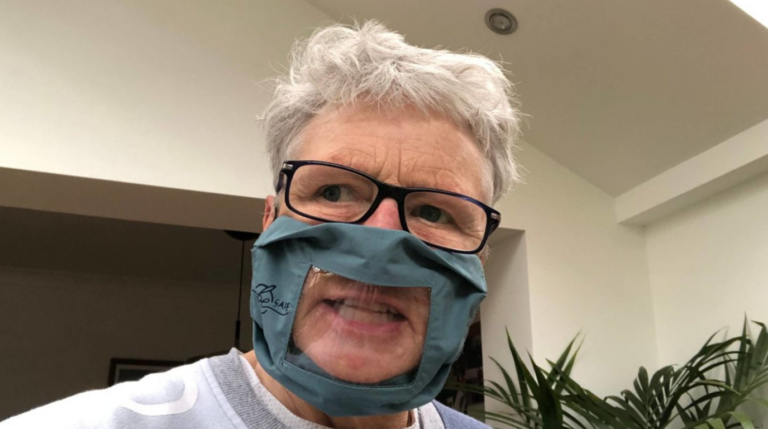
Accompanying the literature review are Considered Judgement forms, which are equally thin on the evidence on the protective nature of surgical masks, resorting to extant guidance as recommendations for use. Despite this, however, benefits are assumed to outweigh risks which are limited to communication problems (resolved with equally problematic clear masks) for residents and potential discomfort for staff. Mask-wearing will never be clinically (or morally) appropriate in care homes as the majority of residents have a diagnosis of dementia or some other cognitive or sensory impairment. Harms, many of them life-threatening, extend far beyond communication and discomfort, as detailed in this benefit-risk analysis.
Despite the general frailty and vulnerability of residents, a care home is their own home and not a clinical area, as assumed by the guidance. PPE (masks) and vaccinations are conveniently prioritised at the expense of promoting better than acceptable staffing levels to ensure good hydration, nutrition, personal hygiene, healthy sleep patterns, access to sunshine and fresh air, meaningful occupation, social interactions and even exercise, all of which play a vital role in preventing sickness and promoting good health.
The manual along with a more specific guidance document encourage staff to suspect an infectious respiratory illness in residents with cold or flu symptoms. These residents will be expected (where tolerable) to wear a surgical mask when they leave their room or when somebody enters their room. This is likely to morph into default isolations with associated life-threatening risks, which should be formally recognised and reported as protection issues. How will exhausted and under-resourced staff ever be able to balance stringent IPC requirements with the person centred approaches expected in Anne’s Law Code of Practice (which I’ve reviewed here).
Other than dreading ending our lives in one, it’s likely that the majority of the population have little or no experience of care homes, which makes it easier to turn a blind eye to what’s going on behind closed doors. But winter is looking very bleak for this vulnerable community unless we collectively take a moral stand against this disproportionate approach to infection control. I’d love to be proved wrong, but it doesn’t seem likely that a politician will be prepared to lead the way.
Valerie Nelson is an independent Mental Health Trainer and Consultant. Subscribe to her Substack page.


Discussion
Comments
This week across the site:
To join in with the discussion please make a donation to the Daily Sceptic.
Profanity and abuse will be removed and may lead to a permanent ban.
This ends when people just stop doing it.
Sadly there is an inate streak of cruelty in some people who have little power generally. When over cautious safety rules can be invoked it gives them an opportunity to exert authority which also in their head gives them the moral high ground.
Also evidence has little or no effect if you believe something to be true… mask wearing is the perfect example.
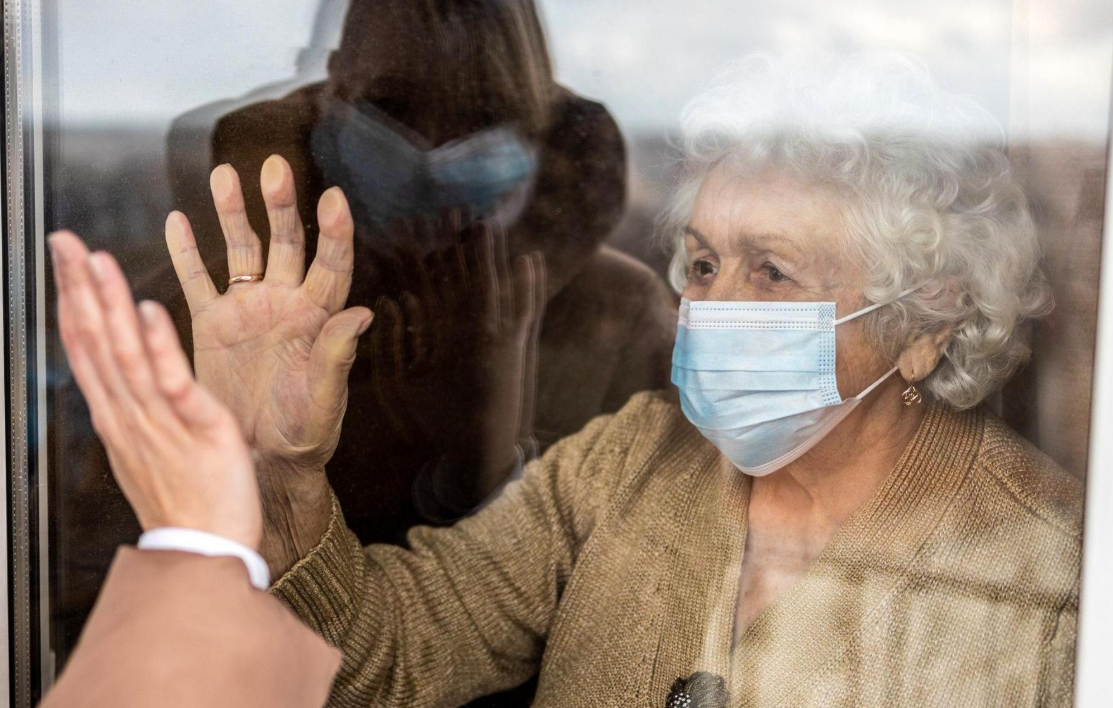
That photograph really jolted me. It reminded me of the last time I saw my mother alive at a “window visit” during Covid. Hands touching across glass.
Why is this still going on.?
God knows. We had this last year. I told the staff “I don’t wear masks” and that was that. Why the hell the staff still do …?
Because no one cares about the quality of life of Ol Whitey.
In 2020/21 the rules care homes were expected to follow applied to all care homes including those for people with learning disabilities. Thinking about the homes I used to work in it would of been an absolute nightmare. The residents went to day care Monday to Friday, without this and without being able to go out they’d get bored and frustrated, this would of lied to a lot of challenging behaviour. The only way to get a lot of them to keep a mask on would of involved copious amounts of gaffer tape. If testing involved a nasal swab some of the residents would probably had to of been physically restrained to take the swab.
I’m glad I no longer did care work and didn’t have to get involved in mandatory torture.
I wonder how many members of staff showed as much compassion and humanity as possible and did what I would of done.
I would of volunteered to do the swabbing, gone into the resident’s bedroom with them and stuck the swab up my nose. As long as the home sends off the correct number of swabs when required who would know that most of them had been up the same nose?
In 2 homes I worked in I was a senior support worker and therefore shift leader most shifts, occassionly they’d be 2 seniors on shift. If I was 100% sure I wasn’t going to be snitched on there would of been no mask wearing and residents could go out, obviously there wouldn’t of been much they could do other than go for a walk, for as long as they wanted rather than just the recommended half an hour of exercise per day.
…would have…
Not “would of” and similar.
I know my ability to write proper English leaves a lot to be desired and don’t need to be reminded of this. Sadly I just don’t seem to be able to remember things people say about my English and improve.
Try harder
I think you got your point across fine…