

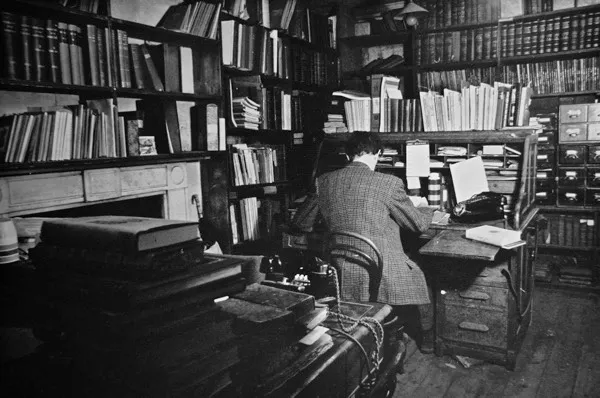
Scanning my bookshelf the other day, I found myself wondering why one returns to certain books while others are left to gather dust. My regular returnees comprise an eclectic assortment: Graham Greene’s The Quiet American; Paul Scott’s Raj Quartet; J. G. Farrell’s The Singapore Grip; Jean Lartéguy’s The Centurions; Paul Theroux’s travel writing; Jon Swain’s River of Time.
I did not grow up in a particularly literary household. Neither of my parents had what we would now call (laughingly or otherwise) ‘higher education’. My father was, however, a formidable autodidact whose bookshelves far exceeded his formal education. It was on those shelves that I first discovered Paul Scott. The others arrived by different routes, though a boyish fascination with empire, distant places, soldiers and history undoubtedly helped matters along.
The older I have become the more I realise that I revisit these books for very different reasons. They are not simply works about colonialism, exotic landscapes or conflict. They describe something more elusive and poignant: what it feels like to transit through historical epochs, when assumptions that once seemed solid begin to dissolve. It is what one might call ‘twilight literature’.
Twilight literature
The allure of this genre lies in its ability to describe societies passing from one political and moral world into another. The Singapore Grip is set amid the collapse of Britain’s supposedly invulnerable fortress in the Far East in 1940–41; the Raj Quartet during the final years of British India; the Quiet American in the aftermath of French rule in Indochina. Lartéguy follows French paratroopers from the defeat at Dien Bien Phu into the even more brutal war in Algeria, explored in his sequel, The Praetorians. Jon Swain records the final years of American adventurism in Vietnam and Cambodia, while Theroux travels through the remnants of empire decades later, surveying what it left behind and how, amongst other things, societies have been fashioned in its wake.
Written in different countries, about different countries, at different times, from different perspectives and in different literary forms, these works nevertheless belong together. Some are novels. Others are memoirs or travel writing. All are drawn to the peculiar experience of living through one world before it has entirely given way to another.
These volumes have also remained companions because much of my own life has been spent on the edges of such transitions; not, I sometimes lament, as a participant in the great events themselves, but as an observer moving between countries, institutions and historical moments. Their familiarity has always owed as much to recognition as to admiration.
The argument and the atmosphere
The lasting appeal of these works becomes clearer when they are contrasted with current affairs writing. Newspapers, magazines, podcasts, YouTube channels, Substacks and social media all promise to explain what is happening in the here and now. Much of it, no matter how thoughtful or perceptive, is ephemeral. It explains what happened yesterday and speculates about tomorrow, then fades from view. The contemporaneous nature of such commentary also means it quickly turns to causes, blame and competing remedies, generating no shortage of outrage and, as the popular vernacular now has it, ‘slop’.
Twilight literature, by contrast, has altogether different preoccupations. It records what might, metaphorically speaking, be called the historical weather: the moral atmosphere, public temperament and suppositions of societies that still feel superficially normal to those living through them, but which are nevertheless on the verge of transformation.
Greene, Orwell, Scott and the other writers in the genre direct their attention towards the social and psychological life through which we can, in hindsight, perceive how such great events unfolded. They notice conversations, loyalties, manners and the little absurdities of everyday life while the society around them changes, sometimes subtly, sometimes dramatically. Through such observations, the vanished world regains its ordinary human dimensions.
The later travel writers continue the story from a different vantage point. Paul Theroux, in many of his novels and travelogues, from Saint Jack and the Consul’s File to Dark Star Safari, to V. S. Naipaul’s A Bend in the River or Tiziano Terzani’s A Fortune Teller Told Me, arrive after the flags have come down and the administrators have gone home. They explore empire’s afterlife: its institutions, memories, flavours and the traces it leaves behind.
The Saigon op-ed
To illustrate the point: no ordinary reader would seek out an op-ed published out of Saigon in 1955 to understand the convulsions following the collapse of the French empire in South-East Asia. Such pieces are now merely chronological artefacts. They preserve the arguments of the period, but their principal audience today is probably confined to historians and anyone who has taken a wrong turning in the archives.
People will, however, still return to the Quiet American. Greene was not trying to win an argument or draft tomorrow’s policy paper. His Saigon is populated by journalists, diplomats, soldiers and idealists, each convinced that he understands what is happening. The reader gradually comes to realise that none of them really does – or could possibly have done in their own time. Greene records uncertainty before history supplies its verdict and, as it happens, he does so with remarkable prescience. The same quality runs through Scott’s India, Farrell’s Singapore, Lartéguy’s Algeria, Swain’s Vietnam and Cambodia, and, later, Theroux’s journeys through places where empire has become a distant memory.
Good literature and travel writing therefore illuminate something that contemporary commentary rarely can. They allow later generations to experience the historical weather before the storm has blown through. That is why these books continue to speak long after the worlds they describe have slipped away.
Britain in transition
Bringing these musings into the present, I think Britain can profitably be read through this tradition of colonial twilight literature. Current media output produces a veritable blizzard of commentary. Every week brings another debate about immigration, identity, economic decline or institutional failure. Some of it will be insightful, but much of it, like most of the essays I have ever written, enjoys a brief moment of self-importance before disappearing into the historical twilight itself.
The twilight writers leave behind more than memorable books. They offer a way of seeing. What happens, we might ask, if that same perspective is turned towards Britain after the Cold War? Thirty years from now, readers wanting to understand what Britain felt like during this period are unlikely to begin with newspaper columns, podcast transcripts or social media exchanges. They will look instead for writers who succeeded in capturing the spirit of the times rather than merely adding their voices to its clamour.
After history
A twilight writer of our own time might begin with a simple question: what sort of country had Britain become? The outlook that developed after the Cold War, they may have concluded, was a cast of mind rather than the preserve of any one party or manifesto. Different governments emphasised different priorities, but they increasingly worked from the same broad assumptions about the direction in which Britain, and indeed much of the West, was travelling. It could be called the era of the Last Consensus.
Our putative narrator would notice the scale of the changes passing through British society. Immigration would loom particularly large. He or she might be struck by how readily movement on a scale without modern precedent came to be regarded by the ruling elites as something to be managed rather than debated. Cheap labour would sustain the economy, diversity would enrich society and any lingering doubts could be attributed to insufficient enlightenment. Beneath it all lay an unspoken conviction that everyone, given the chance, was destined to become an interchangeable liberal democrat with cosmopolitan tastes, an enthusiasm for diversity training and, in due course, a working knowledge of the lyrics to Imagine.
More intriguing, perhaps, would be the questions that scarcely seemed to arise at all. Were these population inflows necessary in the first place? Had the electorate consciously endorsed them? What would they mean for the texture of British life a generation hence? Raising such questions, our writer might note, was rather like querying the route after the train had already left the station.
The twilight novelist would notice how readily multiculturalism came to be presented as a positive description of ‘Cool Britannia’s’ future. Courts, regulators and an expanding archipelago of independent public bodies would assume an ever-larger role as more areas of public life came to be understood as questions of administration rather than politics. Governments would continue to quarrel over taxation, spending and public services. Politicians and commentators would witter away with inexhaustible confidence. The public would dutifully recycle its rubbish, update its pronouns, wonder whether Winston Churchill required cancelling and complain about the price of a pint. All the while, a social revolution would be proceeding remarkably peacefully, helped enormously by the fact that nobody had been asked.
There would always be dissenting voices questioning the consensus, of course, though they would inhabit the margins as dangerous ‘loonies’, ‘fruit cakes’ and ‘closet racists’ (to borrow David Cameron’s choice description of UKIP supporters). One visualises Peter Hitchens as an eccentric figure in an updated British version of Scott’s novels, though one suspects the author would struggle to settle on suitable titles: the Fool in the Crown, the Day of the DEI Hire, the Towers of Compliance; A Division of the Diversity Quota. The Farage Quartet, I don’t know.
Our twilight writer might make much of how frequently governments changed while the ruling orthodoxy stayed the same. New Labour’s breezy optimism and Tony Blair’s 1999 declaration of a war on the “forces of conservatism” belonged to a political culture that saw little reason to defend itself. By the closing chapters, however, the age would have accumulated enough wreckage to make “Things Can Only Get Better” sound less like an anthem than a threat.
A future British twilight novel in the mould of Evelyn Waugh might culminate with Sir Jason Arday ascending to the office of First Lord of the Treasury, shortly before Peter Hitchens meets his tragic, if somewhat ironic, demise beneath a runaway Overton Window that has fallen off the back of a council lorry.
A Passage to Pret a Manger
Once the Overton Window comes loose from its fittings, there is no telling where it will end up. By now our twilight writer would have opened a new notebook. The interesting part had finally begun.
Immigration had for years been discussed in terms of labour shortages, skills gaps and Treasury forecasts, largely to fill a strangely persistent vacancy at Pret. Fraser Nelson might appear as a Treasury economist in a crowded railway carriage, boring the living daylights out of six passengers standing in the vestibule with the news that another 10 million people had triumphantly raised GDP by 0.0,637%. None could find a house or a dentist, but Fraser had a graph proving that they had never been better off.
Meanwhile, down at the police station, a blue-haired desk sergeant with tattoos and a nose ring explains to a weary householder that there are insufficient resources to investigate their burglary: 26 officers, 10 squad cars and the constabulary helicopter are presently engaged in arresting a pensioner who said something on Twitter. At the University of Cambridge, Vice-Chancellor Gary Lineker welcomes the new intake with a lecture on intellectual courage before cancelling three speakers, abolishing the history department and converting the library into a Centre for Decolonial Wellbeing.
The Guardian sends a columnist to investigate the alarming growth of intolerance among people who object to all this. In the bowels of Thames House, Dame Emily Maitlis, now Director-General of MI5, convenes a meeting of COBRA after intercepted communications reveal that three people in Newport Pagnell have expressed reservations about multiculturalism. The threat level is raised to Severe. At the Home Office, the Research, Information and Communications Unit establishes CARE, the Centre for Attitudinal Reform and Engagement, to determine why the public continues to hold unauthorised opinions despite 20 years of expert guidance. Focus groups identify troubling residual attachments to borders, flags, pubs and Christmas. The Behavioural Insights Team, the ‘nudge unit’, once employed to encourage people to eat vegetables and pay their tax on time, now has surveillance powers, detention facilities and an interrogation wing outside Swindon.
In No 10 Downing Street, Prime Minister Arday and his close advisors spend the afternoon devising emergency measures to defend democracy from voters, free speech from speakers and tolerance from dissent. By five o’clock, Britain has been made safe for diversity for another day.
The road to Woke-on-Trent
Beyond London, however, there are signs that the natives have become restless. Deep in the Forest of Dean, the outlawed comedian John Cleese has joined forces with the renegade Professor David Betz to organise a partisan resistance movement composed of publicans, retired colonels, small businessmen, disgraced academics and several thousand people permanently suspended from Instagram for reasons nobody can now remember. The Government classifies them collectively as the neo-Visigoths.
Their programme is alarmingly primitive. They demand functioning borders, policemen who catch burglars, universities that permit arguments, affordable beer and the restoration of several nouns now available only on prescription. CARE immediately designates the movement a threat to social cohesion. Dame Emily orders the Security Services onto a war footing. Lord Lineker closes the university as a precaution and flees to Monaco, citing Britain’s declining tolerance of diversity before establishing a government-in-exile from a gated apartment overlooking the Mediterranean.
Then comes the intelligence report everyone had feared. A partisan column has been sighted advancing south from the Midlands. At the Watford Gap services they overwhelm a lightly armed but heavily credentialled detachment of diversity consultants, BlueSky users and regional coordinators for Hope Not Hate, and seize the Costa Coffee outlet. Cleese addresses the nation from the northbound forecourt. Betz is reported to be studying the road network.
By nightfall, the M1 is closed in both directions. The BBC advises viewers to remain indoors and avoid unauthorised displays of national identity. The Guardian publishes an emergency editorial entitled “This Is Not Who We Are, and We Will Arrest Anyone Who Says Otherwise.” Somewhere beneath Whitehall, CARE begins interrogating the polling data while police conduct precautionary dawn raids on several thousand people identified through suspicious patterns on the Wetherspoons app.
Our twilight novelist closes his notebook. The interval is over.
The civil war is upon us.
Returning to the bookshelf
Looking again at the shelf, I wonder what volumes might eventually join them. Some future Paul Scott may yet give us the Clacton Quartet, while a latter-day Greene records the melancholy career of a junior CARE official who falls in love with a proscribed Reform voter during the siege of Watford Gap: the Compliant American. Orwell might return with Birmingham Days or Shooting an Elderly Racist.
Theroux would wait until the fighting had subsided. Thirty years later, now impossibly old and bad-tempered, he would board a train from Paddington, Virgin Rail having survived the ravages of war, 46 changes of government and another £40 billion in public subsidy, and set out to discover what had become of the country. He would travel through the former combat zones of Leicester and Luton, interview veterans of the Battle of Milton Keynes, inspect the abandoned CARE interrogation facility outside Swindon and eventually reach the monument marking the spot where Cleese first addressed the nation from the northbound forecourt. Betz, by then fortified in a farmhouse somewhere in the Welsh Marches, would agree to be interviewed but refuse to disclose the location.
The journey would take Theroux through towns whose high streets had, somehow, survived the revolution intact: Turkish barbers, fried chicken emporia, phone repair kiosks, pop-up luggage shops, Greggs. In London he would find the old institutions restored to their former premises under new names and staffed largely by the same people. CARE would have become the Office for Democratic Integrity and Social Trust and issued a statement regretting certain ‘excesses’ committed by an entirely different organisation with which it happened to share the same staff, offices and filing cabinets. The BBC, having backed the losing side, would mark the 30th anniversary of the civil war with a six-part series entitled How Russia Won the Battle of Milton Keynes.
Theroux would observe all this with mounting irritation, fill several notebooks and return home by train, with a replacement bus from Reading.
The notes would eventually appear as the Great Vape Shop Bazaar.
Michael Rainsborough is Professor of Strategic Theory and Director of the Centre for Future Defence and National Security, Canberra. He maintains a completely inactive Substack called The Duke of Nuke.


Discussion
Comments
This week across the site:
To join in with the discussion please make a donation to the Daily Sceptic.
Profanity and abuse will be removed and may lead to a permanent ban.
Terrifyingly prescient, a semi-comical précised version of ‘1984’, but with a slightly happier ending.
Ouch. I am now depressed. I hope the novel will have a happy ending.
On my online bookshelves there a File, “plagiarism #MeToo”, until this week was C&P (copy and paste). Only platinum grade authors’ goods have been rendered worth pilfering; Dominic Green, Douglas Murray, David Starkey, Laura Dodsworth…and now Michael Rainsborough (I hope you don’t mind, Michael, as I often do not give references)
It is NOT OK to copy & paste without quotation marks. You don’t have to give precise references if unavailable, as long as you give credit where it is due, using quotation marks for the quote and naming the one who said it. If you can’t remember who said it, or it’s a pseudonym on a public comment somewhere, just say “public comment” or “as someone once said”, so people know it is not yours. That is fair and honourable.
I remember way back in the seventies when I was very young I thought to myself that the Empire would soon look like a graph that started low on the bottom left, climbed up in the middle (Empire) and then shrunk away back down again in the bottom right corner. —-Jeez I must be some kind of prophet. We are steadily heading towards the bottom right hand corner just as I imagined way back then.
Oh how I wish I had bought that house in the Forest of Dean when we returned to Blighty. Sounds like fun – but the wild boar are a bit of a pain.
Absolutely brilliant!
This is definitely a novel that needs writing! But why is there no Anglophone Houellebecq?
A wonderful book is The World of Yesterday by Stefan Zweig describing a similar phenomenon after the Great War, from a Viennese viewpoint.
Greggs would be the first to be looted. They already are.
There’s also twilight music. Don Maclean’s American Pie studies twilight from a different American perspective.
If anyone wrote anything about the twilight of empire as the shadows lengthened in 5th century Britain, nothing of it has survived. Bede could only describe the situation in his day, as it has gradually developed in the centuries before him.
Essentially, this was a new identity. The 5th century was a time when new identities were being formed after the old one no longer served any purpose. Britain today is in another 5th century.
Deleted by me…
^ That was supposed to be on the News Roundup.
I clearly failed to edit it out in time.
Perfectly understandable old chap. Care for a refill?