


Toby Rogers has built his reputation on a single, powerful claim: that vaccines and environmental toxicants cause essentially all of the autism epidemic in virtually every affected child. That claim finds its fullest expression in his May 2025 Substack piece, ‘Mapping the entire field of autism causation studies‘ – effectively his apologia pro vita sua: the culmination of his Public Policy doctoral thesis and subsequent years of advocacy. Rogers promises a shortcut: “You don’t necessarily have to read each article individually… there is a way to move through all of the literature at a meta level that I believe leads to the right answer.”
My previous piece in the Daily Sceptic addressed the broader problem of dissident science’s hardening into orthodoxy. This piece is different and narrower: a section-by-section review of Rogers’s guide – the studies he elevated, the ones he dismissed and the methodology behind each judgement. What Rogers leaves out matters most: that ‘autism’ itself is not one thing, that its diagnostic boundaries have shifted dramatically since 1980, and that a surge in a label whose definition keeps expanding tells us far less about causation than his certainty suggests.
Competing realities, one outcome
Two frameworks compete to explain the autism epidemic: one holds that rising prevalence reflects a genuine biological surge driven primarily by vaccines and environmental toxicants; the other holds that the numbers require scrutiny before causation can be assigned – that shifting diagnostic criteria have moved the category’s boundaries so substantially that the epidemic may be partly (or largely) a measurement artefact. But before either framework can be evaluated, a prior question demands an answer: what, exactly, is autism?
The diagnosis has been redefined four times since 1980, with each revision expanding the boundaries and absorbing new populations. The category now stretches from profoundly disabled nonverbal children to highly functional adults whose primary challenge is social navigation. Calling both ‘autism’ is like calling both a housecat and a leopard simply ‘cats’ – technically defensible, practically misleading. Until the specific subsets of autism’s purported growth are properly classified, no causal argument can be properly framed. Rogers proceeds directly to causation. This is where and how his mapping goes wrong, long before the first line is drawn.
Rogers’s ‘Mapping‘ article represents his most ambitious attempt to settle the question in favour of the first framework. Amongst the 850 studies it covers, Rogers dismisses as methodologically invalid all 22 studies which found no vaccine-autism link, elevates as definitive six vaccinated-versus-unvaccinated studies, and (thus) condemns as the primary driver of the autism epidemic the CDC vaccine schedule.
Narrative first, evidence follows
Rogers opens with a principle that sounds rigorous but recalls the HR joke, ‘Whenever we’re hiring, I shred half the applications… so as to avoid the unlucky.’
It seems to me that the proper way to understand the autism epidemic is to read everything that has been written on autism causation, throw out any studies that are characterised by a financial conflict of interest or fatally flawed study design, and see what patterns emerge from the papers that are left.
By his own standard, the survey is incomplete in a specific and consequential way. Rogers dismisses the entire genetic literature by cataloguing five large genome-wide association studies – AGRE, SSC, ASC, MSSNG, SPARK, gene-hunting projects that searched for specific causal variants and came up largely empty – and concluding that genetics is a dead end. But this answers only the first of two necessary questions.
- Can we find specific genes that cause autism? Rogers looks at AGRE, SSC, ASC, MSSNG and SPARK, concludes they found nothing meaningful, and declares the case closed.
- The one he never asks: What proportion of autism risk is genetic, regardless of whether we can identify the specific genes?
He conflates these two distinct questions, answers only the first, and declares the field exhausted. As I discuss below, the heritability literature that he never engages tells a very different story.
This omission carries an irony Rogers does not appear to notice. His own causal model – vaccines and toxicants triggering immune activation in susceptible children – implies, and arguably requires, genetic variation to explain why some children are affected and others receiving identical vaccine schedules are not. By dismissing the heritability literature as irrelevant, Rogers has removed the mechanism that would explain his own theory’s most obvious weakness: why only some vaccinated children are susceptible to developing autism. His framework produces a trigger without a susceptibility profile – which is not a complete causal model.
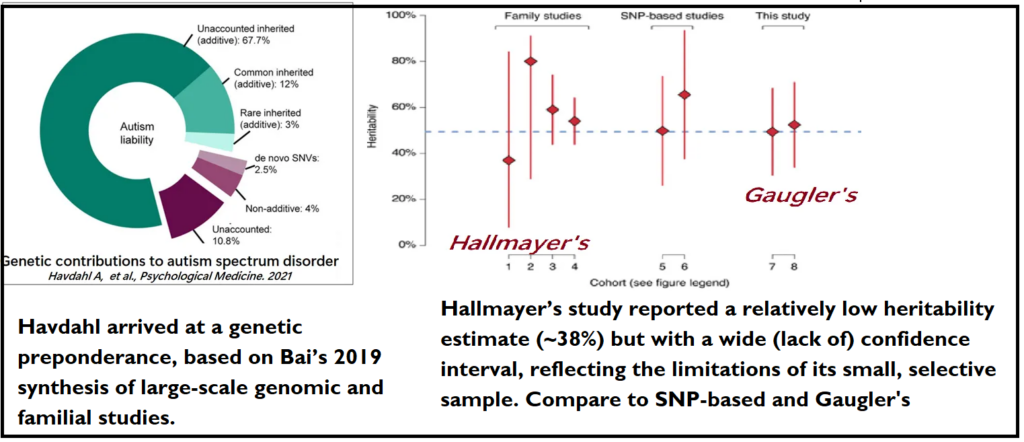
A 2021 multi-institutional review by Havdahl et al. (drawing on researchers from Oslo, Vanderbilt, Aarhus, MIT/Harvard and Cambridge) synthesised the large-scale genomic and familial literature, ultimately concurring with Bai (2019) that genetic factors account for the preponderance of autism risk. Rogers engages none of this literature.
Toby Rogers’s Senate testimony (September 9th 2025) makes his destination explicit: “The autism and chronic disease epidemics are primarily caused by toxicants – mostly from vaccines.” On Substack he has written: “We know what’s causing the autism epidemic. The bloated, unscientific, profit-driven CDC vaccine schedules are causing the autism epidemic.” And separately: “Autism appears mostly to be a story of iatrogenic injury from vaccines.”
Verdict: Rogers conflates two distinct scientific questions: whether specific genes cause autism (still largely unanswered by genome-wide association studies) and whether genetic predisposition shapes susceptibility (consistently affirmed by large twin registries). By answering the first and declaring the second irrelevant, he dismisses or ignores a body of evidence, including studies with multimillion-person cohorts.
The diagnostic expansion Rogers won’t acknowledge
The single most important thing missing from Rogers’s survey is any serious engagement with the expanding diagnostic net as a driver of rising autism prevalence. This is not a peripheral issue; it is arguably the central methodological question. Its absence is not a footnote – it is a structural void that distorts everything else.
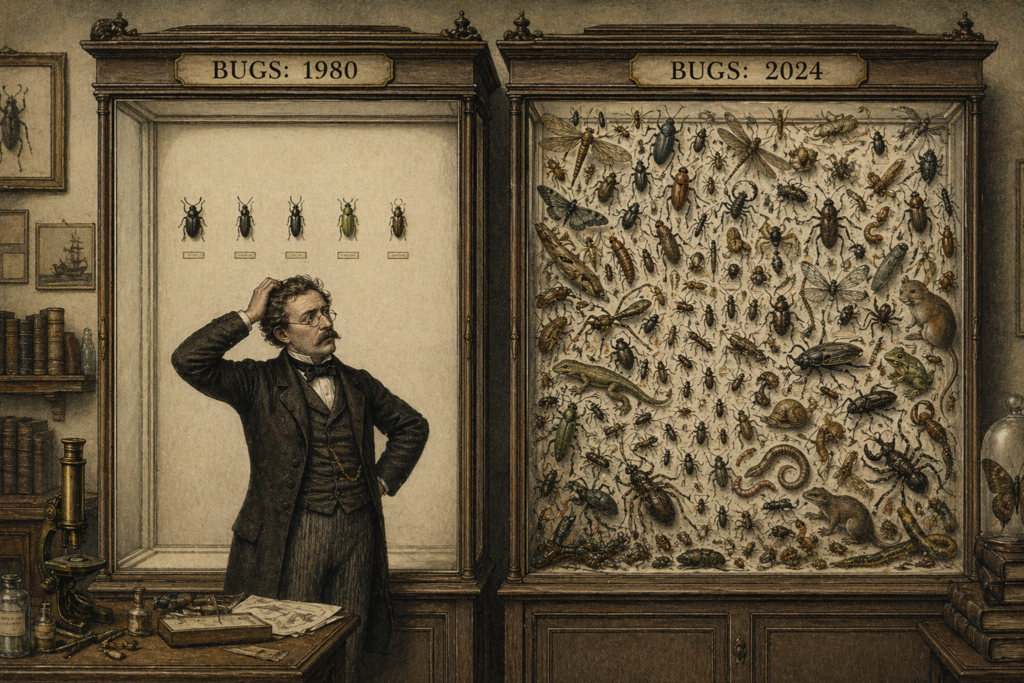
Consider what might be called the ‘bug’ problem. If in 1980 you called only beetles ‘bugs’ and by 2024 you have expanded the category to include spiders, mosquitoes, flies, moths and anything that generally ‘bugs’ you, you will observe a spectacular explosion in the ‘bug’ population. You could then build an elaborate causal theory about what environmental factor caused this explosion: an obvious category error.
In 1980, DSM-III formalised autism as a developmental disorder for the first time. In 1994, DSM-IV added Asperger’s syndrome and PDD-NOS (Pervasive Developmental Disorder Not Otherwise Specified) – capturing individuals with average or above-average intellect who would never previously have received any developmental diagnosis. In 2013, DSM-5 merged these categories into a single spectrum, dropped the requirement that symptoms cause “clinically significant impairment” and removed the prior exclusion that had prevented simultaneous diagnosis of both ASD (Autism Spectrum Disorder) and ADHD (Attention Deficit Hyperactivity Disorder). Each revision expanded the net; each expansion produced a measurable rise in caseloads.
The substitution effect is documented in California administrative data. In 1992, roughly 72% of autism cases carried a co-diagnosis of intellectual disability. By 2005, that figure had fallen to 37% while total autism caseloads exploded. King and Bearman (2009) estimated that roughly one quarter of the California increase was attributable to pure diagnostic substitution – children previously labelled intellectually disabled being reclassified as autistic as the criteria shifted. SSI disability data show autism allowances rising in near-perfect mirror image to declining intellectual disability allowances between 2004 and 2013. Autism without intellectual disability increased 13-fold between 1992 and 2005. The new cases were overwhelmingly mild. The category had expanded to encompass the quirky, the shy, the intensely focused, the socially awkward – populations that exist in every generation and were never previously captured under any clinical umbrella. Rogers acknowledges in passing that some fraction of the increase is diagnostic, citing Byrd et al. (2002) and Hertz-Picciotto and Delwiche (2009) as evidence that diagnostic change explains only “a small fraction” of the rise. But both studies were conducted before the full DSM-5 expansion.
Rogers’s own 2019 doctoral thesis engages the diagnostic expansion question in its section 1.8, but conspicuously omitted King and Bearman (2009), which uses the same California Department of Developmental Services databases as Byrd and Hertz-Picciotto to document something more telling: the growing divergence between autism and intellectual disability seen in the ‘un-eclipsing’ GIF below, created by extending those same databases forward to 2024.

In 1992, autism with intellectual disability accounted, as noted, for 72% of all autism cases (3,210 of 4,446). By 2020, that figure had collapsed to 21.5% (26,486 of 123,190). Over that same period, autism without intellectual disability grew from 1,236 cases to 96,704 – a 78-fold increase! – while autism with intellectual disability grew only eightfold. The explosion is not distributed evenly across the spectrum. It is concentrated overwhelmingly at the mild end: precisely where diagnostic expansion operates, and precisely where a primary toxicological driver would not (and likely could not) predict it.
Arvidsson, Gillberg, Lichtenstein and Lundström (2018) tracked autism symptom severity in Swedish 13 year-olds, finding that as diagnoses rose, the average symptom score steadily declined – suggesting that the “autism” category to capture progressively milder cases (chart clarified by Jordan Lasker, PhD).

If vaccines were the primary driver of the autism surge, one would expect the growth to be distributed proportionally across all severity levels – severe, moderate and mild alike. It is not. Rogers’s map has no chapter for this finding because his framework offers no explanation for it.
Verdict: Diagnostic expansion (acknowledged even in Rogers’s cited sources as a meaningful contributor) is systematically minimised. The entire causal analysis rests on a category that was not stable across the period being studied, and the severity distribution of new cases tells a story Rogers’s ‘Mapping’ cannot accommodate.
The trouble with Hallmayer
Rogers leans heavily on Hallmayer et al. (2011) – the California twin study finding heritability of approximately 38% – to argue that genetic causation is modest and environmental causes must therefore dominate. In the geography of autism’s twin-research, Rogers presents Hallmayer as the commanding summit; but its best use might be in comparison to larger studies.
Hallmayer’s study involved only 192 twin pairs with a 17% participation rate – meaning 83% of invited families declined. This raises serious concerns about selection bias toward more severely affected children whose parents were more motivated to participate. The confidence intervals are so wide (see gene-study image above) as to be nearly uninformative for population-level conclusions.
The actual ‘peaks’ of the twin literature are the Scandinavian registry studies Rogers dismisses or ignores. Sandin et al. (2014) analysed the entire Swedish birth cohort from 1982 to 2006. Bai et al. (2019) synthesised data from five Nordic countries encompassing over two million individuals. These studies consistently place heritability between 50% and 83%, with tight confidence intervals reflecting the statistical power of national-scale samples. Gaugler et al. (2014), using SNP-genotyping across a large population cohort, estimated roughly 52% of autism risk derives from inherited genetic variants.
Rogers’s preference for a 200-family California convenience sample over multimillion-person Scandinavian birth registries is not following the evidence. It is selecting the scenic overlook because the view from the actual summit does not match the postcard.
Rogers argues that “genes don’t suddenly create epidemics” – which is true, but irrelevant if diagnostic expansion accounts for most of the apparent epidemic. The argument against genetic primacy is only compelling once reclassification has been ruled out. It has not been.
Verdict: Rogers selects the smallest, least statistically reliable twin study to minimise genetic heritability, while ignoring far larger Scandinavian registries. The double standard is directional, not methodological.
One theory to rule them all
Rogers crowns six vaccinated-versus-unvaccinated studies as definitive evidence: Gallagher and Goodman (2008, 2010), Mawson et al. (2017a, 2017b – preterm infants), Mawson and Jacob (2025) and Hooker and Miller (2021). He calls these “the highest odds ratios I’ve ever seen in any study of autism causation”. These studies deserve honest engagement rather than reflexive dismissal – the signals are real, the odds ratios are large and they warrant rigorous follow-up with better methodology. But “warrant rigorous follow-up” is not the same as ‘prove causation’.
Mawson et al. (2017a, 2017b) relied on a convenience sample of 666 homeschooled children recruited via anti-vaccine networks, producing two papers from the same dataset simultaneously. Funding came primarily from Generation Rescue, the organisation associated with Jenny McCarthy’s vaccine-autism advocacy. Outcomes were based on parental recall without medical-record verification. The study was provisionally accepted by Frontiers in Public Health (where the assigned peer-reviewer was a chiropractor with no published research in vaccines or epidemiology), then pulled before formal publication. It was subsequently published in the Journal of Translational Science, a pay-to-publish journal ($2,000 for the privilege) characterised by multiple sources as “predatory“, after a legally contested publication history that included a disputed retraction. Selection bias (homeschooling families who actively avoid vaccines are not representative of the general population) and recall bias (parents who believe vaccines harmed their children may be more likely to remember and report symptoms) are both severe and unaddressed.
Mawson and Jacob (2025) improves on sample size – using Florida Medicaid claims data for 47,155 nine year-old children – but carries two unresolved methodological problems. First, the “unvaccinated” group was defined as children with no vaccine billing codes in Medicaid records; children vaccinated through the Vaccines for Children programme, private providers, pharmacies or other states would be misclassified as unvaccinated, corrupting the fundamental comparison. Second, and more revealing, the paper itself reports a dose-response relationship between vaccination visits and ASD diagnosis – children with one vaccination visit were 1.7 times more likely to be diagnosed with ASD than the unvaccinated, while those with 11 or more visits were 4.4 times more likely. This dose-response is presented as powerful evidence of vaccine harm. It is equally – and perhaps more parsimoniously – explained by the fact that children with more doctor visits have more opportunities to receive a developmental screening. Vaccinated children see doctors more often by definition; more doctor visits produce more diagnoses. The authors acknowledge this limitation but do not resolve it. Multiple independent epidemiologists have identified it as the study’s central flaw. Worth noting: the study was funded by the National Vaccine Information Centre – an explicitly anti-vaccine advocacy organisation – which, by Rogers’s own stated standard of disqualifying financially conflicted research, would remove it from his holy grail list entirely.
Hooker and Miller (2021) uses VAERS (Vaccine Adverse Event Reporting System) data – a voluntary self-reporting system explicitly not designed for epidemiological inference, with an unknown denominator and a self-selected numerator. Its use for prevalence estimation is methodologically inappropriate by the system’s own published documentation.
The double standard deserves naming directly. Rogers disqualifies the 22 studies finding no vaccine-autism link because they lack a fully unvaccinated control group – a genuine methodological concern. But his favoured vax-unvax studies fail to control for healthcare-seeking behaviour, socioeconomic status and diagnostic access in ways that are equally fatal to causal inference. He also dismisses CHARGE (Childhood Autism Risks from Genetics and Environment), MARBLES (Markers of Autism Risk in Babies – Learning Early Signs) ,SEED (Study to Explore Early Development) and EARLI (Early Autism Risk Longitudinal Investigation) for failing to control for vaccination status – while ignoring that his favoured studies fail to control for medical-care frequency. Maximum scepticism for studies finding no link; maximum credulity for studies finding one.
Verdict: The vax-unvax signals in the cited studies are real and deserve rigorous study with better methodology. The dismissal of large environmental cohort studies while elevating small convenience samples – one of which would fail Rogers’s own conflict-of-interest filter – reflects directional bias, not methodological consistency.
A map of the autistic multiverse
Rogers is right that many of the 22 no-link studies are methodologically weak. He is right that the genetics research industry has underdelivered relative to its funding. He is right that regression cases – children developing apparently normally then losing skills – are real and demand urgent, unbiased investigation. These contributions are genuine.
A complete map would also require: the diagnostic expansion chapter (the reclassification of intellectual disability into autism, the DSM expansions of 1994 and 2013, the shift toward mild-end diagnoses); the full twin literature rather than one selectively chosen outlier; and symmetric methodological scepticism applied to all studies regardless of which direction their findings point.
The real picture is multifactorial. Genetics loads the gun. Environment (including, possibly, vaccines in susceptible subgroups) pulls the trigger. Diagnostic expansion counts the casualties, often multiple times over, as the same child migrates from one label to another across successive DSM editions. Untangling these contributions requires acknowledging all of them.
Rogers’s two-trillion-dollar reparations agenda deserves more than a parenthetical. In his own words:
We need to set aside a trillion dollars to compensate autism families who’ve been injured by the childhood vaccine schedule. And we need to set aside a trillion dollars to compensate people hurt by COVID-19 vaccines. That is foundational to this country rebuilding and becoming a democracy again. We need to have a conversation about transitional justice.
“Transitional justice” is a term of art from post-conflict political theory – the framework applied after regime collapse, war crimes tribunals and truth commissions. It presupposes that crimes against humanity have already been committed, adjudicated and attributed. Rogers has embedded that presupposition inside what he presents as an open scientific question. This is not a research agenda. It is a verdict in search of a trial. And a two-trillion-dollar verdict demands evidentiary standards of the first order – not a map that omits the diagnostic expansion chapter, selects the smallest twin study in the literature and applies asymmetric scepticism to studies based on whether they confirm the conclusion.
The map, for all its sweep, does not meet that standard. No map of autism causation will be accurate until we first agree on what, precisely, we are mapping – and stop counting every light in the sky as a star.
Randall Bock, MD trained at Yale University (BSc, Chemistry and Physics) and the University of Rochester School of Medicine. He is a practising primary care physician and public health critic. His autism analysis, ‘Unraveling Autism’s Surge‘, was republished by Robert W. Malone MD as “essential reading… a treatise on the enigma scientists have labelled autism.” His works include ‘Investigating Zika-Microcephaly’s “Crash”‘ (American Journal of Medicine, July 2022) and Overturning Zika Find him on Substack and X.



Discussion
Comments
This week across the site:
To join in with the discussion please make a donation to the Daily Sceptic.
Profanity and abuse will be removed and may lead to a permanent ban.
The definition of autism has expanded so much since 1980 that using autism diagnoses as the measurement, to find a root cause, is mortally flawed. The measurement of autism itself is highly inconsistent, as the definition has changed and expanded so dramatically over time.
The statistical tools used to determine root causes are pointless unless the measurement is strictly defined and understood. As a chemical engineer employing the DMAIC tool from the Six Sigma process, I would not move forward to the Analyze phase until the autism definition is broken down into at least several clearly defined modes or levels. The lack of doing this invalidates much of the research into autism root causes these days.
Another point: Rogers uses his own judgment to throw out studies that he, and only he, determines are driven by a profit motive. This allows him to, consciously or subconsciously, throw out the studies that would contradict the conclusion in which he wants to reach – that vaccinations cause the nebulously defined “autism.”
“The definition of autism has expanded so much since 1980 that using autism diagnoses as the measurement, to find a root cause, is mortally flawed.“
That is simply not true. Autistic Spectrum Disorders under ICD 9 and 10 has been stable for decades. There has been no dramatic expansion,
If you say otherwise prove it – show us a timeline of how ASD has changed by reference to ICD 9 and 10.
Furthermore, most cases of ASD are either classical autism or Asperger’s Syndrome. Cases of what under Bock’s DSM 5 are called PDD-NOS are rare.
Pointing out diagnostic expansion is not denying severe autism exists. It is recognizing that the category itself changed substantially over time. If the measuring stick changes, prevalence statistics become harder to interpret causally. please see the GIF(s) within this article , in particular end of the phrase ” This second animation extends forward two decades using subsequent DDS Fact Book totals. The intermediate frames simply interpolate between reported annual counts. The visuals speak to the structural trend: autism’s diagnostic footprint expands relative to intellectual disability over time.” https://dailysceptic.org/2026/02/14/the-truth-about-autism-and-vaccines-doesnt-suit-either-side/
Diagnostic expansion involves more than DSM wording alone; ascertainment practices, school classifications, awareness thresholds, service incentives, and clinician behavior all changed over time. What has happened to mental health payments in general since we went away from pathologically-definable diagnosis-coverage to the more amorphous mental health parity? read here https://brownstone.org/articles/the-hidden-cost-of-mental-health-parity/
There has never been a diagnostic system for ASD based on pathology as the diagnosis is on behavioural symptoms.
There is no diagnostic expansion in the UK. There are difficult to meet requirements for state funding for educational provision or residential care for the most severe cases [~60%].
Formal diagnoses are required. These are normally by specifically trained psychologists and sometimes by psychiatrists using calibrated diagnostic instruments to ensure a diagnosis in one part of the UK is comparable to a diagnosis in another.
So kindly do not tell us in the UK what happens here based on what American physicians do in the US medical Wild West.
Yes MVS, you are definitely spreading disinformation.
DSM 5 contracted the definition of ASD and did not expand it. Exactly the opposite of your claim. So numbers of diagnoses in the USA should be reducing but instead they are continuing to expand:
Comparison of the Diagnostic Criteria for Autism Spectrum Disorder Across DSM-5, 1 DSM-IV-TR, 2 and the Individuals with Disabilities Education Act (IDEA) 3 Definition of Autism
Colleen M. Harker, M.S. & Wendy L. Stone, Ph.D.
University of Washington READi Lab (Research on Early Autism Detection and Intervention)
September 2014
See page 5
Summary of Research Findings Comparing DSM-5 and DSM-IV-TR Criteria for Autism
“Most studies report that DSM-5 criteria, compared to DSM-IV-TR criteria, result in fewer individuals diagnosed with ASD.
5-7,10,12,13 The reduction rate across these studies ranged from 25%-68%, though one study found only a 9% reduction, or sensitivity of .91. 8 One study reported that higher-functioning individuals in the PDD-NOS subgroup were less likely to receive a DSM-5 diagnosis of ASD than were individuals in the other DSM-IV-TR subgroups.10 While some studies reported that females, young children, and/or non-cognitively impaired individuals with a DSM-IV-TR diagnosis were disproportionately under-identified using DSM-5 criteria,4-6 others reported similar identification rates for these subgroups.8,13… Read more »
Randall Bock MD is firmly in the vaccines are “safe and effective” camp.
Who is Toby Rogers?
“On July 4, 2015, my then-partner’s son was diagnosed as being on the autism spectrum. I was in a Ph.D. program in Political Economy at the University of Sydney where I had access to almost all current scientific and medical journals. I wanted to better understand what was happening, so I went to the CDC’s webpage on the causes of autism. As a Ph.D. student I was trained to focus on primary source documents, so I read all of the references in their footnotes.
To my surprise, I quickly discovered that the CDC’s narrative did not add up:
Claims that autism is genetic don’t make sense because autism prevalence was rising too fast — there’s no such thing as a genetic epidemic.
Then the CDC blamed valproic acid, a treatment for epilepsy that is contraindicated in pregnancy, and thalidomide, which was never approved for use in the U.S.
Finally, the CDC pointed to advanced parental age; but the odds ratios were modest and the increase in the proportion of older parents is insufficient to explain the surge in autism prevalence.
Furthermore, the cost… Read more »
Well done to Toby Rogers for his dedication to helping expose the dangers of childhood vaccines! He and like-minded researchers have made a great contribution to humanity. “Unsung heroes” of their time, but may God bless them for it!
No serious physician evaluates medicine tribally. I am not “pro-vaccine” in the same way I am not “pro-antibiotic” or “pro-surgery.” Interventions belong in context. The central question is proportionality, evidence quality, risk-benefit balance, and diagnostic clarity. please see my clothing/anti-clothing analogy in the article originally that set Toby Rogers off, https://www.malone.news/p/unraveling-autisms-surge
Thank you for bothering to reply.
The article of yours that you linked to is almost a year old and although thorough doesn’t come down on one side or the other and relies heavily on previous studies that are mostly set up to fail as Big Pharma and government vaccine injury schemes have too much to lose for a causal link to be found between autism and vaccines.
Toby Rogers may or may not have been triggered by that article but the circumstantial evidence that vaccines are one of the major causes of autism is compelling.
What percent of autism cases are attributable to vaccines?
We now have an answer.
“Steve Kirsch was the first person to calculate a PAF for vaccines and autism but I was not aware of his work on this topic until after I calculated it myself. We both reached the same conclusions — Mr. Kirsch found a PAF of 75% to 80% and I found a PAF of 75.6% to 79.6%. This is an astonishingly high number, and it shows that vaccines are one of the largest preventable harms to the health of the public”.
https://tobyrogers.substack.com/p/what-percent-of-autism-cases-are?publication_id=436968&post_id=194737849&isFreemail=true&r=1ninci&triedRedirect=true
Why is the Daily Sceptic entertaining let alone publishing what is IMHO more drivel from Dr Randall Bock? I am shocked that the Daily Sceptic is breaching the right to free speech by publishing one-sided inaccurate and incorrect information. The right to free speech according the UK Supreme Court includes the right to know. By denying us balanced information infringes free speech by denying the right to know.
Why is it drivel? Because the proportion of the worst affected children with unmistakeable classical autism – the definition of which has not changed – has increased in direct proportion to all other categories over nearly four decades.
For two decades we had its “better diagnosis” and “greater awareness” but that became untenable because “better diagnosis” and “greater awareness” two decades ago does not wash two decades later. We were already better at diagnosis and had greater awareness long ago but the numbers kept going up.
1 in 14 school age boys in the UK is autistic. That is a shocking figure. Indeed the US CDC undercounts the numbers by focussing on 4 and 8 year olds. The average age of diagnosis of classical autism is 4 and for Asperger’s syndrome it… Read more »
Hah. The invisible downvoters who cannot find fault with what I write but downvote it anyway.
I wonder what the ‘autism’ rates are for the Amish peoples.
I don’t doubt that autism exists but to categorise people who are shy, introverted, those who need set routines as autistic/ADHD is wrong. Why do people want these labels for their kids and themselves. In the Uk these labels come with cash incentives thus reducing the need to work for a living.
Why can’t people who are bit ‘odd/eccentric’ be accepted as they are without the need for medicalising?
Regrettably some people want these labels for their children because there is money in it. Disability benefits, carers allowances etc. People with seriously affected children genuinely need the help but..?
Yeah, yeah, yeah, yeah.
Every time I hear this nonsense and challenge it it turns out there is no basis to it.
It is massively difficult to get a diagnosis and there are long delays.
But we have people who tip up all the time and repeat this drivel because it is something someone else wrote somewhere else.
Nonsense on stilts.
It is NOT “massively difficult” to get a diagnosis, and YOU ARE WRONG!
It is MASSIVE CASH INCENTIVES for both parents and children that are fuelling Fake Autism claims, but Real Autism is caused by CHILDHOOD VACCINES.
“It is NOT “massively difficult” to get a diagnosis, and YOU ARE WRONG!”
Prove it.
“It is MASSIVE CASH INCENTIVES for both parents and children that are fuelling Fake Autism claims.”
Prove it.
Talk is cheap. [With or without capital letters.]
1) I’ll use capital letters for EMPHASIS as often as I please.
2) Massive cash incentives: LOOK IT UP.
3) I don’t have to prove that CHILDHOOD VACCINES can cause Real Autism, because you have already done that yourself!
Iconoclast wrote above:
“So vaccines do cause autism and have been proven to do so.”
“Vaccines are known causes of encephalopathy and autism resulting from encephalopathy has resulted in numerous cases of compensation in the US courts including the case of Hannah Poling.”
You’ve evidently been clasting too many iconos, and it’s addled your brain.
I asked you prove your claims and you have failed, I asked you to prove it is not massively difficult to get an autism diagnosis and you reply “I don’t have to prove that CHILDHOOD VACCINES can cause Real Autism“.
You claimed “not massively difficult”. I asked you to prove it. You replied “I don’t have to prove that CHILDHOOD VACCINES can cause Real Autism“.
For “massive cash incentives” you say ‘look it up’, I did and there is no proof whatsoever.
So you can’t prove your claims clearly because they are not true.
And boy are you angry. Capital letters everywhere.
Anger is when something is happening you really don’t like and you can’t do anything about it.
You are being challenged and you can’t cut the mustard.
Judging from the way he uses words and how he structures his thoughts, I’m pretty certain that the German WWI general Erich Ludendorff was a high-functioning autist. Hitler would be another suspect, although less affected. His theory how to combat syphilis (written down in Mein Kampf) would be a nice example of that.
NB: I totally agree that most people “with a diagnosis” I met who all seemed to be socially perfectly well-integrated in a way I couldn’t ever become and wouldn’t ever want to become smelt fake. I think in many cases, such a diagnosis is a favour someone entitled to make it hands out to someone he likes.
“I think in many cases, such a diagnosis is a favour someone entitled to make it hands out to someone he likes.”
More nonsense.
Autism diagnoses are highly structured based on calibrated diagnostic instruments and are carried out by trained professionals – generally psychologists.
Local authorities are responsible for SEND cases and only accept proper diagnoses by these trained professionals.
There are waiting lists and long delays for children to get diagnoses.
Based on examples (less than 5) of people with an autism diagnosis I encountered who were certainly anything but, I came to the opinion that the system is being abused and that such diagnosis is probably frequently a favour.
Your claim that this must be wrong because the procedure is very elaborate and may only be carried out by people specially trained and certified for this is nonsense.
Oh, so now you are an expert in diagnosing autism.
You cannot tell someone is autistic just by looking at them. Autism is a spectrum disorder from mild to extremely debilitating.
You will only see the mild cases because the most serious cases are in residential care. A huge number are non-verbal so you will not get much out of a non-verbal autistic.
Stop lecturing people on subjects you know nothing about.
Stop dumping information anybody could have gotten out of the very article these comments apply to on others and then claim it would be specialist expert knowledge. That’s laughable.
You are the person claiming to know who is and is not autistic.
Three sentences if not “dumping information” [whatever that is supposed to mean].
Agreed! Anyone and his dog can get diagnosed with “Anxiety” or “Depression” or “Autism” these days, and go straight down to the benefits office to get the dosh.
Another nonsense claim to add to all the others you cannot prove – dogs on benefits from the benefits office for depression.
Woof, woof.
You are absolutely right! Nobody needs Extra Money for Autistic Children, who already receive free healthcare. The whole thing is a scam, like people claiming Extra Money for Being Depressed, or Extra Money for Being Anxious. What are they spending it on?
Nonsense.
No, it isn’t. It’s a scam.
What a pile of nonsense. And you still cannot back up any of your other claims either.
Because people don’t want to accept them. They want to stigmatize them as inherently and incurable evil to justify whatever psychical or physical abuse that were planning to inflict on them. And they typically inflict this abuse very generously. Say, as in, the local manager of a well-known dive bar in Reading following me home together with another guy, then suddenly approaching me using a side road and kicking me in the head for some minutes until the other guy got scared of them being noticed doing this. They doubtlessly believed to have a very good reason for this. That’s not an untypical experience of how “accepting” people are towards those who differ from them.
The commenter GlassHalfFull has provided the startling answer to your Amish question, which I just found by following the link he gave below:
“8) Investigative reports found that the only cases of autism in the Amish population were among adopted children who had been vaccinated before joining Amish families. Zero cases in unvaccinated Amish-born kids.
https://www.theburningplatform.com/2023/07/10/new-study-finds-zero-amish-children-diagnosed-with-cancer-diabetes-or-autism/ ”
—from GlassHalfFull’s superb link:
https://classicrecords1.wixsite.com/the-sceptic/post/here-are-a-list-of-studies-and-articles-linking-vaccines-etc-to-autism
Thank you so much for the information.
It’s all very well trying to dazzle the peasants with science, but when parents & grandparents keep telling you how their happy, healthy, normal little child turned into a dead-eyed zombie within hours of being “vaccinated”, you scientists really ought to listen to them, as the Heroic Englishman Dr. Andrew Wakefield did, and tried to warn the world, but was ruthlessly persecuted and driven out of his job, his career, and his ancestral homeland for it.
What are the odds of knowing two people who had a normal child up until they had the MMR jab?
Exactly! Did that really happen to you? I knew one personally, a next-door neighbour years ago in another town, as well as one other perfectly healthy child who ended up unable to speak words, only noises… in addition to reading and hearing about many others. Why don’t the “scientists” ever do surveys like that?
Anecdotes matter emotionally and sometimes scientifically; they generate hypotheses. But hypotheses still require controlled analysis before being generalized into population-level causation claims.
An anecdote is what a cab driver tells you when you are trying to concentrate on the meeting you are travelling to get to.
A patient history is a documented account of the patient’s presentation. It is not an anecdote and it is often accompanied by medical investigations and diagnoses. That is not anecdote.
Two cases is a case series although it is possible to have a case series of one in the event of well documented rechallenge. That is direct evidence of causation in the patient concerned and is the strongest form of evidence of causation in medicine.
Three well documented cases of dechallenge similarly are also the strongest evidence in medicine. This is all standard pharmacology and is common in psycho-pharmacology.
Furthermore, a challenge case series is also strong evidence particularly when the cases are so similar and unique the cause is clearly identifiable. There is no particular number of cases. It is a matter of ordinary assessment of evidence requiring no fancy statistical methods.
There’s a very simple way to eliminate vaccines as a potential cause of brain injuries, but no public health body or vaccine manufacturer will ever conduct the trial.
There was such a trial – Covid. In the US the jabbing of children stopped and guess what was reduced….. Of course drawing this into a paper is being avoided.
100%
More on this topic from a non-medical perspective, as the author has several family members who have autism/autistic traits;
”Leading developmental psychologist, Uta Frith, has recently aired her concerns about the expansion of diagnostic criteria for autism. She feels that it has become so inclusive that it is now including people who do not really merit the diagnosis. This has sparked considerable discussion and debate. Some of this is thoughtful, well-informed, compassionate and valuable. However, a substantial amount of it is confused, conflates different issues and has been politicised. I would like to try to untangle some of it.
For a long time, it was common to treat everyone diagnosed with autism as though they belonged in the most profoundly disabled category. This was one of the reasons my father rejected the concept of autism for himself, and why my mother refused to consider an assessment for me when my primary school recommended one. They understood autism primarily in the light of a deeply stigmatised intellectual disability and reacted with understandable indignation. This historical misconception is rarely considered when people speculate about why autism diagnoses were lower among Boomers and Gen X.
Later, the stereotype shifted in the opposite… Read more »
It makes life harder for people who face genuine challenges but are simply trying to navigate them and would appreciate a little patience or charity if they occasionally make a social mistake.
Hear, hear.
Unfortunately, the default assumption is that these aren’t mistakes but deliberate attempts to rub other people the wrong way and dealt with accordingly and the sky is the limit for the amount of physical violence this may include. Beating someone bloody who doesn’t even understand what he supposedly did happens.
The category had expanded to encompass the quirky, the shy, the intensely focused, the socially awkward – populations that exist in every generation and were never previously captured under any clinical umbrella.
Which is supposed to demonstrate precisely what? Minus the obvious observation that something which wasn’t even defined until maybe 50 years ago cannot possibly have been diagnosed before this time despite the “in every generation” suggests that it certainly existed.
Here are three kindergarten stories about me:
One of the nurseries I went to had a swimming pool the children visited once or twice per week (don’t remember). For a while, I had the hobby of walking straight into the water and holding my breath until I’d become unconscious. That was probably a bit stressful for the people working there who had to watch out for my body in order to get me out of the pool before I came to any harm.
In the outside play area of this place stood a huge tree whose trunk must have been about 1m in diameter. I once ran into that head first at the highest speed I could muster because I was curious what would happen.
In a different… Read more »
Brain injuries have of course existed for many generations, but that is not the argument here. The issue surrounding diagnostics is an insignificant distraction away from the fact there’s zero scientific evidence that can rule out vaccines as a cause.
The study is simple, there’s plenty of avaliable participants, and there’s more than enough money, but no desire to conduct a powerful gold standard trial.
You should really try to understand that you’re not the model human which serves as yardstick anybody else is to be measured against and that different from you thus doesn’t equal defective. You also don’t seem to understand what an injury is. That’s what results from applying sufficient physical force to a body to cause a localized, physical breakage. For instance, lobotomizing someone causes a brain injury. There’s no way an injection of ingestion can cause one (unless something’s directly injected into the brain). Lastly, only positive statements can be proven.
A causes B if and only if A is both a necessary and a sufficient precondition to B, that is, B always happens after A and B never occurs unless A ocurred first. Since not all people who got some (ever changing) set of so-called vaccines as children ended up being diagnosed with autism, these vaccines didn’t cause it. They may have contributed to it but considering how preciously little we know about how our bodies really work (at the level of chemical reactions), this is an extremely murky area that’s mostly outside of our present understanding.
Considering our shared COVID experience, being sceptic of so-called vaccinations is… Read more »
“You also don’t seem to understand what an injury is.”
No factsnotfiction – you do not seem to understand.
“Encephalopathy is a term that refers to brain disease, damage, or malfunction.” MedicineNet “Encephalopathy” https://www.medicinenet.com/encephalopathy/article.htm
Damage arises from an injury. Another definition of Encephalopathy is a general term for brain injury.
Under the US NVICP [National Vaccine Injury Compensation Programme] Table Injuries Schedule children who suffer an encephalopathy within 72 hours of the DTP vaccine or 5 to 15 days of the MMR vaccine are automatically entitled to compensation for injuries arising. In a number of cases that includes autism arising from an encephalopathy consequent on vaccination.
PS. Dr Bock seems to have overlooked that.
The most prominent case was that of Hannah Poling who was awarded compensation which over her lifetime amounts to over US$ 30 million.
So vaccines do cause autism and have been proven to do so.
Your definition list three terms, disease, damage or malfunction and only damage is the outcome of injuries. You then proceed to use a different and non-medical definition of injury two paragaphs later, namely some harm someone sufferend because of someone else’s actions which entitle the first someone to compensation. This doesn’t demonstrate anything except dishonesty.
That someone was awared compensation for something because of something doesn’t demonstrate that the second something caused the first.
The definition of A causes B is still the same I already gave in the previous comment. Unless each and everybody who ever got an MMR vaccination got diagnosed with autism later on, the MMR vaccination didn’t cause the diagnosis. If this was the other way round, it could have caused it. This would still need to be proven.
More nonsense. You don’t know what you are wittering on about. You complained injuries are caused by physical force so vaccines cannot cause injuries according to you,
Oxygen deprivation causes brain injuries but it is not a consequence of physical force.
An encephalopathy is a general term for a brain injury. The injury can be caused by damage from disease or dysfunction like mitochondrial dysfunction which denies cells the energy they need to function properly.
Vaccines are known causes of encephalopathy and autism resulting from encephalopathy has resulted in numerous cases of compensation in the US courts including the case of Hannah Poling.
If you are going to accuse people falsely of dishonesty it suggests you are just projecting your own behaviour and values inappropriately on others.
Well, let me put it this way: I keep talking about a topic. And you keep heaping abuse onto me based on pettifogging about a multitude of possible definition of the term injury most of which have exactly no relation to my text or the text I was originally replying to. Further, you keep repeating the same factually incorrect claims about cause and effect relations.
That’s a typical tactic of people who aim to win an argument by whichever means they can think of except actual arguments in favour of their cause because of these, they have none.
The existence of rare vaccine-associated encephalopathic injury does not automatically establish that the modern autism prevalence curve is primarily vaccine-driven. Those are separate questions operating at different scales.
Vaccine-associated encephalitis is not rare as was demonstrated with the doubling of cases of febrile convulsions compared to MMR when the MMRV vaccine was first introduced and had to be withdrawn. That also shows that the MMR vaccine alone causes encephalopathy.
What is rare are parents who are able to get a physician who can identify and document the symptoms within 72 hours for the DTP vaccine or within 5 to 15 days after the MMR.
Hannah Poling won her case because her father is a neurologist who worked in Johns Hopkins with the US DoJ’s expert witness in such cases. Zimmerman. And her mother was then a nurse who requalified as an attorney.
The vast majority of cases are not so lucky.
After the omnibus autism proceedings were concluded it turns out that many of the children were diagnosed with encephalopathy which had not been done before the cases were heard.