

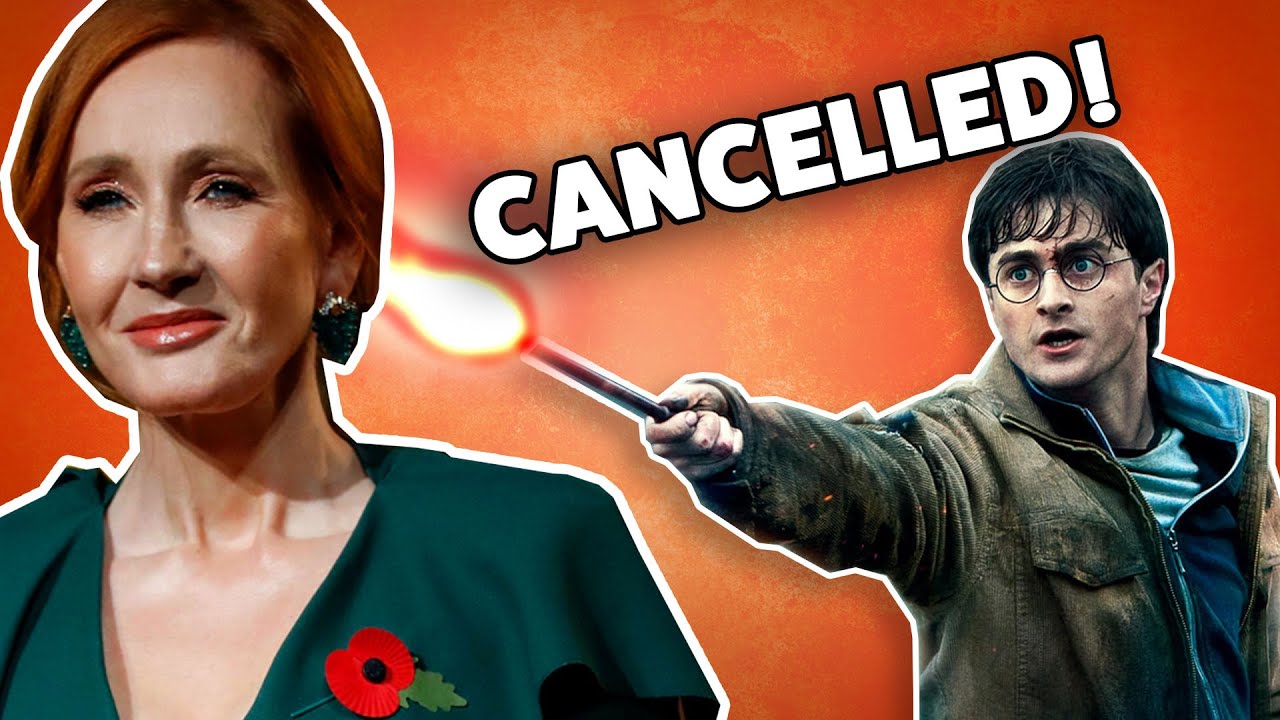
The BBC has compiled a Platinum Jubilee reading list, selecting one book for each year of the Queen’s reign, but it is more notable for the books it has left out than included. The Big Jubilee Read is intended to celebrate great books from across the Commonwealth, and includes many white British authors as well as Indian, African and African-Caribbean writers. Yet it doesn’t include Harry Potter, Lord of the Rings or James Bond. MailOnline has more.
Some of Britain’s greatest authors have been snubbed by the BBC as both J.K. Rowling’s Harry Potter and J.R.R. Tolkien’s The Lord of the Rings have been left out of the BBC’s list of books from the Queen’s 70-year reign.
The BBC’s Big Jubilee Read has been compiled following a five-month search that has involved librarians from towns and villages across the UK – along with readers in 54 countries.
It aims to offer 70 pieces of “brilliant, beautiful and thrilling writing” produced by authors from all over the Commonwealth over the last 70 years, 14 of whom are from the UK.
Yet two of Britain’s most prestigious novelists have been omitted from the list, the Times reports.
JK Rowling’s Harry Potter, almost certainly the U.K.’s largest literary export over the period, has been left out alongside J.R.R. Tolkien’s The Lord of the Rings – beloved since its publication in 1954..
Both franchises were hugely popular globally, both in terms of the original books and subsequent films.
It comes as British megastar author Rowling, 56, has faced accusations of transphobia after she mocked an online article in June 2020 for using the phrase “people who menstruate” instead of “women”.
She later defended herself against the claims in a passionate essay but has been hounded online by some members of the trans community ever since.
An initial long list of 153 books had to be cut down by more than half to 70 – one for each year of the monarch’s reign.
Susheila Nasta, emeritus professor of modern literature at Queen Mary and Westfield University, said there was a “big discussion over about J.K. Rowling” before the list was completed.
She added: “She was on the long-list with Harry Potter and the Philosopher’s Stone.
“A space was cleared for someone equally as good but whose work was not as well known. There were some very tricky decisions.”
But the list, to be published in full on Monday, does feature other books that have later been turned into popular television series or films.
Included are Margaret Atwood’s The Handmaid’s Tale, John Le Carré’s Tinker Tailor Soldier Spy and Yann Martel’s Life of Pi.
The list hasn’t just omitted J.K. Rowling and J.R.R. Tolkien from the list. Also overlooked are any books by Evelyn Waugh, Graham Greene, V.S. Pritchett, Ian Fleming, Len Deighton, Ian McEwan, Julian Barnes, William Boyd, Kingsley Amis and Martin Amis, to name just a few.
Here is the list of the greatest books published by authors from across the Commonwealth published in the past 70 years, according to the BBC. I have to confess, the only I’ve read is Tinker, Tailer, Soldier, Spy. How about you?
1952-1961
The Palm-Wine Drinkard – Amos Tutuola (1952, Nigeria)
The Hills Were Joyful Together – Roger Mais (1953, Jamaica)
In the Castle of My Skin – George Lamming (1953, Barbados)
My Bones and My Flute – Edgar Mittelholzer (1955, Guyana)
The Lonely Londoners – Sam Selvon (1956, Trinidad and Tobago/England)
The Guide – R. K. Narayan (1958, India)
To Sir, With Love – E. R. Braithwaite (1959, Guyana)
One Moonlit Night – Caradog Prichard (1961, Wales)
A House for Mr Biswas – VS Naipaul (1961, Trinidad and Tobago/England)
Sunlight on a Broken Column – Attia Hosain (1961, India)
1962-1971
A Clockwork Orange – Anthony Burgess (1962, England)
The Interrogation – J.M.G. Le Clézio (1963, France/Mauritius)
The Girls of Slender Means – Muriel Spark (1963, Scotland)
Arrow of God – Chinua Achebe (1964, Nigeria)
Death of a Naturalist – Seamus Heaney (1966, Northern Ireland)
Wide Sargasso Sea – Jean Rhys (1966, Dominica/Wales)
A Grain of Wheat – Ngũgĩ wa Thiong’o (1967, Kenya)
Picnic at Hanging Rock – Joan Lindsay (1967, Australia)
The Beautyful Ones Are Not Yet Born – Ayi Kwei Armah (1968, Ghana)
When Rain Clouds Gather – Bessie Head (1968, Botswana/South Africa)
1972-1981
The Nowhere Man – Kamala Markandaya (1972, India)
Tinker Tailor Soldier Spy – John Le Carré (1974, England)
The Thorn Birds – Colleen McCullough (1977, Australia)
The Crow Eaters – Bapsi Sidhwa (1978, Pakistan)
The Sea, The Sea – Iris Murdoch (1978, England)
Who Do You think You Are? – Alice Munro (1978, Canada)
The Hitchhiker’s Guide to the Galaxy – Douglas Adams (1979, England)
Tsotsi – Athol Fugard (1980, South Africa)
Clear Light of Day – Anita Desai (1980, India)
Midnight’s Children – Salman Rushdie (1981, England/India)
1982-1991
Schindler’s Ark – Thomas Keneally (1982, Australia)
Beka Lamb – Zee Edgell (1982, Belize)
The Bone People – Keri Hulme (1984, New Zealand)
The Handmaid’s Tale – Margaret Atwood (1985, Canada)
Summer Lightning – Olive Senior (1986, Jamaica)
The Whale Rider – Witi Ihimaera (1987, New Zealand)
The Remains of the Day – Kazuo Ishiguro (1989, England)
Omeros – Derek Walcott (1990, Saint Lucia)
The Adoption Papers – Jackie Kay (1991, Scotland)
Cloudstreet – Tim Winton (1991, Australia)
1992-2001
The English Patient – Michael Ondaatje (1992, Canada/Sri Lanka)
The Stone Diaries – Carol Shields (1993, Canada)
Paradise – Abdulrazak Gurnah (1994, Tanzania/England)
A Fine Balance – Rohinton Mistry (1995, India/Canada)
Salt – Earl Lovelace (1996, Trinidad and Tobago)
The God of Small Things – Arundhati Roy (1997, India)
The Blue Bedspread – Raj Kamal Jha (1999, India)
Disgrace – J.M. Coetzee (1999, South Africa/Australia)
White Teeth – Zadie Smith (2000, England)
Life of Pi – Yann Martel (2001, Canada)
2002-2011
Small Island – Andrea Levy (2004, England)
The Secret River – Kate Grenville (2005, Australia)
The Book Thief – Markus Zusak (2005, Australia)
Half of a Yellow Sun – Chimamanda Ngozi Adichie (2006, Nigeria)
A Golden Age – Tahmima Anam (2007, Bangladesh)
The Boat – Nam Le (2008, Australia)
Wolf Hall – Hilary Mantel (2009, England)
The Book of Night Women – Marlon James (2009, Jamaica)
The Memory of Love – Aminatta Forna (2010, Sierra Leone/Scotland)
Chinaman – Shehan Karunatilaka (2010, Sri Lanka)
2012-2021
Our Lady of the Nile – Scholastique Mukasonga (2012, Rwanda)
The Luminaries – Eleanor Catton (2013, New Zealand)
Behold the Dreamers – Imbolo Mbue (2016, Cameroon)
The Bone Readers – Jacob Ross (2016, Grenada)
How We Disappeared – Jing-Jing Lee (2019, Singapore)
Girl, Woman, Other – Bernardine Evaristo (2019, England)
The Night Tiger – Yangsze Choo (2019, Malaysia)
Shuggie Bain – Douglas Stuart (2020, Scotland)
A Passage North – Anuk Arudpragasam (2021, Sri Lanka)
The Promise – Damon Galgut (2021, South Africa)
Stop Press: The Free Speech Union has launched a CrowdJustice fundraiser so an author can sue her publisher for sacking her after she inlcuded the hashtag #IStandWithJKRowling in her Twitter bio. You can donate here.
Stop Press 2: A former BBC journalist has written a long, thoughtful piece for Persuasion about why the Corporation’s diversity targets are incompatible with its commitment to impartial, public service broadcasting.

Discussion
Comments
This week across the site:
To join in with the discussion please make a donation to the Daily Sceptic.
Profanity and abuse will be removed and may lead to a permanent ban.
Toby my god! I thought I was the world’s worst reader, I have read 3 of these, Clockwork range, Hanging Rock and The Sea The Sea
Moreover, I think JK Rowling is crap and didn’t think that much of Tolkein either
I liked the Hobbit but 3/4 in to the Lord of the RIngs at age 15 I decided I had enough and put it down. I knew how it was going to end and the style was getting on my nerves. Gollum was interesting though, as a model of corruption.
In a podcast recently (London Calling) Toby was talking about how he was reading the CS Forester Hornblower books. That’s another who should be on the list. He was also reading a book by Bernard Cornwell, Sharpe’s Trafalgar. He obviously only reads what he likes – sensible.
I see the professor pointedly doesn’t name the other author thought equally as good but not as well known chosen in J. K. Rowling’s place.
But as we all well know the BBC don’t do merit today but box tick which this list epitomises as every country has been included, merited or not.
I’ve read: A Clockwork Orange; Tinker Tailor Soldier Spy; The Handmaid’s Tale; The Remains of the Day; The English Patient; Life of Pi. Heard of a handful more and seem to have stopped reading two decades ago.
Hmm. I haven’t read many of those. Can’t see me doing so either.
HHGTTG was made into a series by the BBC as well as an awful film
Apart from that Muriel Spark and a few others the rest “high brow” garbage meant to be read to impress people rather than enjoyed
Fir example after watching Wolf Hall I tried reading the book – heavier going than a M$ software manual
I can’t read Wolf Hall or any of her others because they are written in the present tense – a horrible cheap style trick that puts me straight off any novel.
I consider myself pretty well read, having read literature across the centuries from Ovid and Homer to Proust and Grossman. I have not read a single one of these books.
Having something on the list that sold in millions to the proles would never do.
It would appear the woke anti JK’ers are out in force on these comments
Rowling is always reminded of her faux pas in the media concerning trans, but Lewis Hamilton is not.. I wonder why that is. Is it because JK ain’t black and fell on the sword of BLM worship?!
Lets be honest, this is just a jubilee reading list, it’s not the greatest books or authors of the last 70 years. It never was meant to be, otherwise this woke collection of unreadable would never have made the top 500, let alone 70! See it for what it is, an opportunity for the Left to shove a finger in our eyes
At a quick count only 17 of the 70 authors are from the UK itself anyway. All the rest are from Commonwealth countries, which is fair enough, but to leave the most commercially successful author in the World off that list somewhat devalues the whole project. All because the BBC don’t like her anti woke views on gender. Churlish behaviour to say the least!
I wish people would get this het up about vaccine mandates, mask mandates, lockdowns. Things that caused severe harm and death, loss of income, economic ruin for small businesses, disruption of children’s education. You can actually read any of these books anytime you want.
I did actually and still do!
Usual woke rubbish from the bbc.
Like Toby, I’ve only read Tinker Tailor Soldier Spy by John Le Carre from this list. I’m not especially proud of that, as I expect some of the other books are worth reading. But I think to omit Tolkien’s The Lord of the Rings is extraordinary; also C S Lewis. I find I can’t read much contemporary literature – I am afraid that I ask the same question that C S Lewis asked: ‘Was the archaic simply the civilised, and the modern simply the barbaric?’
No Mary Renault? Pathetic woke list. More telling us what to think.
I thought the list was about books not cars
Toby writes:
I have to confess, the only I’ve read is Tinker, Tailer, Soldier, Spy. How about you?
Well everyone’s read Hitchhiker’s Guide, haven’t they? Only one on the list I’ve read; then again I read very little fiction.
It was fiction? Damn, I thought something was wrong with my towel.
Good one!
Any list that omits P G Wodehouse, the great comic genius, is dead to me.
A bit close to Empire, old boy. Kindly turn yourself in to the nearest Adjustment Centre. They’ll straighten you out in a jiffy. Can’t have the plebs reading about different times; the UK only really got going with the election of New Labour remember. The rest was nonstop genocide, imperialism and slavery, all if which were invented by us.
Not the last 70 years
The Ishiguro and Mantel books are well worth reading for anyone that hasn’t; Le Carre fair enough, although I always had a preference for Deighton. Nothing against Hitchhikers Guide but it’s a pick based on cultural impact not literary skill and both Tolkien and Rowling are better by either measure. And since it’s supposed to be a list for the Jubilee how can you not have Dick Francis. Overall it just comes off like a snobby librarian telling you what you “should” read, not what any normal person would recommend to their friends based on what is enjoyable to read.
I have read several of these books, and they were all excellent. JK Rowling has been very successful, but I certainly wouldn’t include any of her books on such a list. I think the most glaring omission is Rose Tremain, who is, in my opinion, the greatest living writer.
It’s the Biased Brainwashing Cult … it was never going to produce a list based on merit.
Feminized bullshit who cares. You will find out about the novels that really matter when you are up against the wall.
I read a lot, but of those 70 books, I’ve only heard of 13 of them, and read none of them. Fleming would have been a good choice – a Briton, living in Jamaica and his first Bond novel being set on that island. I guess his use of the words ‘homo’ and ‘nigger’ in the Bond novels would automatically exclude him from any list complied by the BBC; not to mention his portrayal of women.
You can only really read the literature of your time if you care about it. Solzhenitsyn in Cancer Ward or The First Circle for example. The sense that you belong to a living tradition. This is a vapid list of accidental vanity pieces that suited the post war defeatist sensibility. Has to be deep and meaningful you know just in case it gets knocked for superficiality. And of course it has to be inclusive. It is a joke compared with the highly developed English sensibility. You should toss it out these people mean nothing but your demise.
I agree with every word, especially the last bit. This is part of the death wish. Letting self-appointed nonentities pick a list of books specifically designed to diminish us and champion diversity.
Not so much a Platinum Jubilee List, as a Philistine’s Jamboree List.
There are some good books in there, but also some that are not, and many that are not likely to have been read by UK readers.
In some respects, it looks to me as if someone made a list of books and authors which fit some criteria, such as country, colour and perhaps sex, and which purposely works to excludes certain types of author, but which definitely doesn’t major on literary merit. They then got someone to cut up the list, and put it in a tombola, from which it was drawn at random, to produce the final Platinum (more a base metal like lead) list.
I wonders how many of these tours de force have enjoyed Royal perusal?
And this list will be consulted by whom outside its authors and usual bunch galoots?
The cancel culture has gone on at least since the 1940s. For example in the study of western philosophy there was a bend away from certain thinkers which often involved their complete omission.As a student I only came across these tendencies by chance and by the good graces of certain teachers. It starts with such an acknowledgement. Whether we have the elan or the brio to assert ourselves again remains to be seen.
One thing in our favour is the lack of competition. The groups they are promoting often lack the spark, so to speak. It is white Europeans who value literature to a much greater degree than many. That helps.
Jorge Luis Borge said that English literature is one of the greatest adventures in the history of humankind. We should treasure and protect this.
I think WE do. It is our self-appointed guardians we need to watch. Purges are coming. We see it in the US; Shakespeare is banned, but some nonsense about gay wildebeests by Kamil Ongobongo is a must read for the kids.
Aljabeeba is holding its breath for the day it can promote Dianne Abbottopotamus’s literary volcanic eruption.
You’ll feel it rather than read it.
About twenty years ago the BBC conducted a survey of reading habits, it was called the big read if I recall. There was much to be gleaned from this list of a hundred books. Notably there were very few novels in translation. It is hard to get a Brit to read a novel in translation. hard even to get them to watch a film with subtitles. I am not making an argument for cosmopolitanism but it was notable that.It was rather similar to this list. Then again we shouldn’t insist on a canon of any sort. C.S. Lewis said that the reason that people are put off reading is that they pay too much attention to what they are told what they should read rather than what they really feel like reading.
I shall take this list as a virtuous target to aim for. I’ve read 9 of them over the years. 2 of them twice. The Sea The Sea and Midnight’s children. I can’t say that any of the others bar Tinker Tailor Soldier Spy had any particular effect on me which surely the very best Commonwealth writing should have done. Certainly none as much as Birdsong did.
It takes all tastes of course and Fantasy novels are so non-U currently. Perhaps a bit too male WASP and geeky for this kind of holier than thou list. So perhaps explaining the exclusion of Harry Potter and Lord of the Rings.
I’m astounded Pullman’s His Dark Materials isn’t on the list – it’s fashionably atheistic. It seems as though fantasy is definitely out-of-favour at the BBC. One can only hope this extends to refusing to commission another series of Doctor Who (which morphed into fantasy some time ago).
Tolkien is an interesting omission given the influence of his work and well outside of the English-speaking world. I do recall though dismissals of Lord of the Rings as essentially an affirmation of fascism. Germaine Greer said that she found it to be a tedious and endless retelling of Norse mythology. Which is utterly irrelevant given the impact that it has had on teenage boys. Terry Pratchett said that if LOTR wasn’t your favourite book at age 15 then you might be crazy but if it was your favourite book at age 50 then you are definitely crazy. Perhaps there are darker motives. One ring to rule them all and in the darkness bind them. Doesn’t really sit well with the current state of affairs.
Well, Tolkein and C.S.Lewis and that lot created fantasy as a new literary genre, really, I think, influenced by the romance writers from the medieval and early modern period. This literary form is hard for modern literary critics to categorise and understand, as it does not follow the realistic convention of novel writing which developed in the 18th century.
I feel that fantasy is often misunderstood by literary critics as it is miscategorised.
I used to hate my brother’s science fiction in the sixties, but now I can look back on it and see that it is an important literary genre, reflecting the impact of technology and science on society, and characteristic of that period.
The totalitarian impulse never diminishes and the techniques of control have advanced significantly and in the digital realm advance at a rate which is simply beyond the human. If you think that such concerns are overblown then take a look at Shanghai for example. With every passing month our relative power diminishes. There is an urgency about current affairs.
I’m glad to see someone say this. I agree. With Shanghai they are taking notes and I worry they will employ it here. A variant so dangerous no movement allowed at all.
Given the response over the last two years I have no faith enough people would push back. There is a general air of passivity I cannot fathom these days. Most people have absolutely no fight in them.
One ring to rule them all is the villain in Lord of the Rings.
Tolkien did not identify with the villain of his novels.