

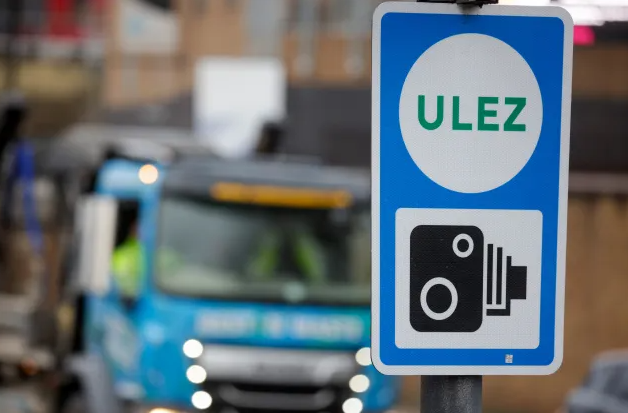
Last Friday, a retired appliance engineer named Kevin Rees was jailed for 15 years at the Old Bailey for blowing up a Ulez camera in a London street in December 2023. The judge found that the offence was motivated by terrorism; the blast damaged cars and property up to 100 metres away, including a child’s bedroom. Of course, building a bomb and detonating it on a residential street is a grave crime, and nothing below excuses it.
But it is fair to ask how a roadside charging scheme became a cause that drove one man to explosives, and why as many as 1,500 cameras are said to have been attacked in some way. Despite an FOI request for an update on how many cameras and other sensors had been attacked or removed, the authorities withheld year-by-year vandalism counts and repair costs, citing public safety and criminal investigations in February 2026.
The extension of the zone to all 32 boroughs in 2023 was imposed on millions of people who had no meaningful say in it. Labour’s loss of the Uxbridge by-election that July was widely blamed on it, and London Mayor Sir Sadiq Khan himself has acknowledged that when the original zone was launched, “all the mainstream political parties, including my own, were opposed”. What we are looking at is less a public-health measure than a moral crusade with a revenue stream.
Moving goalposts and modelled deaths
The standard defence is that Ulez and related measures (

Discussion
Comments
This week across the site:
To join in with the discussion please make a donation to the Daily Sceptic.
Profanity and abuse will be removed and may lead to a permanent ban.
We live in a world where a sunny day is treated like a national emergency. Burnham even had a “Cobra” meeting about it. In other words a “look at me I’m really important” meeting about it.
I have to regularly pass through a ‘Clean Air Zone’ but disappointingly the air is no cleaner than outside the zone. I think when the wind blows, it all gets changed. Anyway, as someone alive before the Clean Air Act in 1968, with industrial processes and coal fires a plenty, I would contest the air is pretty clean nowadays.
Another example (as if we need more…) of something where the first step was necessary and beneficial, and all the steps after it are pursuing diminishing returns at higher and higher cost. So, we have vast teams of people employed at similar vast expense, trying to rid us of the 0.01% of the problem as it was in the first place. Enough, there are plenty of other things we should attend to, litter picking is top of my list. We breath clear air, but with shit on our shoes.
Not sure the ballot box is the answer. Lots of the people affected come into London to work and live outside it, so won’t get a vote. Probably lots of the people who voted for Khan don’t have cars (the poor) or have electric cars (champagne socialists).
Of course, it could also be argued that the motor industry is a beneficiary of ULEZ. Some people.are all but compelled to change their vehicles for the flimsiest of reasons. That adds layers of complexity to any true ‘net environmental gain’ sum. Where are the vehicles and their components being made? What happens to the old ones? What is the environmental cost of manufacture and disposal? It’s part of the treadmill that keeps the economy moving, although not necessarily forward.