

In May, the terrorism trial of activist Majid Freeman ended in a hung jury. Freeman, a British Muslim pro-Palestinian campaigner, stood accused of using social media to encourage terrorism and express support for Hamas. After more than 13 hours of deliberation, jurors could not reach a majority decision on any of the charges.
Months earlier, Freeman overturned a conviction linked to the 2022 Hindu-Muslim unrest in Leicester, where prosecutors had accused him of using threatening and abusive language intended to provoke violence during the riots. By the time the trial began, supporters saw him not as a dangerous agitator, but a political dissident persecuted by the British state for legitimate activism.
The hung jury leaves the Crown Prosecution Service to choose between an expensive retrial before another jury, with no guarantee of a verdict, or dropping the charges and facing accusations of state capitulation.
The Freeman case is one of a series of recent trials that has raised questions about what is happening inside the jury room. Are these deadlocks down to doubts over the evidence, or are jurors refusing to convict under laws they morally reject?
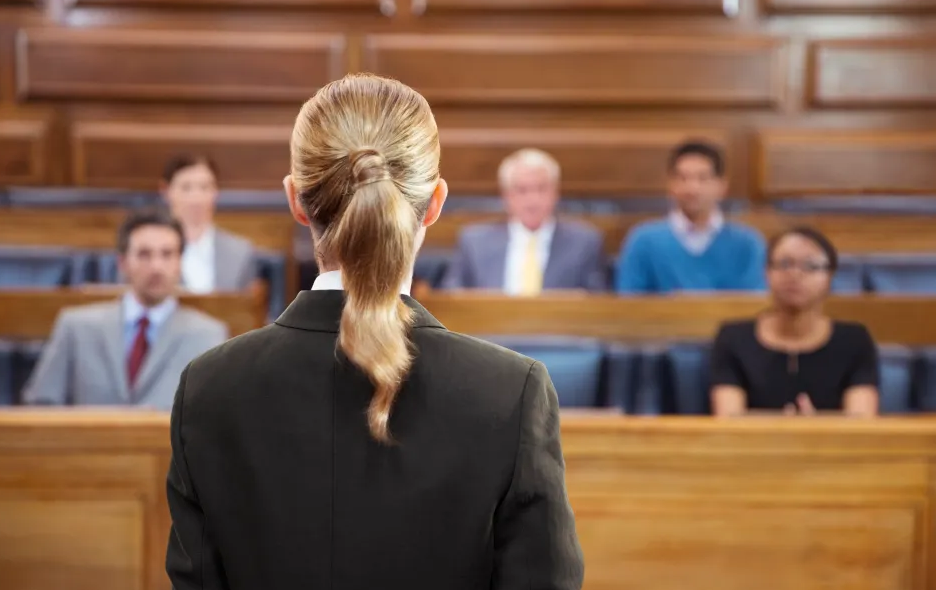
British juries are randomly selected from the local population, meaning the political and demographic character of a court’s catchment area inevitably shapes the jury pool.
Nearly 30% of Birmingham’s residents identified as Muslim in the 2021 census, and in some neighbourhoods that figure exceeds 80%, making the city one of the largest Muslim populations. It has also been politically defined by anti-Israel and Gaza-related activism, with Parliamentary candidates campaigning explicitly on the issue to win seats as independent MPs and councillors.
Freeman’s case hinged on jurors’ interpretation of intent, and whether social media posts crossed the line into unlawful support for a proscribed terrorist organisation. But what one person views as unlawful support, others may view as legitimate political expression.
A Henry Jackson Society poll shows that just 24% of British Muslims believe Hamas committed murder and rape on October 7th 2023, while 39% believe it did not — and are more likely to hold a positive view of Hamas than a negative one. Worrying understandings of Hamas and October 7th exist within a sizeable section of the population. The more widespread a view becomes, the more likely it is to be held within jury pools.
Those attitudes matter in trials that turn on rhetoric and intent. Someone who views Hamas as a legitimate resistance movement, or is sceptical of accounts of its atrocities, may interpret expressions of support very differently from someone who accepts the prosecution’s underlying premise.
Hanin Barghouthi, a former University of Sussex student, was accused of expressing support for Hamas in a Brighton rally speech the day after October 7th, describing the attacks as a “victory” that was “beautiful and inspiring”, urging the crowd to “celebrate these acts of resistance”. After 15 hours of deliberation, the jury could not reach a verdict. Barghouthi insisted she had not known the full horrors at the time and was speaking about Palestinian rights, not Hamas. Her defence argued this was legitimate activism, not criminal support for a proscribed group.
Were there any in the jury pulled from Brighton’s progressive Left-wing monoculture that sees October 7th as resistance?
In February, at Southwark Crown Court, activist Caspar San Giorgi stood trial for scaling the statue of Winston Churchill in Parliament Square and spraying it with red paint. He sprayed slogans “Free Palestine”, “Stop the Genocide” and “Never Again Is Now”. branding Churchill a “Zionist war criminal”.
Prosecuted for criminal damage, San Giorgi argued that he did not commit a crime because his actions were intended as a direct political message to Parliament. He also disputed that the washable paint had caused damage to the statue. The jury acquitted him.
Because jury deliberations are secret, a hung jury does not tell us what prevented jurors from agreeing. But as rejection of particular laws becomes more widespread, so too will suspicions that some deadlocks reflect ideological opposition to the law rather than doubt over the evidence.
Britain has tried to solve a version of this problem before. During the Troubles, fears of jury intimidation and partisan or perverse verdicts led to the creation of Diplock courts, where certain cases were heard by judges sitting without juries. The concern was that jurors might acquit defendants not because they believed them innocent, but because they sympathised with the broader political cause or rejected the legitimacy of the law itself.
But removing juries transfers the question of impartiality elsewhere. Who decides which political beliefs pose a threat to a fair trial, and at what point does disagreement with the law justify denying a defendant a jury?
Screening jurors for political beliefs, restricting jury trials or allowing the state to decide which worldviews are incompatible with impartial justice would create problems as serious as those they seek to solve. Any solution must somehow protect the application of the law without giving the state power to police the political beliefs of jurors.
If politically charged cases repeatedly end in hung juries or acquittals, prosecutors may eventually become reluctant to bring them at all. Laws would remain on the statute book while becoming increasingly difficult to enforce.
Britain faces an uncomfortable reckoning over how to preserve impartial jury trials when jurors increasingly disagree not just over the evidence, but over the legitimacy of the law itself.
Anna Stanley is an open-source investigator specialising in extremism. She previously worked in intelligence roles for the UK Foreign Office and police. Find her on X.

Discussion
Comments
This week across the site:
To join in with the discussion please make a donation to the Daily Sceptic.
Profanity and abuse will be removed and may lead to a permanent ban.
Our legal system used to be simple and fair, until words and phrases became crimes, being offended became a crime, where legislation was introduced to allow the suppressions of political dissent.
Freedom of speech is a “freedom”, a passive Right under Common Law. That means the law cannot be used to prevent it.
However the principle of the Common Law is a person may not enjoy their freedom/Rights at the expense of another – A’s freedom/Right to swing his fist stops where B’s nose starts.
So freedom of speech may not legally be used to incite hatred and violence.
The Law used to be clear – it did not rest on forbidden words.
1) Was there intent to incite?
2) Was it likely to incite?
3) Did it incite?
1) & 2) are difficult to prove, 3) less so. Good reason – suppression of speech must not be easy.
Unless the prosecution can prove 1) beyond reasonable doubt then it’s not guilty.
But then the author says: “Freeman’s case hinged on jurors’ interpretation of intent…”
It is not up to them to interpret intent, it’s up to the Prosecution to prove it. If they cannot the case should not be… Read more »
It’s not just the juries, many judges seem to be activists or at least woke sympathisers these days. And Blair’s Supreme Court doesn’t exactly inspire confidence. And then of course there is the ECHR sticking its nose in. The law profession isn’t exactly renowned for being unbiased either. Sadiq Khan, Two Tier Kier and former Attorney General Richard Hermer spring to mind.
This is not such a difficult topic when juries are protecting free speech rights such as after Southport. Perhaps if there had been more media candour showing the gruesome footage recorded by the Gazans in their attack on 7/10 there would be a more balanced view amoung Muslims.
“… more media candour showing the gruesome footage recorded by the Gazans in their attack on 7/10 there would be a more balanced view amoung Muslims.”
You think so? I think you are out of touch.