

During the 2010-15 Euro crisis, pensions reduced by up to 40% in Greece. Property prices collapsed by around 37% in Ireland. Unemployment rocketed to 17% in Portugal.
Fiscal crashes exact a heavy toll. For the middle class there’s a painful cost in terms of collapsing asset prices, while for the poor their wages and state benefits shrink as inflation rips.
However, we now seem to be normalising the prospect of a fiscal crash while rarely mentioning the inevitable downsides.
My friends nearly all seem to think that there’s a fiscal crash looming. And they’re by no means all doomster Boomers. Rather they’re a mixed bag of one-nation Tories, Reformers, Lib Dems, a few Labour supporters and the odd (very odd) Green.
What’s more they seem surprisingly sanguine about it. Some think that the only way to persuade the nation to live within its means is for the IMF to take the reins.
Others think that if we’re forced to stop funding endless welfare benefits, those whose benefits get stopped may either find a job or migrate.
My climate sceptic mates think that a fiscal crash would force us to stop subsidising Net Zero with the result that we could then reindustrialise as our energy prices halve.
They all tend to be focused on the dubious benefits rather than the very certain calamities that would inevitably flow from a fiscal crash.
But, it’s not only my social circle who seem resigned to a crash, the political parties and commentators seem to be resigned to it as well. And if they don’t say it publicly, their refusal to do anything to stave off such an event speaks volumes for our leaders’ apparent lack of concern.
I’m the most optimistic person I know: I think a fiscal crash won’t happen in the next five years. But expecting ‘normalcy’ is now abnormal!
It’s the same with power cuts. I don’t know anyone who’s not expecting a power cut this winter. Rather than be outraged at the prospect they’re preparing for it. It’s become ‘normal’.
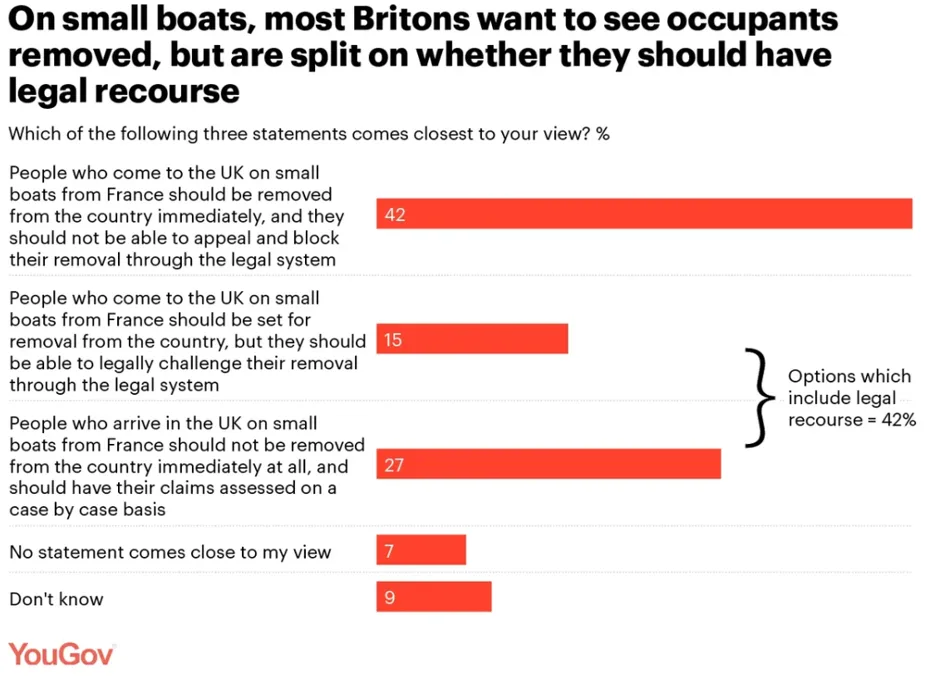
Illegal migration is another scourge that’s been normalised. You may think that all illegal migrants should be immediately deported but, according to the latest polling I could find (YouGov 2024) that asked nuanced questions, this is a minority view, with just 42% in support. The idea that over 100,000 migrants should seek asylum every year has become normalised.
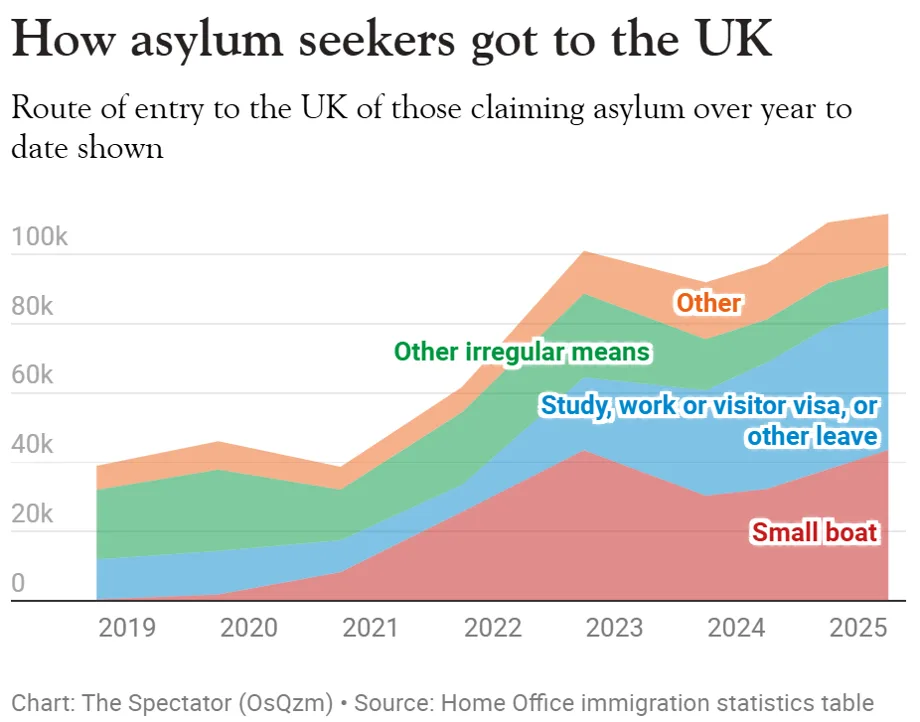
And, while the focus is on ‘small boat’ crossings, it remains the case that most asylum seekers didn’t arrive on a small boat: they were already here. They were students, or visas overstayers. Stop the boats and we’ve only addressed part of the problem.
Data breaches at Marks and Spencer, the Co-op and JLR appear to have conditioned us to expect our personal data to be stolen, or our biggest companies to grind to a halt for months on end. What’s more, invariably it’s a spotty teenager and his mates from Warrington or Wokingham rather than the Russian or Iranian state who’s behind the hack.
Cases like Graham Linehan, the 15 year-old boy in his Walsall bedroom and the dozens arrested daily for posts on X normalise the end of freedom of speech. Increasingly we constrain our own speech out of habit; we expect to be arrested if we step out of line.
The sexual assault of women by blokes who arrived a week last Thursday has been normalised.
The idea that thousands of fighting age men might be dumped in an old army camp, making surrounding properties unsaleable and causing endless anxiety for locals, would, only a few years ago have seemed dystopian, whereas today its accepted with little more than a shrug by most, and positively welcomed by some. Objectors are vilified or imprisoned.
We’ve also just ‘normalised’ antisemitism. The Green’s ‘Zionism is racism’ motion is plainly antisemitic and racist, yet the Greens are still treated as a perfectly legitimate party by the mainstream media. Imagine if a Right-of-centre party had come up with that, or a similar policy targeting Islam, the party would have been banned, not have senior members invited onto every political panel on TV and radio.
But let’s get back to the normalisation of the looming fiscal crash.
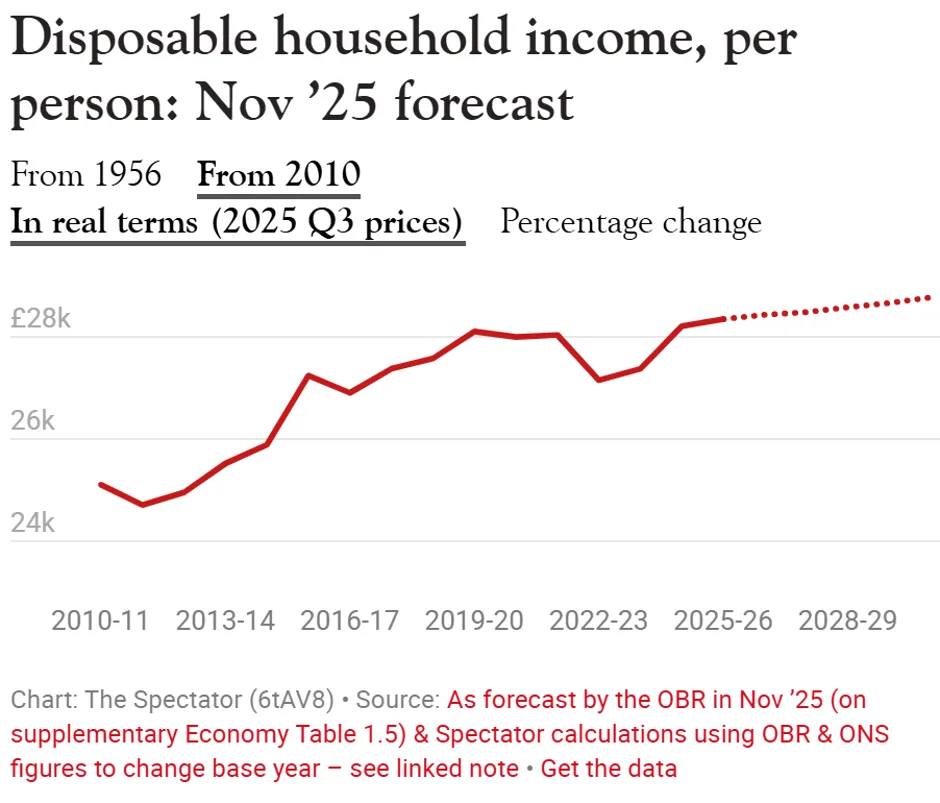
Measure it how you like, GDP, GDP per capita or by disposable income, we’ve never been so well off. So, how come everyone feels hard up and, as a country, we appear to be going bankrupt? Of course, the answer is, because we’re not in charge of our own finances. We keep electing governments that, not content with taxing us at record levels, borrow an additional £100 billion a year only to waste it.
Since Gordon Brown, successive Chancellors have renamed ‘Government spending’ as ‘Government investment’. A new road, bridge or airport might be a genuine ‘investment’. Investments should produce a positive return. Paying welfare to millions who’ve just decided they’ve got ADHD just encourages more claimants.
Arch-Conservative Margaret Thatcher famously said: “The problem with socialism is that you eventually run out of other people’s money.” Post 2015, the Conservatives aped the most profligate of socialists, increasing the national debt from £1 trillion to £3 trillion, all of it “other people’s money”.
Now it’s Labour’s turn to take responsibility for fixing the mess the Tories left, but the party shows no sign of doing anything other than accelerating us towards a showdown with the bond market. Though even if the Government wanted to act, it’d be stymied by its backbenchers.
Burnham and Healey have neither the plans nor any desire to create the conditions for economic growth. In the absence of growth, the debt bubble will keep expanding until they have to admit that they’ve run out of road and call in the IMF. Personally, I suspect that other events will intervene to force the Government to rein in spending and increase taxation. But whether ‘austerity’ measures are forced on them by the IMF or adopted voluntarily, it will still bring the Burnham Government down.
The Tories definitely don’t want to be in power if a crash arrives. Understandably, they’d prefer to be taking office on the upswing after a crash. This would allow them to blame Labour for the necessity of IMF imposed belt-tightening, conveniently forgetting that it was their disastrous policies of Net Zero, Covid mania and uncontrolled immigration that got us here in the first place.
But bailouts or austerity measures, however they come about, aren’t consequence-free.
It’s perhaps worth reminding ourselves of some of the fallout from Iceland’s bailout that ran from 2008 to 2011, and the variety of bailouts and austerity measures adopted by Greece, Ireland, Italy and Portugal following the 2010 to 2015 Euro Crisis.
Iceland, being outside the Euro and the EU, did not have recourse to the EU bailout fund. But it did have the advantage of controlling its own currency, which meant it had the additional tools of devaluation and restrictions on capital flight that it could call on. It instituted severe public spending cuts combined with sharp tax increases. The result was initially a dramatic recession followed by a faster recovery than the Euro countries, which lacked the option of devaluation. Instead, contraction had to be achieved by means of higher taxation and lower spending.
Despite its small size (Iceland has a population of about 400,000) and social cohesion, the crash still caused political as well as economic upheaval. Political support tended to go to new, hardline parties including the ‘Pirates’ party. However, Iceland took its medicine and has been able to sustain its recovery.
Ireland was an interesting case. Between 2008 and 2012, property prices fell by over 35%. Public sector wages were cut by around 10%, emigration surged as unemployment reached 15%, while social programmes were cut back dramatically.
In Greece, pensions were cut and pension age increased sharply. Similarly, in Italy and Portugal, taxes were increased and services cut.
Whether it was the IMF, as in Iceland, or Euro technocrats, in the case of the Euro nations, democratically elected politicians lost control. Politics became, and remains, far more volatile. The wealth and livelihoods of the population were severely damaged. But none of this needed to happen. There’s nothing inevitable about excessive government spending. Interestingly, when the UK Government was bailed out in 1976, the IMF loan facility was never called upon. The threat of imminent financial collapse was sufficient for the country to take its medicine.
In each of these crises, the fiscal disciplines insisted on by the IMF and the European Central Bank were measures that the national governments could and should have adopted themselves. All too often we hear politicians complain that if they adopted fiscally restrictive measures then electorates wouldn’t vote for them, but the success of Thatcher, Cameron in 2015, Meloni in Italy and Milei in Argentina all give the lie to this.
The other sobering thought is that both the UK and France are now exceeding the debt levels that triggered the last currency crises.
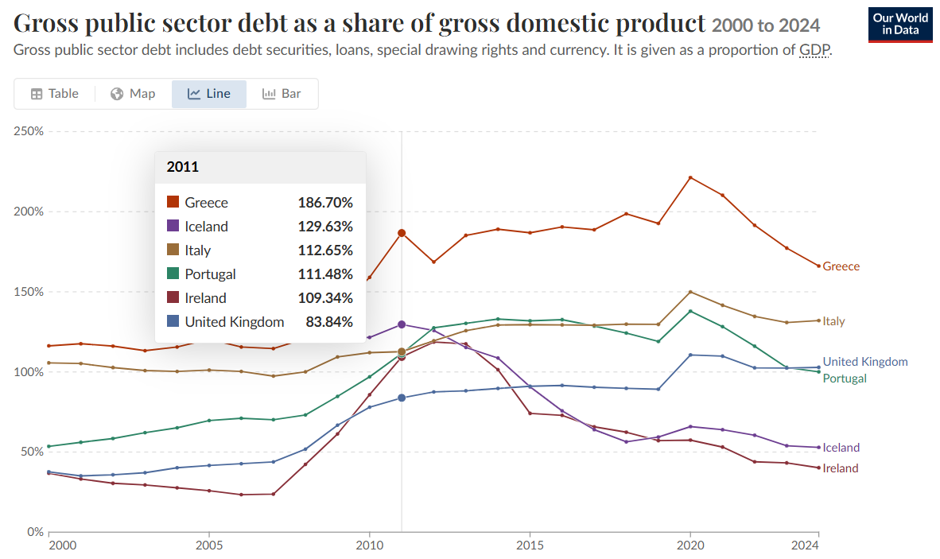
The 2010-11 Euro crisis was blamed on profligate governments; however, it’s arguable that bankers were as much to blame.
Bankers loan money, their principal skill is to know the value of the loans they make. The value of a loan depends on the risk attached to it. When the Euro first started, banks wrongly believed that the risk of getting repaid was equal across all Euro participants. This led to profligate Club Med countries obtaining loans at rates previously only available to the puritanical northern European nations.
As Warren Buffett famously quipped, “Only when the tide goes out do you discover who’s been swimming naked.” Well, the tide went out in 2008 and the bankers and Club Med countries were caught in the buff.
This time, the bond markets are innocent; they’ve taken on board that different Euro countries represent different risks. Rather, it’s the national governments who’ve continued to borrow, despite usurious rates that reflect national risk. The governments have no one to blame but themselves as the rates get ever steeper.
Before we ‘normalise’ the idea of a fiscal crash we need to remind ourselves of the damage it will do. The personal insolvencies, the destruction of jobs and livelihoods. The inevitability of broken families. Collapsed social programmes and the likelihood of violent disorder amongst our newly sectarian society.
Fiscal crashes aren’t consequence-free. It’s about time governments across Europe started acting in a fiscally responsible way and adopted the very measures now that will otherwise be imposed by external institutions.
There’s nothing ‘normal’ about a fiscal crash, an antisemitic mainstream political party, energy blackouts or the cancelling of our tradition of free speech and our national culture.


Discussion
Comments
This week across the site:
To join in with the discussion please make a donation to the Daily Sceptic.
Profanity and abuse will be removed and may lead to a permanent ban.
I saw the YouGov poll and my heart sank. I have no faith whatsoever in polling generally, but specifically with this outfit. I struggle to imagine that the figures reflect the nation as a whole, that only 42% want illegal immigrants removed without legal recourse to appeal, whilst suggesting that the same number wants people to be removed but only after an expensive and lengthy legal proceeding. I would love to see the demographic for the people they contacted for these opinions.
Yeah, all this is true but the problem is that nobody knows what to do about it.
There is a general misconception that countries and individuals act in a rational way.
If that was the case, there would be no alcoholics, drug and gambling addicts and gays-for-Palestine marchers.
And Adolph would have realized by 1943 that the game was over and negotiated a peace treaty.
Yes, we are probably heading for a showdown with reality but unfortunately people don’t like reality too much anyway, preferring their psychological projections and delusions. So this happens from time to time.