

Australians are used to their Government’s war on men — treating males like a species to be managed, and boys like suspects in training.
But last month, out of the blue, Albanese and his mates delivered a real kick to the balls. They pulled the rug out from under a programme that supports men when their bodies, and their sense of themselves as men, are most under threat.
They axed the Commonwealth funding for nurses supporting men with Australia’s most commonly diagnosed cancer — money painfully built up over years by the Prostate Cancer Foundation of Australia (PCFA), which scraped together the resources to train the 96 nurses who support more than 300,000 Australian men living today after a prostate cancer diagnosis.
It’s taken years to even get this far. That’s maddening when you compare it to breast cancer — the most fashionable cancer cause in the country, with its own colour, its own cricket test and a PR machine that has produced an embarrassment of riches.
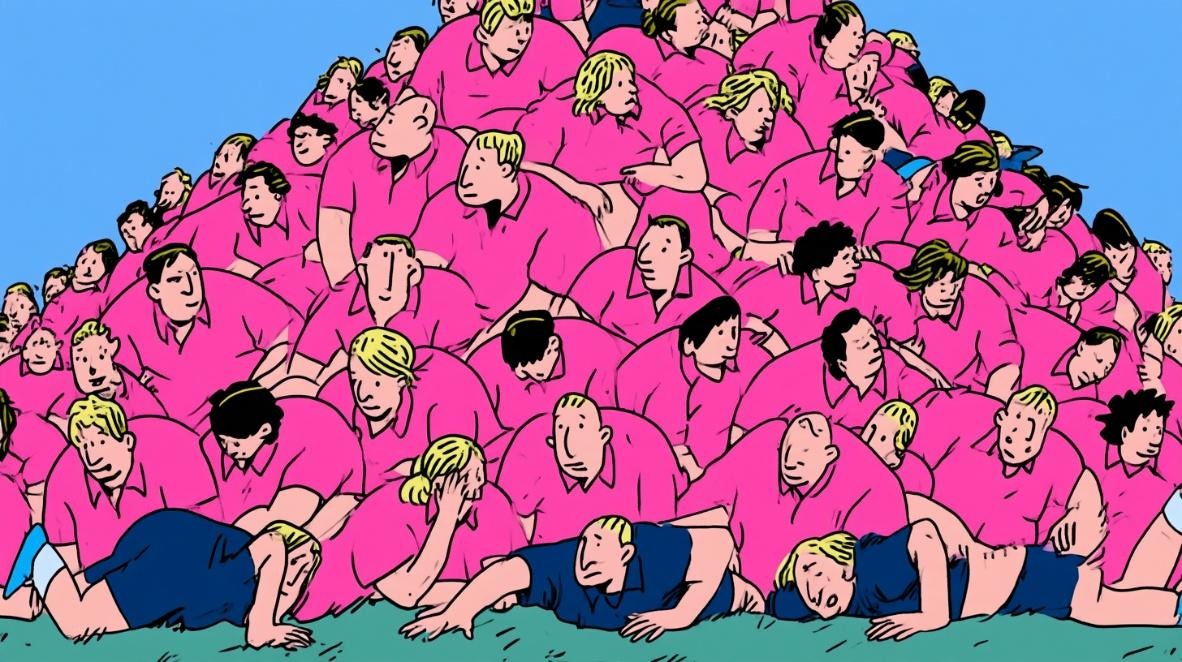
Eight years ago, I made a video at the Pink Test — the cricket match every January that turns the Sydney Cricket Ground into a sea of pink, all in aid of breast cancer nurses. It’s a tribute to Jane McGrath, wife of cricket legend Glenn McGrath, who died of the disease in 2008.
At that time there were just 28 prostate cancer nurses working in this country — compared with more than 300 breast cancer nurses. That year alone, the government had already handed the McGrath Foundation $20 million. And in a single day at the cricket, the Pink Test raised another $1.3 million, enough to fund 119 more nurses. This disparity has only grown since.
I’m told the McGrath fat cat problem has been a regular fixture on the agenda at national cancer meetings — with this one trendy cause gobbling up an ever-bigger share of the cancer dollar, more money than it knows what to do with, while other cancer charities — brain, lung, prostate, etc. — are left rattling the begging bowl.
So what does this brain-dead Government do now? It strips away the entire pool of Commonwealth funding that kept specialist prostate cancer nurses in the field — and dresses it up as a gift to men’s health. The Government’s own press release was headlined: ‘McGrath Foundation adds prostate cancer nurses.’ Adds. Not one word about the fact that PCFA’s funding, and the decade of prostate tumour-specific expertise behind it, was being axed on the very same day. The charity that was already drowning in cash was just handed the keys to a hugely important part of men’s health — and was warmly thanked for accepting it.
Speaking in Parliament on September 7th, National MP Llew O’Brien pointed out the almost unbelievable irony: September is Prostate Cancer Awareness Month. His verdict was blunt: “It’s simple: lose the nurse, lose the expertise and lose the service.”
And possibly lose the man. Men with prostate cancer are at a 70% increased risk of suicide — and for those whose cancer has spread, that risk more than doubles. Over half of those suicides happen within the first year of diagnosis.
So, what exactly will the McGrath nurses do for these men? Nobody can say — PCFA says the Government hasn’t given it, or anyone else, complete operational details about individual positions, host-site arrangements, clinical governance, or how continuity of care will even be protected.
We do have one clue, though — and it isn’t reassuring. In January 2025, the government folded lung and melanoma nursing into McGrath’s new ‘all cancer’ model — the same playbook now to be used for prostate cancer. Lung Foundation Australia has now spoken out, pointing out the McGrath’s nurses aren’t there for the moment that matters most: the diagnosis itself, when people are at their most frightened and most at risk.
It is absolutely crazy that a women’s charity is being asked to take over the nursing care of the organ that is most quintessentially male — the penis — and its proud owner. Prostate cancer treatments play havoc with penile functioning, and the erectile dysfunction and incontinence that so often follow are devastating to a man’s confidence, his sense of masculinity, his relationships — his very sense of himself as a man.
I spent years campaigning to get that message out: writing articles in newspapers, talking on radio and television, teaching doctors and urologists. I even spoke at the National Press Club about these unlikely matters but failed to persuade them to promote the talk by my preferred title: ‘Why is a breast worth more than a penis?’ That was too much for them, but I did manage to raise the issue of why treatments to help women recover from breast surgery, such as breast reconstruction, are covered by medical benefits while many of the expensive erection treatments go unfunded — a disparity which still applies.
In my speech I talked also about the need to lobby the new Labor government to take the needs of these men seriously. That means having empathic, informed people on hand from the moment of diagnosis — which is exactly what PCFA has been aiming to provide.
Thanks to early detection, most women with breast cancer now move through diagnosis and treatment in a matter of months — surgery, sometimes chemo or radiation, and for many, that’s the acute phase behind them. But for the vast majority of men, prostate cancer treatment brings devastating, lasting consequences. A landmark population study found that 12 years after diagnosis, 87% of men still had erectile dysfunction or were sexually inactive — against 62% of men who’d never had the disease. Incontinence remained a problem for many: 20% of men still living with it, more than three times the rate of men who’d never had prostate cancer. Another major study found the same grim pattern holding at 15 years out: up to 83% of men still living with erectile dysfunction, their sexual function never returning to what it was.
One man suffering through all this told me: “This is not living… it is just existing.”
In 2026, PCFA has 131 trained professional prostate cancer nurses in over 100 locations out in the field, delivering 150,000 consultations a year, supporting more than 22,000 new patients, as well as existing ones. They are embedded in urology and radiation oncology teams.
It is just extraordinary that the Government has decided to demolish this unique and important nursing service — instead pouring $46.5 million over five years into McGrath’s ‘all cancer’ nursing programme to include prostate cancer nurses. PCFA claims continuing the existing programme would actually cost about $1 million less per year.
The PCFA is holding a Big Aussie Day of Action on Thursday October 15th 2026 — asking the Government to reverse the Minister’s decision. But the depressing truth is that this Government couldn’t care less about men’s health and it isn’t going to change.
As one of Australia’s first sex therapists, Bettina Arndt began her career discussing sex on television and training doctors and other professionals in sexual counselling at a time when such topics were largely taboo. Her current – and even more socially unacceptable – passion is exposing Australia’s unfair treatment of men through the relentless weaponisation of laws and policies that portray women solely as victims. Her decades of advocacy for fair treatment of men in the Family Court included serving on key government inquiries. Bettina makes YouTube videos and blogs on Substack.




Discussion
Comments
This week across the site:
To join in with the discussion please make a donation to the Daily Sceptic.
Profanity and abuse will be removed and may lead to a permanent ban.
It probably isn’t just breast cancer that gets far more publicity and funding than cancers that only affect men. Women of all ages are offered routine testing for cervical cancer, I think it’s every 5 years, but as far as I know there’s no routine testing for prostrate cancer. I’m pretty sure I’m now in the high risk age group but have yet to be invited for a test, I don’t know if prostrate cancer can be detected before men develop symptoms such as incontinence or erectile dysfunction. I’m guessing that a lot of men will just assume these symptoms are part of the aging process because there isn’t much if any money spent on education about prostrate cancer.
Good for you, fighting the good fight.
Really, equal treatment shouldn’t be too much to ask, should it?
I so despise these virtue signalling communists…