

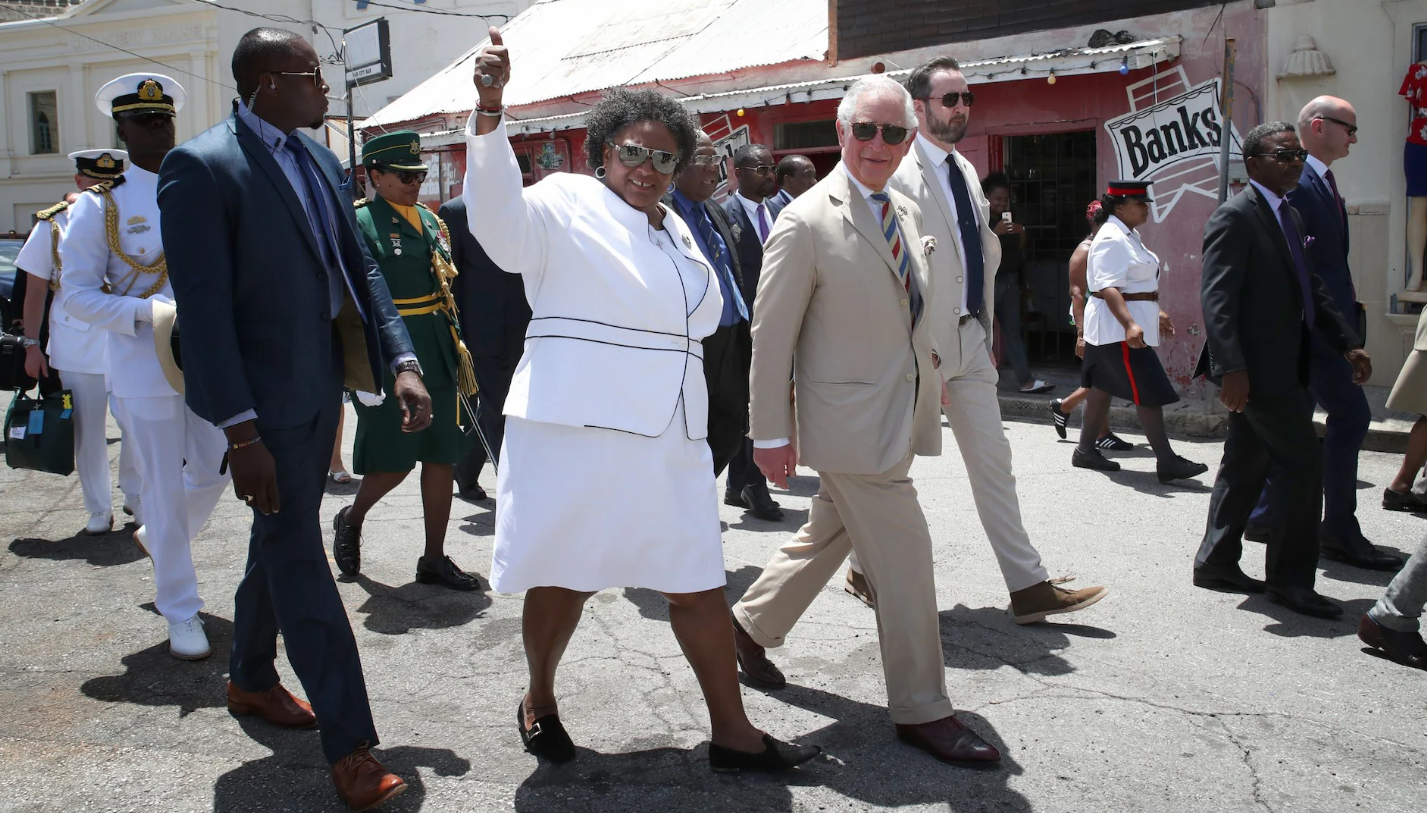
Caribbean nations are set to demand slavery reparation talks by forcing them onto the agenda of the forthcoming Commonwealth summit attended by the King. The Telegraph has more.
Mia Mottley, the Prime Minister of Barbados, is hosting a meeting of policymakers and campaigners this week to discuss plans to secure compensation for the slave trade.
Delegates at the conference confirmed on Thursday evening that Caribbean leaders would push reparations onto the agenda at the Commonwealth heads of government meeting in November.
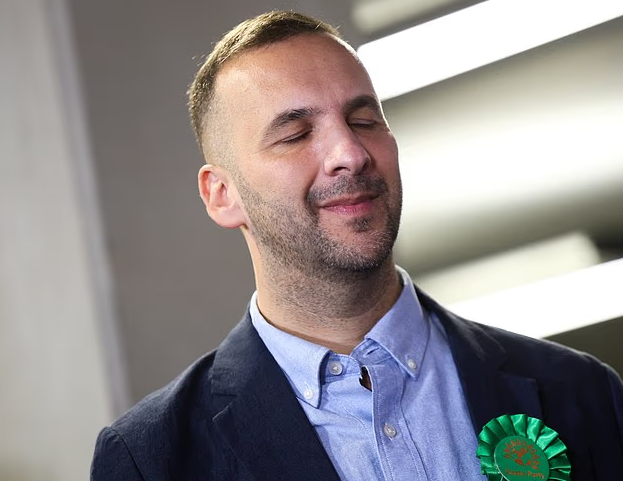
The event, in Antigua and Barbuda, is expected to be attended by the King. Andy Burnham may also attend.
The attempt by Caribbean nations will be the latest effort to exert pressure on Britain to offer compensation for slavery.
The plans were confirmed by Dr Carla Barnett, the Secretary-General of the Caribbean Community (Caricom), an organisation of member states in the region.
She said Caricom nations were “preparing to advance reparations on the agenda of the upcoming 28th Commonwealth heads of government meeting”. Further diplomatic efforts would be made at the United Nations, she added, saying: “The advocacy and activism therefore continues.”
Prof Sir Hilary Beckles, the Chairman of the Caricom reparations commission, the lead advocacy body for the region, spoke at the conference.
He said the 21st century would be the “century of reparations”, and that any compensation deal had to be “transformative” and capable of undoing historic wealth extraction from the Caribbean.
Caricom’s attempt to use the Commonwealth summit to apply further diplomatic pressure comes after a previous attempt in 2024, when the issue dominated the conference despite not being on the agenda.
A statement made by the King at the conclusion of the summit touched on the “painful” issue of slavery. He stated that countries could commit to “learning the lessons” from that episode of history, but calls for reparations were not directly addressed.
The Caribbean leaders are seeking redress for centuries of British slavery across the region’s former island colonies, where enslaved Africans were put to work on sugar plantations.
Campaigners argue that compensation is owed for these historical actions as well as for Britain allegedly leaving the Caribbean nations ‘underdeveloped’ following emancipation in 1834.
Worth reading in full.


Discussion
Comments
This week across the site:
To join in with the discussion please make a donation to the Daily Sceptic.
Profanity and abuse will be removed and may lead to a permanent ban.
I demand reparations for ENDING slavery and policing the world to stop other nations continuing the practice.
Seriously? I am now expected to pay for the historical actions of my great, great, great etc grandfathers historical wrongs. People whose personal history I know nothing about. I don’t think so thank you.
My ancestors were far too occupied being worked to death in the mills of the North to have anything whatsoever to do with slavery, apart from their own near – slave like status, that is. Of course, these money – grubbing parasites wouldn’t consider pursing the descendants of the tribal chiefs who sold their ancestors into slavery in the first place, would they, as they would no doubt be told to take a running jump, just as these chancers should be.
In over 2000 years, the indigenous black people on the continent of Africa never built or launched a single seaworthy boat to allow them to escape Africa. There was not a single two storey building built, just basic huts made with wood straw or stones. Not a single statue was erected to an influential black person. It was only when the dreaded white man arrived did that change. They don’t act or think or create as white people do. That statement was made by a black priest.
Charles Windsor should go with a bill prepared showing how much the UK spent destroying the slave trade, how much we have invested in their countries via Aid and include a charge for all the infrastructure we built for them.
I think the balance sheet will show that they owe us money.
King Chuck’s fat girlfriend in the pic looks like she’s doing perfectly well without reparations. How much might she eat if she received some?
“There is a class of colored people who make a business of keeping the troubles, the wrongs, and the hardships of the Negro race before the public. Having learned that they are able to make a living out of their troubles, they have grown into the settled habit of advertising their wrongs-partly because they want sympathy and partly because it pays. Some of these people do not want the Negro to lose his grievances, because they do not want to lose their jobs.”
Booker Taliaferro Washington
And…
“I am afraid that there is a certain class of race-problem solvers who don’t want the patient to get well, because as long as the disease holds out they have not only an easy means of making a living, but also an easy medium through which to make themselves prominent before the public.”
Booker Taliaferro Washington
Wise words considering his questionable hairstyle. Of course you can substitute lots of terms for ‘race’, climate or mental health for example, and we fall for them all.
Yes indeed. Such as ‘asylum seekers’?
And he was born into slavery.
When the French banned slavery and gave Haiti to its people, they had to buy themselves out of slavery, to the sum of $150m from 1820, which took until the 1947 I seem to recall. Giving the Carribean countries to its people for nothing, with their banks full and a ton of infrastructure doesnt look so much a bad deal does it?
Haiti and the Dominican Republic share a lot of colonial history and the same island, but are doing very differently economically and politically. The ethnic mix is very different.
How’s about no.
Dear King Charles III,
Please give them the Message of the West:
“Dear Third World, we owe you NOTHING. Stop whining & get over it!”
Don’t think that he has the spine for such action.
It would appear that those calling for reparations are doing very well for themselves. Not so much for their fellow citizens.
Of course it does. There would probably be an overall benefit if moral claims became time expired after 70 years on the basis that no ‘victims’ still existed. So arguments about Gaza and Palestine start fading from memory, Greek Cypriots can give up on Northern Cyprus, and people with a slave heritage get disappointed. Hey, even the Germans can put World War 2 behind them.
The only people who would still continue to be upset would be advocates and activists. QED.
Tort Law. Round them up, ship them back across the Atlantic, naked and in chains and deposit them on the West Coast where their ancestors were bought having been marched there by African slaver-tribes to be sold.
As proxies, this returns them to the condition their ancestors were in prior to being bought. This satisfies Tort Law. They can then go to the head of the supply chain in Africa and demand reparations from the descendants of those who enslaved their ancestors.
And jolly good luck with that.
And then we’ll take back our islands.
They imply that they would be richer had they not been victims of colonialism. Let’s see how Liberia and Ethiopia are doing, two countries that were never colonised by white people. The people of the Sentinel islands have lived largely untouched by the evil modern world – I wonder how rich they are.
Would those be the same Africans who were enslaved by the conquering tribe next door in the interior and sold to the slave traders on the coast? A trade which was stopped by the Royal Navy at a huge cost of blood and treasure?
Time to shut down the commonwealth, stop all funding, end all diplomatic activity related to it.
All individuals in England by virtue of any facet at all of commonwealth to be deported.
When a puppy shits on your carpet he gets a slap (I should know) and he learns not to do it again.
These people need to be metaphorically slapped.
CHOGM – Commonwealth Heads of Government Meeting.
Or as Mrs Thatcher called it: Come Hands Outstretched to Grab Money.
Plus ça change.
Metaphorically?
We should also make the ruling dynasty redundant without a golden handshake.
Norman invaders – ūt, ūt, ūt.
We should offer them reparations – a single plane ticket to whichever part of Africa their families came from. I wonder how enthusiastic they’d be about that.
Liberia was created for freed US slaves. The majority elected to stay in the US. Those who did go soon upset indigenous Africans by their high-handed and elitist behaviour.
This is being pushed now because grifters like Hilary Beckles smell weakness. They are right to.
and these chancers will in turn repatriate the ‘Caribs’ and the native american indian’s in the usa, whose land they now occupy.
Reparations? Shouldn’t they be grateful they escaped Africa and now live in far.more appealing prosperous Caribbean countries?
There are plenty of people still trying to escape Africa today, in case they hadn’t noticed.
”The Rumble in the Jungle” the famous boxing match between Mohammed Ali and George Foreman in 1974 in Zaire – now Democratic Republic of Congo.
Ali won.
On his return to the US he was asked by a reporter at the airport what his impressions of Africa were, to which he replied: “I’m just grateful my great grandpappy got on that boat.”
Hit them with the bill for anti-slavery patrols carried out by the Royal Navy.
We’ll call it quits.
I can see where they’re coming from however – just another shark circling the decaying corpse of the UK looking for their bite.
They want ‘reparations’ because apparently giving them the Caribbean wasn’t enough. Maybe they should compare property prices with those in Central Africa.
The British abolished slavery two hundred years ago. And of course all ex-slaves of the British still living should be given compensation by the former slave owners. My understanding is, though, that there are no former slaves of the British still living. Is it the view of the “Caribbean nations” that there are ex-slaves of the former British slave owners who are still alive? Is this what the madleft means when it claims that non-whites have “different ways of knowing”?