


On March 27th 2002, as Jewish families gathered at the Park Hotel in Netanya to celebrate the Passover Seder, a Hamas terrorist entered the dining room carrying an explosive device packed with shrapnel and detonated it among them; 30 people were killed, many of them elderly, and around 140 were injured. It was the bloodiest single attack of the Second Intifada, but there was nothing particularly exceptional about its intended victims, because during those years Israelis became accustomed to the possibility that an ordinary journey to work, a family meal in a restaurant, an evening in a café or a teenager’s bus journey to school might end with a young man or woman walking into the crowd and blowing themselves apart in order to kill as many people as possible.
The Sbarro restaurant bombing in Jerusalem killed 15 people, including seven children and a pregnant woman; the Dolphinarium discotheque bombing killed twenty-one, overwhelmingly teenagers; buses were bombed in Jerusalem and Haifa, civilians were murdered in markets and shopping centres and the cult of the suicide bomber became one of the defining obscenities of the period, complete with posters, songs, celebrations and the elevation of those who deliberately murdered civilians into martyrs.
It is worth remembering what an Intifada actually looked like before the word became another piece of revolutionary theatre on Western campuses and British streets, shouted by people safely separated from its consequences and frequently possessing only the vaguest understanding of the conflict whose vocabulary they have appropriated, because the Green Party of England and Wales is now entertaining a motion which demonstrates just how completely a particular interpretation of that conflict has migrated from the revolutionary politics of the 20th Century into supposedly respectable progressive politics in 21st-century Britain.
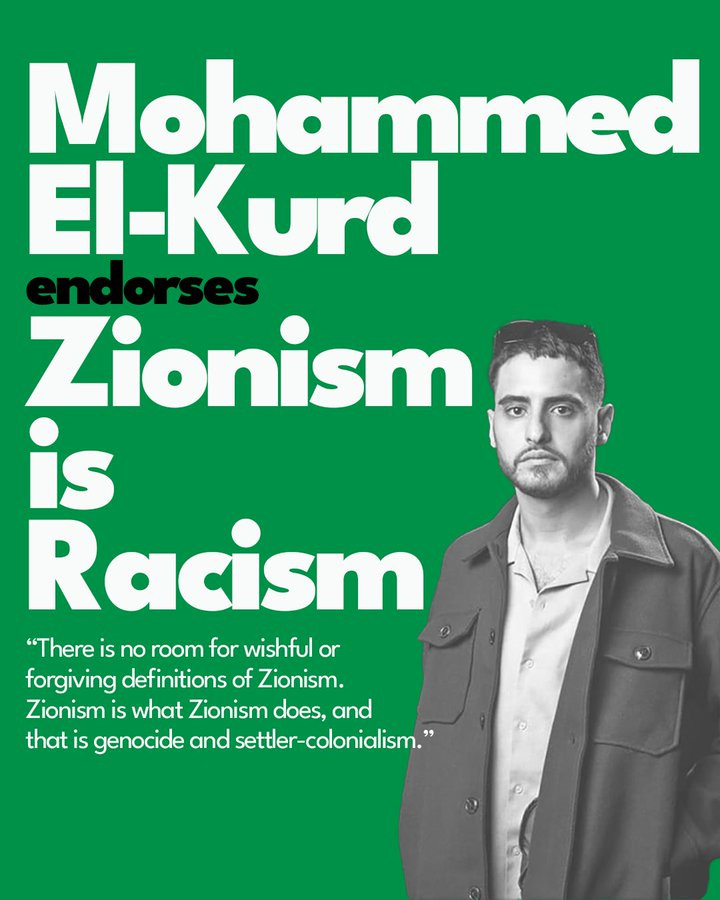
The proposed declaration that “Zionism is Racism” is offensive enough in itself, but what makes it particularly revealing is that its authors are not simply proposing criticism of the present Israeli government, the conduct of the war in Gaza, settlements, borders or any of the other questions over which Israelis themselves argue with considerable vigour; the motion defines Zionism in terms which encompass the creation and “continuity” of a Jewish state and then declares that principle racist, before advocating a single Palestinian state across historic Palestine. Those are not hostile interpretations imposed upon the proposal by its opponents; they appear in the Green Party’s own published conference agenda. The significance of the word continuity should not be lost amid the usual evasions about criticism of Israel being deliberately confused with antisemitism, because nobody needs to manufacture such an argument in order to oppose this motion; what is being proposed here goes considerably further, since if Zionism includes the belief that the State of Israel should continue to exist, and Zionism is itself defined as racism, then the belief that the world’s only Jewish state should continue to exist becomes a racist proposition.
We have therefore moved beyond an argument about what Israel does and arrived at an argument about whether Israel has a legitimate right to exist at all, which is precisely why the Green Party cannot hide behind the familiar defence that anti-Zionism and antisemitism are necessarily discrete phenomena: they certainly can be, depending upon what is meant by anti-Zionism, but when anti-Zionism requires Jews to surrender a right to national self-determination which its advocates enthusiastically concede to almost everybody else, and when it demands the dissolution of the one Jewish-majority state on earth while describing those who object as racists, the distinction becomes increasingly difficult to sustain.
There is also a history to this language which makes the Greens’ willingness even to entertain it extraordinary, because “Zionism is racism” did not emerge organically from the modern human-rights movement and nor is it some new insight produced by the war in Gaza; it belongs to a much older political tradition whose roots run through Communist hostility to Zionism, the increasingly antisemitic campaigns of the late Stalinist period, Soviet foreign policy in the Middle East and eventually the grotesque 1975 United Nations resolution which formally declared Zionism to be a form of racism.
The Communist movement had regarded Zionism with hostility long before the creation of Israel because Jewish national consciousness sat uneasily beside a Marxist understanding of nationalism and class, but under Stalin something darker developed as “Zionist”, “rootless cosmopolitan” and supposed loyalty to international Jewish interests became convenient political categories through which an ancient prejudice could be expressed in the vocabulary of revolutionary anti-imperialism. The destruction of the Jewish Anti-Fascist Committee, the purge of Yiddish cultural institutions, the anti-cosmopolitan campaign which saw thousands of Jews dismissed or demoted and finally the Doctors’ Plot of 1952–53 were not accidental aberrations in an otherwise pristine history of Soviet anti-racism; the United States Holocaust Memorial Museum describes the post-war period as one of increasingly blatant governmental antisemitism, culminating in those campaigns, while scholarship on Soviet anti-Zionism notes that the regime’s large-scale anti-Jewish campaigns were themselves camouflaged in anti-Zionist language.
Restating the history here is important because one of the more persistent conceits of the contemporary radical Left is that antisemitism ceases to be antisemitism provided that the object of hostility is first linguistically converted from “Jew” into “Zionist”, yet this is almost precisely the mechanism by which the USSR – a state formally dedicated to internationalism and racial equality – discovered that it could resurrect extremely old suspicions about Jewish loyalty, Jewish conspiracy and Jewish power while insisting that it was doing nothing of the sort.
There was, admittedly, an extraordinary moment of Soviet pragmatism at the creation of Israel, when Stalin calculated that the new Jewish state might weaken British influence in the Middle East and the Soviet bloc assisted its survival, but when Israel stubbornly refused to become a socialist client and instead developed towards the Western camp, the older ideological hostility returned with considerable force.
After the Six-Day War in 1967 Moscow broke diplomatic relations with Israel and Soviet anti-Zionism accelerated dramatically; Israel was increasingly represented not simply as an enemy state but as an outpost of Western imperialism, Zionism was associated with racism, colonialism and eventually Nazism itself, while the Soviet Union armed Arab states confronting Israel and cultivated relationships with Palestinian revolutionary movements. This was an extraordinarily useful piece of ideological repackaging because it allowed a conflict with complicated national, religious, historical and territorial origins to be inserted into the increasingly fashionable binary language of Western imperialism and Third World liberation; Israel became the colonial oppressor, Palestinian nationalism became another revolutionary liberation movement, and the uncomfortable fact that the Jewish population of Israel included refugees and descendants of refugees from persecution in Europe, Russia, the Middle East and North Africa could simply disappear from the picture.
The Soviet Union did not invent Arab hostility towards Zionism, any more than it invented Palestinian nationalism, but it supplied an international ideological language through which Israel could cease to be understood principally as one participant in a bitter national conflict and become instead a manifestation of the wider structures of Western racism and imperialism; it is difficult to overstate the importance of that intellectual manoeuvre because, stripped of its hammer-and-sickle decoration and translated into the vocabulary of intersectionality and decolonisation, it remains remarkably recognisable today.
The culmination came on November 10th 1975 when the United Nations General Assembly passed Resolution 3,379, determining that “Zionism is a form of racism and racial discrimination”, by 72 votes to 35 with 32 abstentions; the voting coalition itself tells us a great deal about the political circumstances in which the resolution was produced, bringing together the Soviet bloc and a large number of Arab, Muslim and non-aligned states as part of the wider Cold War struggle over Israel. It was not some timeless moral truth discovered by the international community, however often the phrase is now treated as though it were, and when the Cold War ended the United Nations itself revoked the determination: Resolution 46/86 passed on December 16th 1991 by 111 votes to 25, with thirteen abstentions, formally cancelling the equation between Zionism and racism.
There is something almost surreal about watching a supposedly modern, progressive British political party prepare in 2026 to exhume an ideological formula which reached its international high-water mark through the duplicitous diplomacy of the Soviet Union and its allies half a century ago and which the United Nations repudiated as the Soviet system itself was collapsing; more remarkable still is that it should be done under the banner of anti-racism, as though the political history of the slogan began last Tuesday on Instagram and not in a period when Soviet Jews themselves were discovering the remarkable ease with which a state could persecute Jews while explaining that its real objection was merely to Zionists.
This is also why the argument requires some elementary clarity about what Zionism is. It has never been a single ideological programme and there have been socialist Zionists, liberal Zionists, religious Zionists, revisionist Zionists and many other varieties whose disagreements with one another have sometimes been considerably more passionate than their disagreements with outsiders; at its irreducible core, however, Zionism is the proposition that the Jewish people constitute a people and possess a right to national self-determination in their ancestral homeland. Before 1948 one could argue about whether that aspiration ought to result in a state; after 1948 the argument acquired a rather different character because Israel ceased to be a theoretical proposal and became a country in which generations of human beings have subsequently been born, lived and died.
The proposition that Israel should now cease to exist therefore cannot sensibly be presented as though we were revisiting a 19th-century debate between Theodor Herzl and his critics before anything irrevocable had happened; it means dismantling an existing state of nearly 10 million people, many descended from Jews who could hardly “return” to the European or Middle Eastern societies from which their parents and grandparents fled or were expelled, and somehow imagining that this could be accomplished peacefully in a region whose recent history provides very little reason for such confidence. The remarkable double standard involved is rarely acknowledged: national self-determination is regarded across much of the contemporary Left as almost axiomatic when claimed by Palestinians, Kurds or other peoples, yet Jewish national self-determination is subjected to an ideological test applied to almost nobody else, until the continued existence of Israel becomes something which must periodically be justified before a tribunal of Western activists.
The apartheid analogy is indispensable to this process because it transforms a complicated national conflict into a moral story whose ending has already been written. Once Israel is South Africa, Zionism becomes Afrikaner nationalism, Palestinians become the equivalent of black South Africans and the appropriate solution ceases to be reconciliation between competing national movements because one of those national movements has already been classified as illegitimate. The analogy is enormously powerful and enormously misleading. Arab citizens constitute a substantial minority of Israel’s population; they possess the vote, form political parties, elect members of the Knesset, serve in the judiciary and professions and participate in the institutions of the Israeli state, and in 2021 Ra’am became the first independent Arab party formally to join an Israeli governing coalition. Freedom House continues to describe Israeli elections as competitive and the country as a parliamentary democracy, while also recording discrimination and socioeconomic disparities affecting Arab citizens; both things can obviously be true, because democracies can contain inequalities and injustices without thereby becoming apartheid states. The circumstances of Palestinians in the West Bank, Israeli settlements and the legal and security arrangements created by decades of occupation raise different and much harder questions, but collapsing those questions into a claim that Israel in its entirety is simply the reincarnation of apartheid South Africa does not illuminate the conflict; it performs the politically useful task of deciding in advance that Jewish sovereignty itself belongs in the same moral category as white minority rule.
The same mechanism can be seen in the increasingly casual use of the word genocide, a word whose legal and historical gravity ought to make people particularly careful about employing it as a political slogan. The scale of civilian death and destruction in Gaza has understandably generated intense international controversy and the allegations made against Israel are serious, but the transformation of “genocide” from a specific legal allegation requiring proof of the necessary genocidal intent into a ubiquitous slogan has served a wider political purpose: once genocide has been established rhetorically rather than judicially, anybody defending Israel’s legitimacy can be made to appear not merely mistaken but complicit in the ultimate human crime. This is deliberate because the effect is to close the argument rather than conduct it, and it fits remarkably neatly beside the apartheid analogy because both transfer Israel into categories already carrying settled moral conclusions in Western consciousness. There is then no need to wrestle with Hamas, Palestinian Islamic Jihad, the history of repeated wars against Israel, the suicide bombing campaigns, the rejection of earlier partition proposals, the competing territorial claims or the fact that Israelis themselves have repeatedly experienced the conflict as a question of physical survival; all of this becomes extraneous once a ready-made explanatory template has assigned everyone their part.
This is where the convergence between the hard Left and political Islam has been so extraordinarily successful, despite the profound incompatibility between many of their underlying beliefs. Islamist movements did not need Western progressives to embrace Islamic theology; they needed them to interpret the Palestinian cause through categories which the Western Left already regarded as morally decisive, and the language of colonialism, racial oppression, indigenous struggle, white supremacy and apartheid provided exactly that bridge. The old Marxist assumption that the West represents the principal organising source of global oppression had survived the disappearance of the Soviet Union remarkably well, migrating through post-colonial theory and the academic Left into a broader worldview in which Western power is presumptively malign and movements ranged against it acquire a corresponding presumption of authenticity; Israel, as a prosperous democracy allied to the United States and culturally connected to Europe and North America, could therefore be placed instinctively on the oppressor side of the ledger, while the ideological character of those fighting it became strangely secondary. Hamas could persecute homosexuals, subordinate women, openly proclaim an Islamist political project and deliberately murder civilians without seriously disturbing a coalition of Western activists who would regard comparable positions at home as beyond the pale, because within the adopted framework none of those things determined its primary identity; it was “resistance”, and resistance to a Western-aligned state had already acquired the moral status from which everything else followed.
The irony is that while sections of the Western Left have been travelling backwards into the ideological world of 1975, some of the Middle East has been moving, slowly and painfully, in precisely the opposite direction. Egypt recognised Israel and made peace in 1979; Jordan followed in 1994, and in 2020 the Abraham Accords opened diplomatic relations between Israel and the United Arab Emirates and Bahrain, followed by normalisation agreements involving Morocco and Sudan. The language of the Abraham Accords could hardly be further removed from the eliminationist politics which has dominated so much of the conflict: mutual understanding, coexistence, human dignity, religious freedom, cooperation, dialogue and the development of friendly relations between states are explicitly placed at their centre. The agreements did not solve the Palestinian question, and nobody sensible imagined that they had, but they represented the growing recognition among pragmatic Arab governments of a reality which ought by now to be obvious: Israel exists, it possesses a powerful economy and military, it is woven into the strategic architecture of the region and it is not going to disappear; the future therefore lies in accommodation, trade, diplomacy and ultimately some form of settlement which allows Israelis and Palestinians to live alongside one another, rather than another generation being sacrificed to the fantasy that history can somehow be reversed by destroying one of the peoples involved.
This makes the Green Party’s flirtation with “Zionism is Racism” more disturbing rather than less, because the motion does precisely what decades of failed Middle Eastern politics should have taught responsible politicians not to do: it makes the legitimacy of one side’s national existence conditional while presenting the other’s as axiomatic. Even the Jewish Greens have warned about the consequences. Their position has evolved and their membership is currently divided, but their February statement observed that for many Jews Zionism means at its most basic level having somewhere Jews are no longer a persecuted minority, warned that the motion could make Jews feel unwelcome in the party and drew attention to the danger that “Zionist” has increasingly become an abusive substitute for “Jew”; their August briefing records members who fear that the proposal could discriminate against Jews because Jews are disproportionately likely to identify as Zionists or to have connections with Zionist institutions, while other Jewish Green members support the motion, demonstrating that there is no single Jewish view which can conveniently settle the argument.
That internal disagreement should itself have encouraged caution, yet the surrounding political culture appears to be moving in the opposite direction, and leaked messages reported this week from an unofficial Green activist group are profoundly disturbing: participants reportedly discussed or justified “killing Zionists”, one Green councillor expressed a desire to see Israel “wiped off the map”, and other messages presented violent resistance as legitimate. The group was unofficial and it would be wrong to attribute every statement made within it to the Green Party as an institution, but it would be equally absurd to pretend that such language tells us nothing about the danger created when ‘Zionist’ becomes an infinitely expandable category of political wickedness.
This is the point at which the endlessly repeated assertion that “anti-Zionism is not antisemitism” becomes inadequate, because it answers a much simpler question than the one actually before us. Of course criticism of Israel is not inherently antisemitic, and neither is opposition to a particular Israeli government or policy; equally, there have always been Jewish anti-Zionists, just as there have always been arguments within Judaism about the nature and meaning of Jewish nationhood. The question is where anti-Zionism leads when Zionism has been defined, as the Green motion defines it, to include the continuity of Israel itself. If the belief that Israel should continue to exist is Zionism, and Zionism is racism, then the millions of Jews in Israel and the many millions elsewhere who believe that Israel should continue to exist are adherents of a racist ideology; if political organisations subsequently determine that racists are unwelcome within their ranks, the practical destination of the argument becomes obvious even if nobody has yet had the courage to state it explicitly. Jewish people are thereby presented with a peculiar political test which no other minority in Britain is routinely required to pass: disassociate yourself from the national existence of a state containing roughly half of the world’s Jews, including perhaps your own relatives, or accept that your attachment to its continued existence may be officially classified as racism.
There is a further obscenity in doing this under the banner of anti-racism, because antisemitism has always possessed an unusual capacity to adapt itself to the moral vocabulary of the age. In Christian Europe the Jew was condemned as the religious outsider; in the racial nationalism of the 19th and 20th centuries he became biologically alien; under Stalin, the ex-seminarian who grew up in a notoriously antisemitic empire, the Jew could become the rootless cosmopolitan and Zionist conspirator; within parts of contemporary progressive politics he can now appear as the privileged white colonialist whose supposed proximity to power strips him of the protections normally extended to minorities. The vocabulary changes while certain underlying patterns remain unnervingly familiar: Jewish collective identity is treated as suspect, Jewish power is imagined as unusually sinister, Jewish claims about antisemitism are received as strategic manipulation, and hostility which would immediately be recognised as racial when directed towards another minority is sanitised through the insistence that the target is really ‘Zionism’. This does not mean that every anti-Zionist is an antisemite, which would itself be an intellectually lazy proposition; it means that anti-Zionism provides an exceptionally convenient vehicle for antisemitism when the boundaries of the term are expanded until the overwhelming majority of Jews who simply believe that Israel ought not to be destroyed can be placed inside it.
The Green Party should therefore be condemned not merely if it eventually passes this motion at its Brighton conference in October, but for having reached a political condition in which such a proposition can be treated as a respectable subject for debate. The party’s own published material says that conference is its supreme policy-making forum and that members will gather there to determine policy; this is not an obscure discussion taking place in a student society but a proposition being considered within a party which holds seats in Parliament and aspires to considerably greater influence over British public life.
A responsible progressive party with even the most elementary historical memory should have recognised the phrase “Zionism is racism”, examined where it came from, remembered the Soviet campaigns which converted anti-Zionism into an acceptable language for hostility towards Jews, recalled Resolution 3,379 and its eventual repudiation, looked at the extraordinary success with which the Israeli-Palestinian conflict has been forced into racial categories borrowed from completely different histories, listened carefully to Jewish members warning about where this rhetoric can lead, and concluded that there are some ideological corpses which deserve to remain buried.
Israel is not above criticism because no democratic state is above criticism, but that observation has become so ritualised that it increasingly obscures the much more important distinction the Greens are in danger of abandoning: criticism of what a state does is fundamentally different from denying that the state has any legitimate right to exist. Israel is an established nation whose citizens include Jews, Muslims, Christians, Druze and others; its Arab citizens vote, organise politically and sit in its parliament, while the country’s arguments about its identity, security, religion and future are conducted through democratic institutions in a region where liberal democracy remains conspicuously rare. Its neighbours who have chosen peace have done so because they eventually accepted the elementary fact upon which any peace must be built, that neither Israelis nor Palestinians are going to vanish and that no durable political settlement can be constructed upon requiring either of them to do so. The Abraham Accords, whatever their limitations, belong to that world of recognition and accommodation; “Zionism is racism” belongs to the older world of ideological delegitimisation, Soviet propaganda, rejectionism and the fantasy that peace can somehow be achieved after one side’s national aspirations have first been declared morally illegitimate.
The Greens can choose which of those traditions they wish to inherit, but they should not be permitted to pretend that there is no history behind the choice. The slogan they are considering is considerably older than many of the activists now repeating it; it survived Stalinism, was internationalised through the Cold War assault upon Israel, reached the United Nations in 1975 and was formally repudiated in 1991, only to return half a century later dressed in the fashionable language of decolonisation and intersectionality. What makes this particularly depressing is that the Middle East itself has supplied abundant evidence of where the alternative lies: not in pretending that Israelis are going to disappear, nor in romanticising Intifadas whose actual history was written in the blood of people eating dinner and travelling on buses, and certainly not in taking the national movement of one of history’s most persistently persecuted peoples and declaring it uniquely racist, but in the much harder work of recognising that two peoples possess histories, grievances, attachments and rights which cannot simply be wished away. If the Green Party cannot understand that, then its problem is considerably deeper than one offensive conference motion; it has allowed an ideology which regards itself as uniquely alert to racism to become so historically illiterate that it is in danger of resurrecting one of the 20th Century’s most notorious political attacks upon Jewish national existence and congratulating itself for doing so in the name of anti-racism.
C.J. Strachan is the pseudonym of a concerned Scot who worked for 30 years as a Human Resources executive in some of the UK’s leading organisations. Subscribe to his Substack page.



Discussion
Comments
This week across the site:
To join in with the discussion please make a donation to the Daily Sceptic.
Profanity and abuse will be removed and may lead to a permanent ban.
Zionism is one of Green’s compulsions, which also include net zero, tax middle-class to extinction, boost the benefits to the unwilling and welcome the invading hordes.
Bearing in mind that “any publicity is good publicity” is there a chance that they are totally ignored.
The Left align with Islam and its followers. This is why The Left are so anti-Israel and anti-Jew. You can add anti-West to that also.
It’s that simple.
In the Greens’ defence here, they are being consistent, they want to eradicate the notion that ethnicity or a monoculture plays any part in national identity, on the occasions that they even find national identity relevant at all. They believe that of British identity, and therefore, in their view, it should apply equally to Israeli identity.
Melanie Phillips famously wants to allow a jewish state, based on an ethnic and religious identity, but denies it to the native inhabitants of our islands. This has largely been dismissed by the right, on the grounds, again, of consistency.
Agree 100% with your first paragraph. I don’t know much about Melanie Phillips – what has she said about the ethnic and religious identity of Britain?
I am broadly sympathetic to Israel, despite their arms sales to Argentina during the falklands, but I am heartily sick of their war in gaza.
If you can’t destroy hamas in 3 years of destruction, call it a day, thiink of a new plan you’re supposed to be so smart.
The fact that the tedious rivalries of the middle east are infecting our nation’s politics, I find absurd.
It’s not our problem, we have our own, already.
This is a terrorist army whose weapons and combatants are firmly embedded within the civilian population, including a sophisticated tunnel system bigger than the London Underground. Contrary to hard left propaganda, Israel goes out of its way to avoid killing civilians.
Imagine the IRA on steroids and take it from there. How long did THAT one take?
There are probably many reasons for the internationalist left’s enthusiasm for “anti-Zionism”. One of Israel’s Basic Laws defines the country as the homeland of the Jewish people and that they have the right to self determination. It was apparently controversial even in Israel. It’s the only explicitly/overtly ethnonationalist nation I am aware of. The modern left seems to hate ethnonationalism. I would like to see England declare itself the homeland of the English people and for England to aim to retain a supermajority of English people who should have the final say on whether England continues in any meaningful way. All sorts of people will be calling me racist at this point.
All of that said, I find it odd that Jewish people in the UK and especially in the USA have as far as I can tell on average been more inclined to support the political left than the right. I don’t find myself enamoured of that tendency.
But if I were a Jewish Israeli born in Israel I don’t think I’d be too keen on dissolving my country or sharing too much land with anyone else.
Very fine comment indeed.
That’s exactly it.