


Solar power is threatening to overwhelm the UK electricity grid this summer as gluts of supply create a risk of blackouts and leave households and businesses facing being asked to consume excess power. The Telegraph has the story.
Energy chiefs are drawing up plans to stop the electricity grid being overwhelmed by solar power this summer.
The National Energy System Operator (Neso) said it would be forced to use “more tools, more often” to keep power networks stable when sunny weather caused surges in energy generation.
This would include paying households and factories to consume excess power for the first time, as well as potentially issuing unprecedented orders to switch off large power stations.
Neso issued the warning as Rachel Reeves travelled to Washington, where she is expected to urge a gathering of world leaders to “follow her plan” to combat the energy crisis caused by the conflict in the Middle East.
At the International Monetary Fund summit, the Chancellor will call for “collective action” while urging countries to embrace Net Zero to boost energy security.
She will also pledge to “do all in her power to keep costs down for the British public”, warning against “knee-jerk decisions that are unaffordable and deepen economic pain”. …
In its summer outlook, published on Tuesday, Neso said war in Iran would push prices higher because of Britain’s dependence on gas, but that it had no concerns about the security of electricity supplies this summer.
However, it warned that gluts of solar power and “low demand” periods were making the grid more difficult to manage as Ed Miliband, the Energy Secretary, rolled out swathes of new wind and solar farms to hit Net Zero.
Grid instability occurs when energy demand is low but renewables still generate large amounts of power. If not counterbalanced, this can trigger blackouts.
But many onshore solar and wind farms are not directly connected to the main transmission system and cannot be managed by Neso, which is tasked with keeping electricity networks stable.
It means it must balance the system in other ways, such as paying larger power plants to turn off or paying consumers to ramp up demand.
The amount of solar on the grid has more than doubled to 22 gigawatts in the past decade, as households and businesses have sought to cut their power bills by installing rooftop panels.
Worth reading in full.



Discussion
Comments
This week across the site:
To join in with the discussion please make a donation to the Daily Sceptic.
Profanity and abuse will be removed and may lead to a permanent ban.
Never forget that Solar energy provides only ~10% of its nameplate value as an annual contribution to the Grid.
And it produces most when you need it least.
The late Christopher Booker warned that the most likely time for the UK to suffer a grid collapse was not Winter when demand exceeds supply, but in the Summer when demand is low and more solar is pumped into the grid. Clouds wafting across can cause fluctuations.
When you listen to the ideologically motivated politicians like Miliband and Media like the BBC people will be led to believe that all we need to do to save the whole planet from storms, floods, droughts and wild fires is to be rid of fossil fuels and cover the country in wind turbines and solar panels, and everything will tick along just fine. —-NO IT WON’T.
By the time you have done all of this millions will be in energy poverty, the Industrial Base will be destroyed and the grid will be destabilised.—We are being sold an eco socilaist lie, and it is costing us vast sums of money that could be better spent on everything else that is deprived of the trillions wasted on this total CRAP
“use more power”? arent these the same people telling us to not use any? More evidence that “net zero” refers to the IQ of its proponents
I feel very small and ignorant when I read all the learned comments (seriously, not being facetious), and I recall that Charlie Brown cartoon where they are lying on the ground looking up at the clouds and seeing famous paintings or historical events. Charlie looks rueful and says he can see a little ducky.
It is complicated and although I’ve listened to many discussions on the topic, I recall only limited fragments.
For someone who really knows the details seek Kathryn Porter on YouTube. She also spoke on a previous Daily Sceptic interview.
Thank you for the link. It does actually matter to me, because I have a friend who recently ran a campaign to block an application for a huge solar farm on an upland area close to her. It was so grotesquely inappropriate (as they mostly are) what with carving out chunks of land to make way for massive batteries, inadequate access for fire engines, unsuitable access for cables and whatnot. The application was turned down by the local council, but the solar firm appealed, then withdrew their appeal at the last minute. We hope and pray it is not a case of ‘reculer pour mieux sauter’.
Upvote just for the French 😊
Ok, so I cheated and asked Venice. Apologies a bit long. But to think that solar operators get paid when they produce a glut and risk an outage. It is just outrageous:
UK-based solar farm operators get compensated when the grid cannot accept the energy they produce. This situation is known as “curtailment,” and the compensation is part of what are called “constraint payments.”
Total constraint payments across all generation types (primarily wind) were projected to increase from £1.5 billion in 2024 to more than £1.8 billion in 2025.
In Ireland, solar curtailment even quadrupled between 2024 and 2025, suggesting a potential trend that might emerge in the UK as well.
These constraint payments are ultimately passed on to consumers, with Ofgem estimating that constraint costs added around £15 to a typical annual household bill in late 2025.
The £15 per household figure appears to be significantly understated based on the total curtailment costs reported as there are approximately 27 million households in the UK. This would actually amount to roughly £85 per household, not £15.
The discrepancy might be explained by the fact that the £15 figure from Ofgem likely represents only the portion of constraint costs that appears… Read more »
Unless I’ve misunderstood recent developments, the British tax payer is being asked to:
I’m sure I’ve missed a few other things too.
I think it’s already at the point where I some areas they can’t use all the available wind power due to grid limitations. But they have a guaranteed price, so they build new turbines anyway. Kerching! 💰
The general public should be more angry than they are. A big outage may be needed to shock people out of their stupor.
And yet people wonder why our electricity is the most expensive in the World.
And people still believe renewables will make it cheaper! – how can it with that lot?!!…
One of the most shocking aspects of this story, for me, was the news that Rachel Reeves has a plan.
Baldrick’s lawyers have sent a letter of intent to sue for breach of copyright and theft of intellectual property.
I wouldn’t put her in charge of the office tea club….
Jo Nova has a piece on the topic: https://joannenova.com.au/2026/04/the-coverup-warnings-months-before-the-spanish-blackout-today-was-really-bad-and-were-going-to-crash/
Guess who told her?
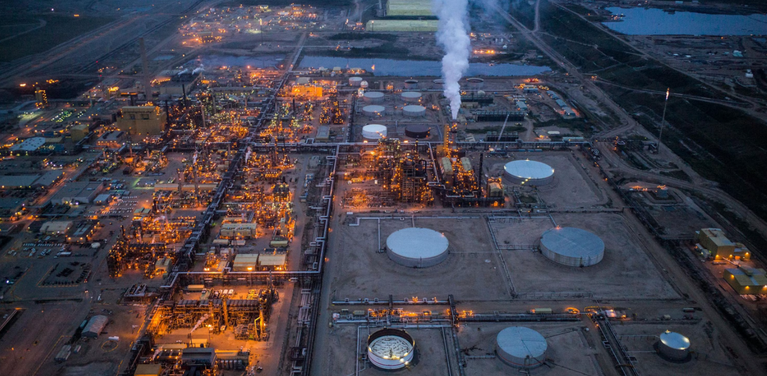
I can’t escape how depressingly ugly the lead picture is. An empty field is beautiful by comparison. On approach to Luton airport recently, these eyesores were dotted everywhere.
Pray for hail.
Very large hail.
Cue calls to block out the sun.
Article about this in the Daily Telegraph only a few days ago.
A somewhat redundant act on this island surely?
It is a feature of those who promote Net Zero and the electrification of all our energy, that they understand neither physics nor economics.
Did we have the same problems of under and over supply when we generated electricity from predictable sources? Are intermittents a step forward?
No, we did not have these problems because the generation was controllable and the rotating machines have inertia which is essential to stabilise the grid.
Of course intermittent, unreliable generation is not a step forward, it’s a very expensive step into the unknown.
The problem with solar arrays connected to the grid in a cloudy Country like ours, is that passing clouds casting shadows over solar arrays cause sudden drop in output, then sudden increase. This causes spikes in voltage and frequency and since there is no inertia in solar arrays can cause problems on the grid.
The same is true for wind which can quickly drop out or back in as wind speed varies, or gusts.
Unless there is sufficient spinning generators connected to the grid – I have read this really needs to be about 60% – to provide inertia and automatically to speed-up, slow-down when there are changes to voltage or frequency, then the grid is not stable.
The grid collapse in Spain in April occurred when 73% of supply was wind/solar with over 50% solar. A frequency spike at one large solar array caused other arrays to disconnect causing more spikes which within half a second* collapsed the grid, there being insufficient inertia to stabilise it.
Now it has been mandated that the Spanish grid will have at least 48% gas generator input.
The point about this is: it will never be possible to run a… Read more »
A small grid in Australia suffered a collapse as a cloud came over. It had quite an effect as the grid manager blocked the addition of a much larger solar farm to the grid until the owners were able to guarantee 24/7 output. their budget did not include a generating plant and so the panels remain unconnected.
We need that grid manager in the UK.
Ha Ha
Spains been there done that, had the black out.
Their enquiry has just publish voice transcripts from operators last January say they were close to crashing, and on the morning of the 28th April calling for more spinning reserve. And it was all caused by over voltage. It only took a couple of seconds.
Coming to a transmission network near you.
Yes, Spain lost 40% of its generation due to the instability and the collapse took just over 5 seconds to occur with the operators unable to act fast enough to prevent it happening.
The problem is they still need big spinning machinery to allow the grid to stay synchronised, so you are either paying for solar and wind to cut output so thermal plants can still operate or they need to look at bringing synchronous condensers online at incredible cost. “Renewables” also can’t provide reactive power, which is essential for grid stability so that’s additional cost and complexity managing that. But sure, renewables are cheap.
Hmm. How to cut output from a solar farm? What happens if they just disconnect the solar panels? All those electrons will still be kicked around by the photons but they can’t go anywhere. My guess is that leaving solar panels exposed without a connected ‘load’ would be very bad for them. Can anyone confirm?
As far as small inverters, like the 3 kW peak one in my house are concerned, they can only operate if the grid connection is live. When a mains power cut happens, they have to shut down automatically. The DC input from the panels is always live during daylight, but when the inverter is not running, there is no current. When it is necessary to disconnect it manually, one has to switch off the AC side first, not the DC. This is because there would be a nasty spark on the DC side, a wee bit like you see on third rail electric trains as the contact shoe runs off the third rail.
Nope no load no production, there’s a stack of old panels outside my workshop in full sun quite inert.
Many thanks.
If a circuit is broken, there is a Potential Difference (in voltage) between the two poles, but current cannot flow.
In the wall sockets in your home, there is a Potential Difference (~ 230/240 volts) between the Live and Neutral, but current only flows if you plug in some appliance to complete the circuit between the Live and Neutral. The switch in the socket can make or break the circuit.
I wouldn’t say so, there will be an electrical potential at the output terminals but no current flow.
Correct. The spinning reserve to maintain frequency stability is by gas turbine stations connected and running at far less than their full load efficiency of 48-50% in specific energy terms. The synchronous condensers provide power factor correction but some of DESNZ talking heads confuse that provided by high speed rotors with spinning reserve.
“But many onshore solar and wind farms are not directly connected to the main transmission system…”
Then what are they connected to?
The *distribution* system.
The transmission system is the network of 400kV and 275kV transmission lines runnning across the country, with multiple cross-connects, hence “grid”.
The distribution system is then branch lines taken from this at 132kV and below (right down to the 415/240V into each property)
You mention 400kV, 250kV as transmission lines and 132kV and below down to domestic connections. Is there any source of info where I can find out what the local transmission towers run at?. From my youth I think I remember signs on pylons saying “Warning! xx,000 volts!” but I don’t see that these days. Maybe I’ve mixed up signs from elsewhere.
Most of the wooden pole mounted cable used carry 11 kV three phase cable, to the local transformer (sometime mounted up on a pole in rural areas) which is usually fenced in nearby. Some areas without buried cable have overhead 400V 3 phase (to modern standards; in the real world some are still 415V 3 phase from which single phase pairs at 230/240 run into individual properties.
Quite a lot of local distribution is on buried cable at 11 kV, or occasionally at 33 kV as far as local transformers.
On the pylon mounted cabling, it’s either 275 or 400 kV in the NESO domain. The ones with groups of 4 close together (i.e. 6 groups of 4) are 400 kV, so quite easy to spot.
Thank you.
The ‘Meccano’ pylons near us are 6 pairs of cables – so only 275kV (only!). I’ve long noticed the three phase cables on wooden poles with occasional taps off with just two cables (presumably just two of the three phases) on wooden poles going a mile or two to small hamlets or farms with the transformers on the poles near the houses or farm buildings. I notice at the join there are often padlocked levers leading to hefty looking switches up near the cables – so that must be switchgear for the 11kV.
I have 400kV crossing forest land in N E Wales with 2 sets of 3 phase circuits double not quad conductors. And 3phase 132kV double wooden poles – “ green” from wind farm substation to main grid interconnection point.
Have a look at Open Infrastructure map – just do a web search and it will show you all the transmission and distribution lines in your area complete with voltages annotated.
Yes, it’s here to avoid a search
https://openinframap.org
Thanks both.
Currently binging on that openinfra site. How have I not found it before?!
I think these are small generators feeding-in on and off into local, low voltage circuits which are after the main HT grid.
Lots of smaller solar farms in my area, the grid over volts on sunny days and all the home solar panels including my ebay second hand installation shut off as the inverter won’t accept the grid voltage. I’ve not managed to get into the higher level programming to up the inverters limits.
Very interesting. Do you get any warning lights or readouts to identify the problem? Just how sensitive is your inverter (or installations in general) to mains conditions? For example would they work if isolated from the grid but fed by a small generator set?
The inverters won’t function without grid connection unless they are specifically designed to charge a battery bank in isolation, my neighbour has batteries and they won’t charge with the power out, they also don’t power the home when the powers out. I think the factory setting is something in the 255V range.
If you plugged in a generator I think you would need something in-between to hold or use the power completely as the smart meter exports any excess production, when the powers working only of course.
Thanks for that – I was imagining some sort of scenario to mug a domestic system into running when completely off grid (main breaker pulled or deliberately disconnected, we don’t want to try to power the whole neighbourhood!)
Typically a hybrid-inverter is one that can charge batteries, via solar (or other inputs) and also operate off grid in an island mode… whole house or critical circuit backup etc. Originally designed for totally off grid living where there is no grid availability. It’s important any system cleanly disconnects itself from a grid that is down, to avoid endangering the lives of linesmen etc working to bring it back up.
Can’t see the point of having batteries if you can’t use it in island mode to keep the lights on…
I take your point (I think) but I don’t agree. If you don’t use much power during the day but can save it up and use it later when the sun isn’t shining then that’s a benefit. Being able to keep essentials running even in a power outage would, of course, be much better.
In the latter case I guess it comes down to whether you want to run for a while during a short power cut or whether you’re trying to breeze through a grid collapse like Spain had.
(edit2: I don’t like the idea of big batteries in my house – I don’t really trust them. That said, they’re a lot less likely to be involved in a ‘bump’ than an EV battery.)
Yes good point – I kind of took that for granted tbh, economically you are far better off retaining any of your own generation for your own use, prices to sell to grid are only going to go down in my opinion, even negative at times…
I think batteries are intended to assist with load balancing. Supplier X agrees to supply Y KWh in a specific settlement period, sun goes in leading to undersupply, or bob turns on his kettle leading to increased demand, batteries kick in to make up the shortfall. It’s a bit quicker than spinning up a gas turbine.
They do the bidding process for every half hour period, with penalties for not meeting the bid. It’s a bit more complicated than I outlined but that’s the gist.
Yes in theory that’s possible, however the level of monitoring and control required right down to the final leg of the distribution network is massive… and that’s before comms latency etc is taken into account – we are talking about milliseconds here.
you’d also have to give your supplier total control over your installation… personally, I’ll keep that to myself… I’m sure many people would happily give up control for a few quid saving, similar to people who allowed 3rd party solar installs etc.