


In December 2023, the UK Health Security Agency (UKHSA) captured mainstream headlines with claims that massive increases in temperatures could lead to tropical mosquito-borne diseases sweeping the nation, endemic dengue fever in London by 2060, and a 12-fold increase in heat mortality within 50 years. All nonsense, of course – and the UKHSA report relied heavily on the notorious 2018 Met Office Climate Projections report (UKCP18). This Net Zero-promoting exercise ran only one set of assumptions through its supercomputer model and highlighted the findings in bold type. Those assumptions, always far-fetched, have now been declared “implausible” by the UN’s Intergovernmental Panel on Climate Change (IPCC).
The UKHSA report was entitled Health Effects of Climate Change in the UK: State of the Evidence 2,023 (HECC). It relied on UKCP18 and appears to have standardised its findings around RCP8.5. The Met Office work seems to have been responsible for all the HECC scenario assumptions, hazard frequencies, temperature trajectories and rainfall intensification estimates. HECC claims that temperatures could rise by 4°C in under 80 years – evidence, or rather guesses, that exist only on the Met Office’s RCP8.5-fed computer. This hopelessly flawed work must be withdrawn immediately, preferably with an unreserved apology for presenting what was little more than health fear-mongering as ‘evidence’. But the reckoning must go much further. The UKCP18/RCP8.5 rot runs deep throughout the UKHSA’s climate health messaging. Many of its separate outputs – from projections of future heat-related ambulance demand to input into England’s National Adaptation Programme – are heavily influenced by the same now officially implausible assumptions.
It is no exaggeration to say that UKCP18, with its RCP8.5-only projections, has effectively become the standard UK climate source for adaptation planning. Again, immediate withdrawal is required to prevent further damage to the wider British economy.
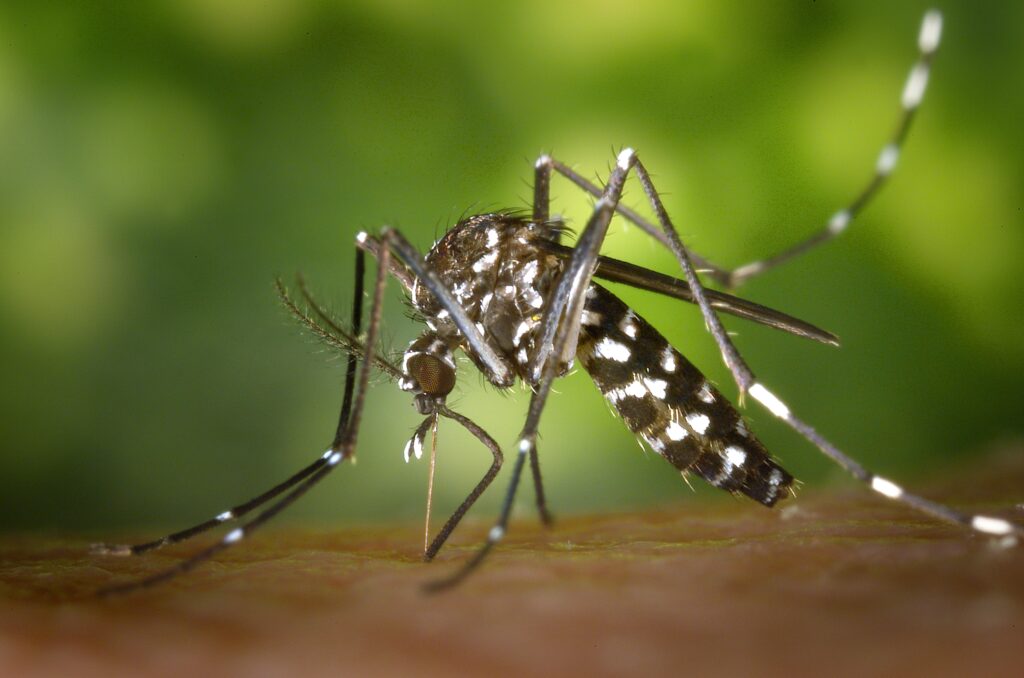
The claim of endemic dengue fever is perhaps the most egregious element of the HECC report, given that it is tied directly to rising human-caused greenhouse gas emissions. The culprit is the Asian tiger mosquito, which was confined to its tropical forest base during the last ice age but has been moving northwards throughout the current interglacial period. As larger areas have opened up for colonisation, the mosquito has become more tolerant of lower temperatures and – in common with many invasive species – has thrived as human mobility has increased. Through shipping and trade, the Asian tiger mosquito has already established itself across much of Europe. There have been reports of mild dengue fever cases in several European countries, but fatality rates are at or near zero.
UKCP18 is described as ‘evidence’ by the UKHSA, and RCP8.5 as a “plausible worst-case scenario”. Both claims are untenable, for at least three reasons. First, RCP8.5 was always implausible: it fed assumptions about global population growth and coal consumption into computer models that no serious analyst should ever have considered credible. Second, the Met Office ran only RCP8.5 through its model, deriving other – and largely unpublicised – figures from those results. A clear case, one might suggest, of Garbage In, Garbage Out. Third, the model was programmed on the assumption that human combustion of hydrocarbons controls the climate thermostat by contributing roughly 4% of the carbon dioxide entering the atmosphere each year. None of this would survive a rigorous process of scientific debate and falsification – which is precisely why political activists have declared climate science ‘settled’ and closed to scrutiny. Garbage In, Gospel Out is the operating principle in the fantasy world of Net Zero advocacy.
Another way of looking at it: billions of pounds in subsidies, grants and salaries tends to purchase a great deal of the right kind of scientific wisdom.
And few outputs were more fanciful than those found in HECC 2,023. Who better to amplify them than the Guardian, which reported that the “climate crisis” could cause up to 10,000 extra deaths in the UK every year by the 2050s. An estimated 4.3°C rise in temperature, the paper claimed, would produce a 12-fold increase in heat-related deaths by 2,070, along with a surge in insect-borne tropical diseases. The BBC, needless to say, ran with it at full speed – repeating the RCP8.5 projections and adding a claim that there would be a “big impact on mental health and wellbeing of young people in particular”. There are, of course, those who suggest that the mental health of the young would be considerably improved if they stopped absorbing the relentless climate alarmism transmitted by a State broadcaster that levies a tax on their television sets.
Alarmism with an ulterior motive, as the BBC’s own reporting confirms. The UKHSA observes that many “potential problems” remain avoidable with swift action. “Steep cuts to greenhouse gas emissions could avert some of the worst consequences,” it adds.
New balls, please – these old ones have lost all their plausibility.
Chris Morrison is the Daily Sceptic’s Environment Editor. Follow him on X.



Discussion
Comments
This week across the site:
To join in with the discussion please make a donation to the Daily Sceptic.
Profanity and abuse will be removed and may lead to a permanent ban.
For several decades we as veterinarians have been warned that the incidence of Ehrlichia, Babesia and Leishmania (different bacterial and protozoal infections, transmitted through ticks and sandflies) in dogs would increase dramatically because of lifting quarantine and global warming (increasing vectors).
Occasional cases still occur, mainly in imported dogs.
Still waiting for the big outbreak…..
Since 2020 the UK Government produced outbreak fear-porn about:
Streptococcal Infections
Measles
Shingles
M-pox
Bird Flu
Meningitis
Hantavirus
Ebola
?????????
Which one do you think is next folks? Maybe Professor Luc Concocte and Head Chef L’enders will whip up a new one?
The clown show continues 🤡🤡🤡
There are multiple agencies producing multiple reports that make claims about risks and dangers faced by the public. And in some way it is their job to do that.
The issue isn’t that these reports are produced. The issue is the state action they generate.
What is really needed with this, and more generally, is a major debate on the limits the state should face on taking action that affects our lives. This debate needs to be had urgently because at the moment we have what is in effect an out of control bureaucracy operating without any practical limits.
Some very fundamental questions need to be explicitly addressed.
These questions are currently wide open, leaving us completely open to abuse by the state.
Surely people won’t fall for this again, will they. Will they? Surely not. Surely…
The UKHSA report was entitled Health Effects of Climate Change in the UK:
And yet British and other European citizens will willingly take holidays in European countries that naturally have the doomed climate we are projected to have some distance in the future. As Greece, Spain, Turkey and Sothern Italy were already hot why hasn’t Dengue Fever, and other tropical deseases taken hold. Perhaps it is because Europe doesn’t have any tropical climates and never will, and perhaps we improved living standards so much that the Maleria we did have has gone.
You’re absolutely right, but I don’t have the energy to get into the particulars of every exaggerated report, every ridiculous claim. It’s so pointless. It’s like trying to fight an ant infestation one ant at a time.
The root of the problem is what needs to be tackled. And to me, the root of the problem is the state’s seemingly unlimited power and authority to act on our lives. There is no bar they have to clear in terms of proof or justification to introduce new measures and regulations. We have to find a way to limit the power of the state or we’ll be constantly screwed in one way or another. If not this, some other way.
A sobering point. But we will still need to have the particulars for any and all arguments against tyrants and for our own sanity. That is because the truth is an obsatcle to any tyranny and it must be changed or removed. Consider this please
https://www.youtube.com/shorts/XXpxyfIFp1g
The abandonment of RCP8.5 should be a golden opportunity to review all climate legislation to see if it is still valid. Where is Reform on this or are they just filling the headlines with the spat between Jenrick and Yussuf?