

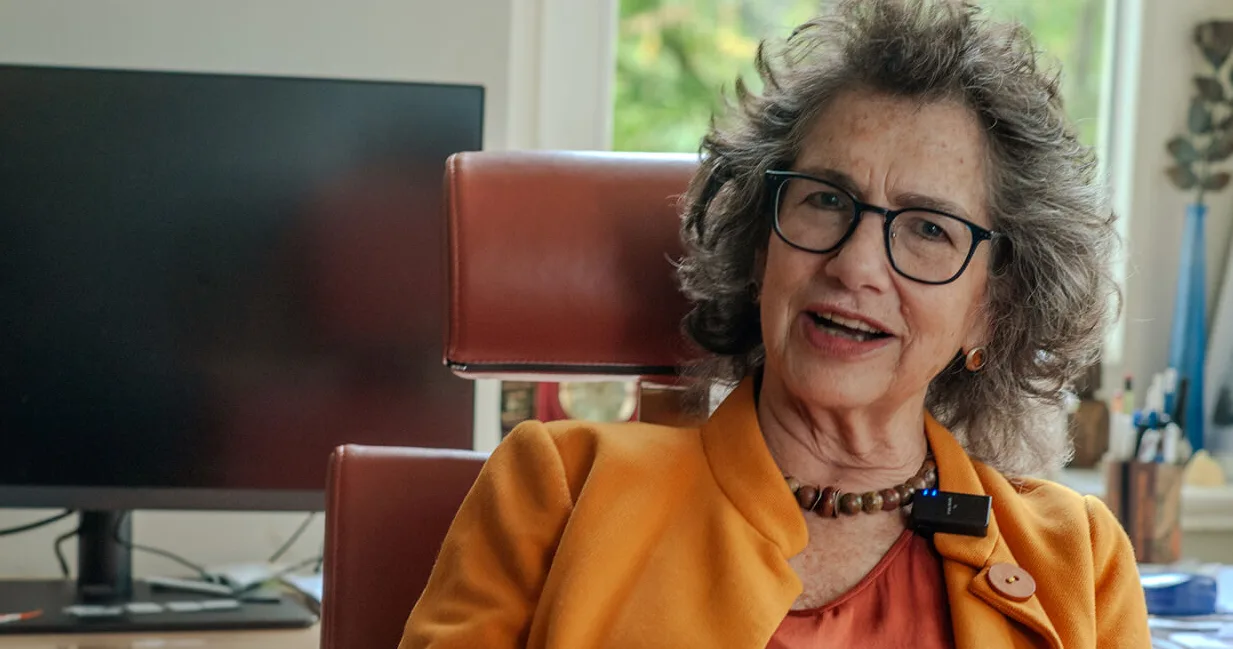
With the publication of Call it Evil: Understanding the Trump Era Susan Neiman has abjured philosophy for crude proselytising. The book, which Neiman said she intends as “an intervention”, its purpose to “sound an alarm”, opens on a sustained note of hysteria, and is full of exaggeration, hyperbole and juvenile catastrophising. I can’t recall reading anything with less nuance about politics anywhere except on placards at demonstrations.
There is no discussion of evil as a metaphysical concept. Neiman reminds us, to justify her reckless use of the word, that she “once wrote a book about modern evil”, but this is not true, she wrote a book called Evil in Modern Thought which was a work of historiography, dealing mainly with the problem of theodicy, and ‘modern’ was mostly the 18th and 19th centuries. Perhaps the nearest she comes to a definition of evil is the nonsensical, “Evil is an idea that arises whenever the gap between the way the world is and the way the world ought to be becomes too big to bear alone”, which relates it to utopic politics, and is more like a definition of despair.
A philosopher, as much as a poet or novelist, is a guardian of language, but rather than helping purify the language of the tribe, Neiman poisons it by cheapening the word ‘evil’. To put this book in perspective, at the same time as I was reading it I was also redevouring Gita Sereny’s Into that Darkness, her masterpiece about Treblinka and its Commandant Franz Stangl, who oversaw the industrialised murder of between 900,000 and 1.2 million innocent men, women and children.
Neiman opens her catastrophising introduction with “How to describe these days of nightmare?” as if she were living in Nazi Germany, Iran, North Korea or Pinochet’s Chile, and makes the preposterous claim that Donald Trump has “an ability to govern with impunity”, as if he were a dictator not subject to the same checks and balances as every preceding President, referring bizarrely to his “enjoyment of staged violence”.
Whatever negative adjectives one might like to apply to Trump, evil, the gravest of all moral categories, cannot be one of them. None of the necessary and sufficient conditions for evil action and character are present, and there are no modern philosophical definitions of evil that could possibly include him, which is why Neiman doesn’t discuss any of them. ‘Evil sceptics’ in the philosophy community argue that the concept of evil ought to be abandoned precisely because of this kind of misuse of the word to demonise political enemies. Neiman admits to first using AI to confirm whether her use of the word “evil” in relation to Trump was justified, but she didn’t get the answer she wanted. She explains this negative response away by saying that “they reproduce consensus drawn from the vast amounts of texts humans create”. This an admission that her use of the word is “evil” is non-normative, for those texts the AI LLMs use includes just about everything any philosopher, social scientist or psychologist has written about the concept of evil. She claims, to account for her outrageous relativism, that we are “without definitions of evil”, but philosophy is full of competing definitions of evil: the problem for Neiman is that none of Trump’s policies – or free market capitalism, which she also describes as evil – accord with any of them. Her use of “evil” is like Humpty Dumpty’s use of language:
“When I use a word,” Humpty Dumpty said, in rather a scornful tone, “it means just what I choose it to mean — neither more nor less.”
With no trace of self-awareness she writes of the word evil that “used indiscriminately, it can serve to stir up evil itself”. Quite.
There are three reasons Neiman gives for applying the word evil to Donald Trump: because of the war with Iran; because of the activities of ICE (Immigration and Customs Enforcement); and because he’s a businessman who she feels is the apotheosis of self-interest and “has no values beyond the search for wealth and power”. Regarding the first: Iran executes thousands of people annually: in 2025 it was 2,158, six a day. In a few weeks in January the regime, which executes gays, has no freedom of speech, uses police torture and denies all civil rights to women, murdered as many as 40,000 protesters, more than half of the number of war-dead in Gaza. Iran is arguably the nearest to a Nazi regime on earth. As for the war: Iran has 441 kg of uranium enriched to 60% that it refuses to give up. Leaving aside the threat to Israel and the US, once Iran has nuclear weapons, a potentially apocalyptic Sunni-Shia nuclear arms race would be inevitable in the Middle East.
Obama increased troops in Afghanistan and conducted strikes against Syria, Somalia, Yemen and Libya: the latter led to increased migration to Europe and the migrant crisis of 2014. Bill Clinton oversaw military operations in Afghanistan, Bosnia. Haiti, Iraq and Sudan. George W. Bush intervened in Somalia, Pakistan and the Horn of Africa, and of course was responsible for the Gulf War of 2003. Trump, it’s very true, has been caught out lying: but did he ever tell a lie as grave as Bush’s about Weapons of Mass Destruction, one that changed the world forever? Joe Biden has been caught out lying throughout his career, and had to pull out of the 1988 Presidential race because of his lying plagiarism. Neiman writes as if lying is some new kind of malfeasance that emerged with Trump, and not one of the foibles most of us connect with politicians. This is not to defend Donald Trump, but to highlight that, once one starts to compare, not just with various repressive regimes across the globe but with any other modern US presidents, the idea of his singularity or the idea that he is ‘evil’ looks like silly, overwrought agitprop.
Take the second of the reasons for Neiman describing his as evil – immigration – and the story is the same: Bush deported twice as many migrants as Trump, Obama three times more; 72 migrants died in ICE custody under Obama, 91 under George W. Bush, as opposed to 38 under Trump. In defence of all of these Presidents, none were killed by ICE agents: all of these deaths were a mixture of homicide by other migrants, accidents, death by natural causes and suicide.
Neiman says that the “moral ideas that Donald Trump embodies and reinforces are destructive enough to warrant the word evil”. These “ideas” turn out to be those around free-market capitalism, and “self-interest”. Yet Trump is very far from being its most negative or even most notable example of a free market capitalist, and in any case as Hannah Arendt noted, “’self-interest’ is a humanly understandable motive and therefore cannot be evil”. Trump, she says darkly, has made his money from “selling his brand”, presumably for her something more villainous than if he made his money in Big Pharma, the pornography or arms industries, by people or drug trafficking, or by war profiteering.
Typical of her will to demonise is her repeating of Trump’s crass remark just after 9/11 that he now owned the tallest tower in New York, a remark that, according to Neiman, puts him in the 2% of the world’s psychopaths, along with serial killers and mass murderers. A despicable comment perhaps, yet there were many people who said much worse, such as that America ‘had it coming’, that the victims ‘deserved it’, and who all but celebrated the attack. Moreover, Islamists aside, these people mainly came from Neiman’s constituency, far-Left academics and middle-class progressives. Some of her statements are so exaggerated that they are not worth engaging with, such as the claim that Trump has “absolute power” and that he has “captured all institutions”, and at one point, with staggering hypocrisy, she admits that she’d hoped for a military coup to oust Trump, despite one of her reasons for describing him as “evil” being the shambolic farrago of January 6th which she, inevitably, describes as an “attempted coup”.
According to Neiman “the basic economic assumptions that underwrite our world are wrong”, and there are three chapters excoriating free market capitalism, explaining how it was foisted on us and maintains itself through propaganda, and the formation of this over time into what she calls “self-interest ideology… the foundational ideology of modernity”. The chapter on the “red scare” claims ludicrously that “McCarthyism is stronger today than it was 60 years ago”, and urges a return to social democracy and what she vaguely terms “universalism”, describing capitalism as “the nightmare we’re living through”.
She often expresses her hatred of America itself, with passages discussing the proto-fascism of Little House on the Prairie and “reactionary icon” Little Orphan Annie. She discusses a pantheon of familiar villains: Edgar Bernays, Friedrich Hayek, Milton Friedman, Carl Schmitt, although her treatment of them, as with everything else in this short book, is nugatory: for anything she discusses, you’d get more detailed treatment in a Wikipedia entry. “Once factors like health, leisure time, crime and job security are part of the equation, the American standard of living looks pretty dismal,” she writes. I wouldn’t deny that American workers get a raw deal compared to Western European counterparts, but she has nothing to say about all of the benefits capitalism has brought, and labelling it as evil when the current alternatives are repressive communist dictatorships, fascist theocracies and the abattoirs of failing, Third World states is moral idiocy. The other alternatives are European social democracies or welfare states, of which she has a somewhat rose-tinted view. Neiman wants America to become one, too, and the only reason Americans haven’t embraced socialism thus far, according to her, is because of years of relentless propaganda and “manufactured consent”.
Neiman expresses her regret for the end of communism in Europe, writing that “1991 signalled the end of not only of hopes for socialism but of any project that strove for justice on an international scale”, and Call it Evil is peppered with sly apologias for communism, such as when she writes that Soviet Russia was the first place where communist African American Paul Robeson “felt like a man”.
It is her chapter on Gaza that is the most egregious part of the book. It begins, “Not every form of evil is subtle. Numbers count.” But she doesn’t go on to talk of the 1,200 Israelis, raped, tortured and murdered on October 7th 2023, but of the Israeli military response. She writes that by October 2025 the Israeli military had dropped more bombs on Gaza than had been dropped on Dresden and Hamburg together. Yet Neiman must know that these were surprise carpet bombings, whereas Israel gave prior warnings of bombings, with precise co-ordinates, and helped civilians to humanitarian zones. These measures were unprecedented in the history of modern conflict, and account for the historically low civilian to combatant fatality rate.
She repeats the blood libel about “genocide” and refers to the casualties of the war who were children as having been “murdered” (by an Israel which inoculated more than a million Palestinian children against polio in 2024). Her feeble excuse for ignoring all of the conflicts in which the casualties exceed those in Gaza by several orders of magnitude – a million in Somalia, 600,000 in Syria, 375, 000 in Yemen and 400,000 in Sudan – is that “Israel has claimed to hold itself to a higher standard than other nations”. So much for numbers mattering.
Neiman, a long-time supporter of BDS (the movement to boycott, divest from and sanction Israel), even does the Norm McDonald meme, writing “late that night [of October 7th] I texted a friend, ‘Let’s go to sleep and hope things will get better in the morning’, then quickly added: ‘Except they won’t, because in the morning, Gaza will be pulverised.’” She then adds that “when justice and peace are constantly thwarted by injustice and humiliation, no one should be surprised by the explosion of rage the world saw on October 7th”, a remark that puts her in the company of the world’s most deranged antisemites.
The book is written in a simplistic, patronisingly dumbed down style: Herbert Marcuse and Ulrike Meinhof channelled through Maya Angelou. I’m not sure whom the book, which has a cobbled-together feel, is intended for. It’s of no interest to anyone interested in philosophy; of no interest, either, to anyone interested in Left-wing discussions of capitalism and alternatives to it, as there is absolutely nothing new in it for them. Near its close is a hagiographic portrait of Einstein which seems randomly interpolated until you learn that Neiman is Director of the Einstein Forum, suggesting that this may be helping to fulfil part of her contract of employment. Trump, despite the arresting title, is largely absent from the book, and the focus of most of it is on other, earlier eras, and the most ironic thing about this book is that it smacks of a cynical attempt to turn a quick buck.
Call it Evil: Understanding the Trump Era is published by W.W. Norton, priced £19.99.
Chris Milton is a freelance writer based in the North East of England. He blogs at the Ragged Wood.



Discussion
Comments
This week across the site:
To join in with the discussion please make a donation to the Daily Sceptic.
Profanity and abuse will be removed and may lead to a permanent ban.