

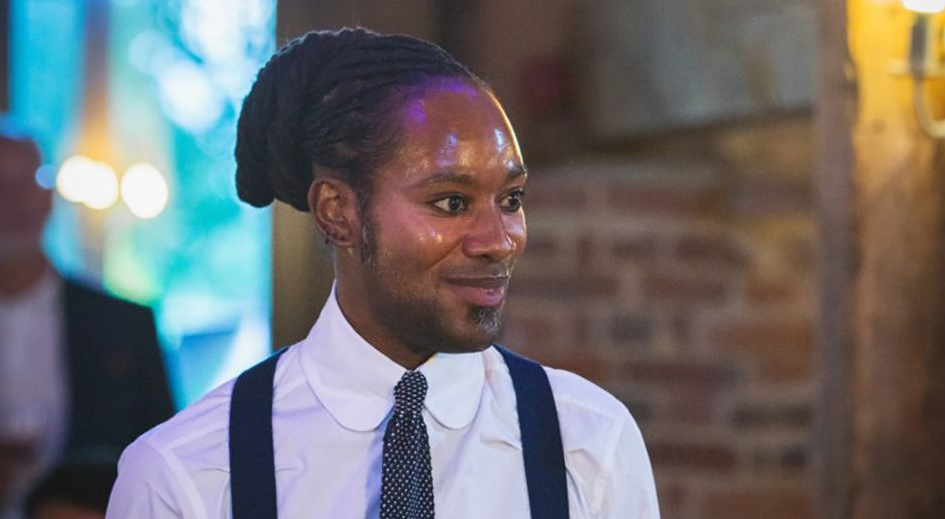
The Arday matter needs a different consideration than has been accorded it so far in the press. When I first saw his Curriculum Vitae (CV), I laughed out loud in disbelief, as I was sure it must be a lampoon or spoof, something Sasha Baron Cohen would produce. It has his stamp all over it.
It was, in fact, its over-egging of the pudding that produced my response, since its host of claims involved not just disablement (mute until 11! Plus autism), but also a non-reader or writer until 18. As someone with a distinction in the remediation of SpLD (dyslexia) and experience in teaching non-readers, I find it hard to believe any school would have allowed such an unfortunate child to reach the age of 18 before intervening with help.
Beyond that, as if disablement was not enough, he claimed to have also delivered huge sums for charities, running into the millions of pounds, and moreover being an athlete who ran 30 marathons in 35 days, the last nine with a broken leg. He went so far as to claim that he had featured as a child in Seven Up, a famous documentary from the 1960s, 20 years before he was actually born. Notwithstanding that many people present in his world at these various times who could and did eventually reveal the untruths, he still fantasised that he was “not a liar”. These are the last public words he appeared to utter, an imperfect ending to an imperfect career. As yet we do not know if his death was either suicide or an accidental overdose of cannabis (or some other drug) to succour his wounded pride.
What concerns me as an academic, now retired, is something else entirely. It is the very serious matter of plagiarism, which has not been given the profile it deserves. Academia, especially at Oxbridge, is nothing if the extensive reading, thinking and writing of its tutors does not produce some sort of contribution to their subjects. It is expected that Oxbridge academics will originate new ideas, thoughts, understanding, etc., or take basic knowledge a little further. Academics are supposed to be thinkers, but not thieves.
Plagiarism is theft, pure and simple. As an undergraduate I recall we were warned against it as a heinous offence which would inevitably lead to institutional censure and personal disgrace. It is an appropriation of another person’s original thoughts, ideas and understanding, expressed in the very language that they have used or only very slightly paraphrased. This is because plagiarism makes no attribution to the thinker whose thoughts or ideas are being stolen. In fact, it actually attempts to pass them off as one’s own work. This is the nub of the matter. It is stealing on a grand and shameless scale and is similar to a breach of copyright, which is illegal, of course.
Ideally, academics attempt to make a contribution to the intellectual life of their subjects. The sole currency of our profession is supposed to be originality, finding new or fresh ways of thinking or interpreting an aspect of a subject. Such an approach has to be sacrosanct. What else does academia offer other than the refining of ideas and thought with the assumption that one is seeking ‘the truth’ not just self-advancement. Plagiarism strikes at the heart of what used to be called and practised as ‘honour’ and honesty. All professions are supposed to uphold standards because they are bound by a discipline that requires adherence to one’s duty, which in itself involves, at its very centre, respect for one’s subject and skills as well as for those colleagues who teach it and have already written about it. This is summed up by the word ethics and is surely why a captain goes down with his sinking ship.
As for the role of Cambridge in this sorry affair, it makes one wonder what its HR dept does. Where does the pursuit of due diligence appear? Most normal people would expect claims in applications for such a prestigious position as professor at the very least to be verified; otherwise, they will soon be populated by charlatans. Surely, it was not impossible to check the man’s date of birth against that of the first appearance of the documentary Seven Up. It is utterly sloppy not to check out the qualifications referred to in an application. Or is it considered racist when the applicant is black?
It is clear in Arday’s case that Cambridge ‘education’ prefers to select the candidates it is looking for on grounds that have nothing to do with merit. In fact, the grounds are racist: the colour of the candidate’s skin, otherwise known as positive discrimination, being the guiding light. This is the woke world which some academics are inevitably too squeamish to reject or even criticise for fear of losing their jobs. Much of the blame lies with Cambridge, but it is clear from his CV that other ‘universities’ had been involved in accepting Arday’s ‘history’ and appointing him (for brief periods) without demur and also without checking. Moreover, he did not hesitate to contact the police and solicitors to intimidate his critics, which must be a first in academia. His ‘fame’ must have gone to his head. But then the BBC had made such a fuss of him by allowing him to guest edit one of the Today programmes. It reminds me of the old saw, ‘Oh what a web we weave, when first we practise to deceive.’
As someone who exactly 40 years ago contributed a chapter called ‘Language, Race and Colour’ to Anti-Racism: An Assault on Education and Value, edited by Frank Palmer, with contributions from Professors Roger Scruton and Anthony Flew among many eminent thinkers, I am used to writing about ‘multi-culturalism’ and the lies its proponents advance. However, whenever I applied for an academic post I had to take precautions to omit this contribution from my CV. The rot in academia had set in as long ago as 1986.

Discussion
Comments
This week across the site:
To join in with the discussion please make a donation to the Daily Sceptic.
Profanity and abuse will be removed and may lead to a permanent ban.
Well Arday clearly identified as having made all these spectacular achievements, so in these days of identity politics that was probably good enough for him. It’s clown world.
Cambridge University
A* for right on DEI
Fail for gullibility and naivety
I do not think naivety came into it. Cambridge and his college appointed him with full knowledge.
It’s extraordinary, isn’t it – they appointed Arday knowing that he was a fraudster and conman.
“Who Dares Wins” – the famous motto of the British Society of Plagiarists.
Why was Arday’s death “tragic?”
It strikes me that if he committed suicide, questionable ‘if’ these days, then it was perhaps the most honest thing he did. Hardly tragic.
The ‘university of spies’ wants the ‘arday’ saga to just disappear, never to be referred to again. they tried using the ‘r’ word, when that didn’t work it was all a ‘far right’ conspiracy. The truth is always the simple answer, they wanted a black super icon. The fact they hired a conman of the highest magnitude is now stuck in their throats and they just want it to go away. Plagiarism, what plagiarism?
You touch on a very, very serious problem: the anti-whitism and repudiation of our civilisation in our universities. And the obvious question is “what can we do about it?”. My own view is that our universities have crossed the threshold into the New Dark Age, and that this requires a radical solution: the re-founding of our universities, starting with the wholesale expulsion from them of those people who support plagiarism and anti-whitism, and who repudiate our civilisation.
Lessons will be learned! As long as the lessons do not reveal an unsavoury truth.
Far more acceptable to portray Arday as a tragic fabulist rather than a tragic fabulist who copied other peoples’ homework.