

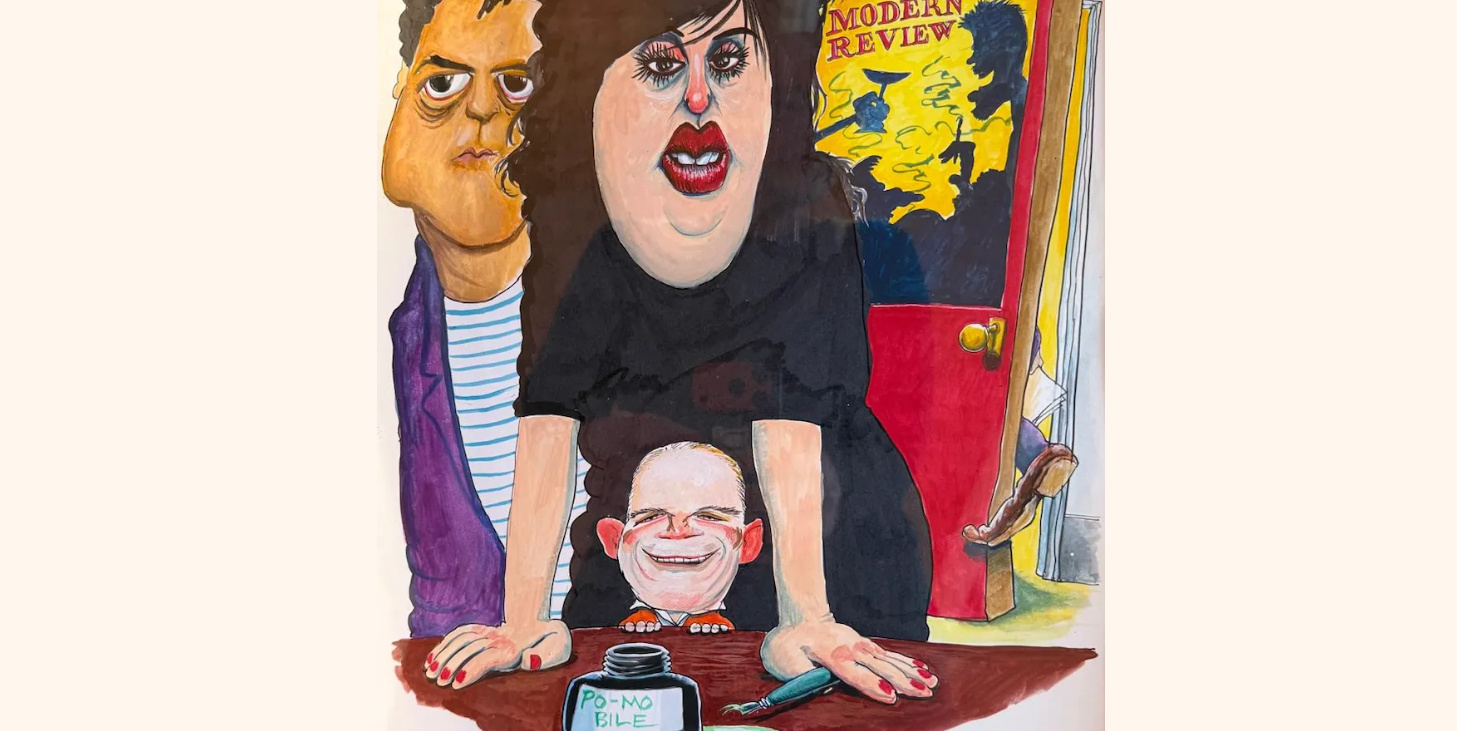
The Modern Review, the famed ‘low culture’ magazine I set up with Julie Burchill in the 1990s, is coming to Substack with an online archive plus new original content. To inaugurate the new site I’ve posted an extract from How to Lose Friends and Alienate People, my memoir about trying and failing to take Manhattan in the mid-1990s, telling the story of how I spectacularly fell out with Julie as the magazine came crashing down around us. Here’s a taster – head over to the new site to read the rest.
Every Fleet Street hack I know has, at one time or another, fantasised about working for a New York magazine. Getting that call from Tina Brown or Graydon Carter is the equivalent of the telegram Herman J Mankiewicz sent Ben Hecht from Hollywood in 1925:
WILL YOU ACCEPT 300 PER WEEK TO WORK FOR PARAMOUNT PICTURES? ALL EXPENSES PAID. THE 300 IS PEANUTS. MILLIONS ARE TO BE GRABBED OUT HERE AND YOUR ONLY COMPETITION IS IDIOTS. DON’T LET THIS GET AROUND.
In my case, the call came at just the right time. Exactly two weeks earlier I’d taken the decision to close the Modern Review, the magazine I’d been editing for the last four years, without telling my co-proprietor, Julie Burchill. At that time, Julie was probably the most famous journalist in Britain, with a reputation for being extremely vindictive. Crossing her wasn’t a good idea. “Toby has no future here,” she thundered in the Times when she found out. “He’ll have to leave the country, like everyone else who falls out with me.” Julie and I had quarrelled after she’d abandoned her husband, an American journalist named Cosmo Landesman, and run off with Charlotte Raven, a 25 year-old bisexual feminist. Charlotte, a contributor to the magazine, had re-awakened Julie’s radical conscience and Julie wanted to make her the editor. Together, they were going to turn it into a cross between the Nation and Ms. I’d decided to close the magazine rather than let it fall into enemy hands and the upshot was that I was now unemployed – and very, very unpopular.
By rights I should have been depressed. The Modern Review was my life. Julie, Cosmo and I had founded it in 1991 and in the intervening years it had acquired a huge cult following, selling 15,000 copies at its peak. The original idea was to provide a forum for journalists and academics to write long, scholarly articles about the likes of Bruce Willis and Stephen King – the magazine’s motto was “Low Culture for Highbrows”. The point, of course, was to champion the kind of mainstream schlock that the chattering classes regarded as beneath contempt. The Modern Review set out to épater the educated bourgeoisie.
In the first issue we published authors like Pauline Kael, Nick Hornby and James Wood on such important icons of our time as Bart Simpson, Kevin Costner and Hannibal Lecter. Typical articles included a bibliography of Arnold Schwarzenegger by the magazine’s literary editor and a piece by a young Cambridge don on the enduring appeal of the Porkies films in the Romanian underground. It even contained a book review by an unknown Cambridge graduate named Chris Weitz who, along with his brother Paul, went on to make American Pie nine years later. After flicking through it for the first time, Julie described it as being like an issue of Smash Hits edited by F.R. Leavis. (The American equivalent would be an issue of the National Enquirer edited by Lionel Trilling.)
The magazine got off to a flying start when Robert Maxwell, the infamous publishing tycoon, threatened me with a massive lawsuit. It was the autumn of 1991 and in the course of putting together the first issue I’d smuggled my staff into the offices of one of his newspapers to use its high-tech production facilities. He went nuts when he found out. It wasn’t just that we’d used his equipment without asking his permission, though that was bad enough, but also because I’d thanked him on the contents page for helping us put out the first issue. It was act of pure lunacy. “That’s like burglars leaving a calling card,” he harrumphed. He said that unless I agreed to shelve the magazine for good he’d apply for an injunction against it and report us to the police for trespassing.
I decided to fight him – he was a James Bond villain and I wasn’t about to pulp the first issue just because we’d injured his vanity – but it was a high-risk strategy. The magazine could ill afford an expensive legal battle. In its first year, the Modern Review had to limp along on an initial investment of around £25,000. Over the course of its four-year life, the total investment in the magazine was roughly half of what Graydon Carter spends on limousines in a single year. It only managed to survive by having very low overheads. It wasn’t so much a cottage industry as a studio apartment industry, being produced out of my flat in Shepherd’s Bush. The ‘office’ consisted of two Apple Macs and an Amstrad telephone/fax. When people called up and asked for the “subscription department” I simply handed the phone to Ed Porter, the deputy editor. He and I were the only full-time employees and we paid ourselves a grand total of £4,500 a year. No one could accuse us of being in it for the money.
Towards the end of 1991 things were looking bleak. Maxwell’s application for an injunction against the Modern Review had been rejected, but he’d brought a civil suit against me personally and that was looming. In the meantime, the lawyers I’d hired to fight the case had presented me with a bill for £25,000 and were threatening me with a lawsuit of their own if I didn’t settle it immediately. You don’t see that on Ally McBeal. Then, just when it looked as though I was going to have to take out a second mortgage on my flat, something happened on the other side of the world that completely changed my fortunes. I first heard about it from my friend Aidan Hartley, a journalist based in Nairobi, who called me at 4am on November 5th. He’d just seen something on the wire he thought might interest me.
“This better be good,” I said.
“It is. Robert Maxwell’s missing at sea.”
Maxwell’s death put an end to his lawsuit. As for the Modern Review’s solicitors, they reduced their bill to £20,000 and agreed to let the magazine pay in instalments. We never heard anything from the police.
Worth reading in full (obviously).
We’re putting the entire Modern Review archive online, one issue at a time, with a new issue every week for the next 20 weeks. Some of it is free, but to access all of it you’ll need to become a paying subscriber. The money raised will help to pay for a new Modern Review journalism prize awarded each year to the most career-endangering piece by a writer under-30. You can become a subscriber here.




Discussion
Comments
This week across the site:
To join in with the discussion please make a donation to the Daily Sceptic.
Profanity and abuse will be removed and may lead to a permanent ban.
Toby you have balls of steel, brilliant my lord!
Superb.
I missed the Modern Review when it came out – mostly because I was usually away at sea as a navigating officer in the RN. But I will certainly sign up – with the money I’ll save by cancelling my Telegraph subscription!