

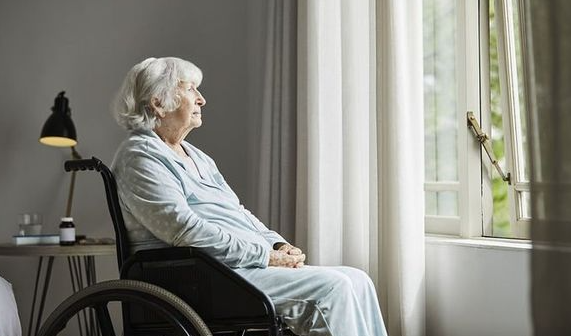
In spending thousands of hours in care homes up and down Britain over many years I have regularly heard old people say, “Oh I just want to die.” Superficially, this is quite jarring. But, on further investigation, when people utter this the weird thing is that they almost never mean they literally want to end their lives. Instead, they mean:
‘I am in pain.’
‘My struggle is getting me down.’
‘I need comfort and love.’
‘I need to see my family.’
‘I’m confused and I need reassurance.’
‘I need to be entertained and have my mind distracted from my current issues.’
‘I need a friend to talk to who understands what I am going through.’
And so on ad infinitum.
The vast majority of British care homes are either caring or very caring places, staffed by good people who are not highly paid but who are motivated to do their best to help people live their best lives in their old age despite their challenges. (Trust me when I say the negative press created by a small fraction of bad care homes is not fairly representative of the norm.) Care staff almost always try to find a way of providing effective support to someone who has said, “Oh, I just want to die.” And, almost always, by the time a couple of hours have passed, the person is grateful for the support/friendship/humour/entertainment/love/medication, is happier and is no longer pronouncing his or her own death wish. This is a down-to-earth example of what good care looks like in practice and it happens all the time in many, many care homes every day.
Recently I have broached the subject of the possibility of forthcoming assisted suicide legislation with a few care home managers and owners. My sense is that almost none of them have even begun to consider the ramifications or practicalities of what would be required. I think this is because it would just be such a cultural anathema to how care in Britain is. “Oh, I just want to die” instinctively prompts a reaction to solve the most likely issue from the non-exhaustive list above. The British reaction is never to call in the suicide squad and attempt to hasten the person’s death. To do so would be horrifying and wrong to the vast majority of those in the industry with their appropriate caring instinct.
A ghastly story from a care home in Canada, where a grandmother was euthanised against her will, should be seen as a stark warning to us from across the world to what we will become if this appalling bill is passed.
It’s not even so much the fact that a mistake was made that is the worst thing from this case. It is the dystopian reports of the nurses both introducing the idea of suicide to the lady and then trying to push that suicide through even when there were serious doubts about whether the lady wanted it or could consent to it. Currently, none of that would ever happen here in Britain, but the proposed bill would mandate not only that it could, but in fact that it should and it must.
If the bill were to pass, when care and nursing staff realise the reality of what has happened there will be widespread revulsion. They will object and then will be told they cannot object, because it is the law. They might not personally have to undertake the conversations with people about the possibility of suicide, but they will not be free to work in any care facility where this does not happen because they can no longer exist. The Archbishop of Liverpool said this week that Catholic-run care facilities will either have to break the law or cease operations if they are to hold to their long held faith-based beliefs that suicide is wrong. The Archbishop of Liverpool is correct, but the issue goes way beyond religious objections in faith-based facilities and will actually affect every positive, upbeat care facility in the land. If the bill passes I predict there will be an industry exodus of many of the good care and nursing staff at all levels, just at the time social care can least afford it. Many of those that stay will be severely morally compromised.
The best argument advanced for assisted suicide is that a person who is terminally ill and in pain should have the right, the autonomy and choice to make decisions about how and when he or she should die in order to avoid unnecessary suffering. The trouble is that taking this position is never consequence-free for others and it is questionable whether anything can be seen as a valid human right for some if it has such deleterious effects on many others and on society.
I cannot list all the negative consequences here, even for care homes. There are simply too many. But what about the rights of other care home residents to live in safe, caring facilities where staff are not trying to persuade them to kill themselves all the time? What about the rights of care and nursing staff to work and earn a living in facilities where they are not under pressure to acquiesce to (or ignore) the fact that the people they are looking after are being killed off under their noses? What about the rights of families to have their loved ones cared for in facilities where they are not being offered intentional death as a regular part of the menu?
If those are not enough unintended consequences to give an averagely compassionate person pause for thought, then I despair. Oh, and just one more from a personal perspective. What about my right to continue to do the job I love? That is to work with and advise care facilities to be the best versions of themselves, without having to walk them through legislation that enforces they have to offer to kill off the people they care for.
I don’t want to do that. I don’t know how I’d even begin to do that.
Simon Cavadino is Director of the Woodberry Partnership.



Discussion
Comments
This week across the site:
To join in with the discussion please make a donation to the Daily Sceptic.
Profanity and abuse will be removed and may lead to a permanent ban.
How many people with a terminal diagnosis must suffer uncontrollable pain before maintaining a ‘culture of care’ is seen as cruelty?
With current methods of pain relief, uncontrollable pain is fortunately very rare. Acupuncture is proving to be a valuable adjunct to conventional medicine in such instances.
Hard cases make bad law. Always have, always will.
We are a very long way from having care homes being in a position to dispense death without any safeguards.
A ‘culture of care’ sounds like a great idea
The assisted dying bill as it stands is for terminlly ill people with less than six months life expectancy. Please stop with all this melodrama.
It’s the top of a very slippery slope.
Ours (Netherlands) started that way too. Now depressed teenagers can get it, and already have.
Besides, old people’s homes are by their very nature chock full of people who could easily be described as having less than six months to live, so that’s hardly a protection.
You clearly have not read the criteria for judging a person being 6 months from death.
Life expectancy for people with terminal illness is notoriously difficult to judge. Look at Dame Esther Rantzen.
Of course it is. The number of times I have been told that someone has “ three months to live “ or some such just makes me roll my eyes. I nursed for 40 years and never heard of anyone being told this. They might have been told that on average, a person with such and such a diagnosis may live for a certain period of time, but no more than that.
Doctors are trained to be pessimistic.
On my 14th birthday my 15-yr-old sister was rushed into hospital, and we were told she may last 24 hours – prepare for the worst. She died 40 years later.
I just read the whole bill. I am no more confident than before in its continued restriction to things like locked-in syndrome and final-stage MS.
I can imagine how precious those six months would be.
An aspect of this shocking proposal I had not thought of. Thank you for bringing it to our attention.