

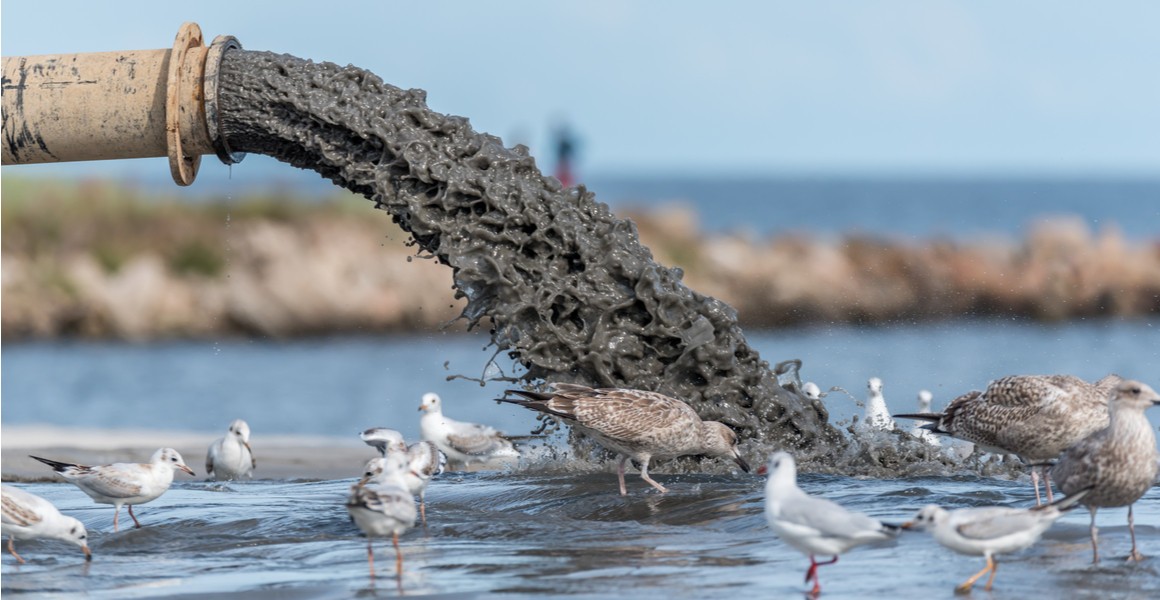
A friend just forwarded a splendid rant about the manifold sins and wickednesses* of the privatised water and sewage companies. (*Book of Common Prayer, for you youngsters.) All so true, and how wicked they have been: loading their companies with debt since 1989, looting them for dividends, failing to upgrade infrastructure. Naughty, naughty people.
And what did we all do about it? While taps kept running (except at, for example, Tunbridge Wells), while toilets flushed, and water bills were trivial, we happily looked the other way – with a few honourable exceptions such as Surfers Against Sewage. We don’t still take our laundry down to the river these days, as so much of the world has to, so nor did we bother much about the untreated sewage being dumped into waterways (under the fig-leaf of emergency “storm overflows”).
The stock answer is to nationalise the water companies, something we’re sure to hear more of at the Labour Party conference. Perhaps our Messiah from Manchester knows where the £100 billion-plus might come from to do that in an orderly way? But putting it all on people’s water bills would be a foolproof way to lose an election.
We are where we are, and not where we’d like to be. A few points are seldom mentioned in the name-calling and whataboutery over water and sewage: management, regulation, workforce. So let me make them.
One of the conjuring tricks of privatisation was the way the same lacklustre drongos who headed water companies in public ownership were kept on by the new owners – at multiples of their previous salaries. Not stupid, because these were the people who knew how the creaking systems worked and where the skeletons were buried: essential they stick around if the taps weren’t to run dry. And if they became uneasy about how things were going, bonuses (aka “retention payments”) took care of any silly qualms.
The way you stop the foxes (private sector) massacring the chickens (captive customer) is to have good fences of course. But fundamentally you need a farmer with a gun. Instead of sheriffs with balls and six-shooters, what the water sector actually got was a procession of feeble regulators and the hapless Ofwat.
I happened to meet one of these regulators socially in the 1990s, and a less impressive apparatchik I have seldom encountered. I doubt she could have confronted a shopkeeper who’d given her short change, let alone water company owners who were making out like bandits and breaking the law. How right that was. But even the most uncompromising regulator would have needed political backup – and where was that?
Then there’s public sector efficiency. The amount TfL pays its drivers to keep the Tube running totals, say, three times what the work involved is worth in the real world. It’s human nature: most people would prefer to be paid lots more for doing a lot less, and wherever essential workers spot a chance to run a closed shop to achieve that, they grab it. As Attlee discovered in the 1940s, the only way to get the NHS off the ground was to stuff the GPs’ mouths with gold.
See also Fleet Street’s old printers, Camden’s direct labour force when I lived there in the 1980s, train drivers and resident hospital doctors today. Liverpool was infamously the city run by and for the benefit of its council’s manual workforce, and collapsing. What reason is there to suppose workers in publicly owned water companies would not find ways to make taxpayers and customers pay them ever more for doing ever less? If the toilets might stop flushing, those pay rises will magically appear: with taxpayer subsidies and/or increased bills rising in lockstep.
As for the idea of confiscating the companies from their present owners and reneging on their debts: could there be a more effective way to crash the UK economy? The bond market would have something to say about that, and no one would lend to or invest in the UK ever again. (A small upside, perhaps: there’d be no money to pay benefits to everyone who doesn’t feel like working, and economic or illegal migration would cease – Iraq or Nigeria would look like better bets.)
We would also have to renege on those gold-plated subsidies to windmill and solar-farm owners to supply intermittent ‘green’ electricity. Boo hoo, and bring on the day. Living with candles and paraffin heaters, as I remember doing in the 1970s during those three-day weeks, might almost be worth the pain – but it still took some years to face down the closed shops.
The notion that the water companies were handed over in good shape in 1989 is just silly. Even then the infrastructure was creaking, and the Government of the day couldn’t tax people enough or borrow enough to put it right. And in the early years, the new private owners did borrow, and good work was done. But before long they realised the regulators and Ofwat were useless, and there was no political will to stop them taking excessive rewards and breaking the laws against pollution. No consequences? Gimme, gimme.
Even Thames Water has a long list of successful projects – well yes, obviously: if they’d screwed up London too badly, even the dimmest politicians would have noticed, as Parliament did in the Great Stink of 1858, and hired Joseph Bazalgette to sort out sewers and the Thames. Luckily for London, he doubled the diameter of pipes compared to what was thought necessary, thus quadrupling the flow – and keeping the city going for 150 years.
Thames Water’s new London fresh-water ring main was finished on time and under budget; its Thames Tideway “Super Sewer” was a bit delayed by Covid, but similarly successful; the Lee Tunnel intercepts five million tons of sewage a year that would otherwise have gone into the River Lee and thence the Thames. And so on.
So if simple expropriation – the communist approach – would be suicidal, how about what the fascists did in the 1930s? Allow the water company owners to keep their businesses, but on condition that the state will tell them what they may or may not do. Their share prices would collapse, but that’s capitalism for you – and perhaps payback. Shame about people’s pension funds that invested in them, though: omelettes, eggs…
And the spectacle of a Labour government arriving at the solution that worked for fascist states 90 years ago – well, that would be something to savour.
Mike Wells won the World Press Photo competition in 1981 and worked in many countries including Nigeria. He has written often for DS and elsewhere about the repatriation of the Benin bronzes.



Discussion
Comments
This week across the site:
To join in with the discussion please make a donation to the Daily Sceptic.
Profanity and abuse will be removed and may lead to a permanent ban.
Aberfan disaster took place under the NCB, a nationalised company.
Most infrastructure started in the mid 19th century due to increase in wealth of towns and cities. Villages and towns had gasworks, sewage works, water treatment works and electrical power stations. These gradually became merged.
By 1960 water treatment companies had been merged and river boards created . However, even by 1970s there were 1300 sewage operators. The Part II of 1963 Water Act allowed councils to raise water rates to pay for new sewage works. Many northern councils andwhere the NCB had influence, refused to raise water rates. The waterauthorities were formed in 1974 which merged all the sewage works and most
water works but left some water only companies. We joined the EEC in 1973. By
1988, dirty rivers and beaches because a lack of expenditure resulted in
threats from the EEC and also they had massive debts. In other countries water
rates were higher, leakage often lower and infrastructure had largely been
built post WW2. Britain spent money on welfare.
Privatisation was to bring money into the water industry and infrastructure was built. However , the EU forced the Government to sell the golden… Read more »
Water is a vital resource essential for human survival.
If countries cannot take control of failing privatised water companies and other vital utilities because they are afraid of the consequences of rampant greedy capitalism like excess compensation, increased debt, investor caution, currency fluctuations, a run on the pound, twitchy bond markets, share prices, a stock market crash etc. then they have failed their citizens.
There should be a cultural, political and economic revolution whereby ALL utilities can be taken back by the state and run for the benefit of every citizen without the fear of all the negative consequences mentioned above.
It doesn’t need to be communism or fascism to achieve “state run capitalism”, it is just the right thing to do and a better way to run a country than rely on unchecked capitalism.
It’s interesting that the writer cites feeble regulators and later mentions communism. Lately I’ve been pondering why communist China has been doing so well in recent years and came across a video attempting to explain why. They went on to point out that like Russia they realised that pure communism could never work, so what they did was to release the populations natural tendency to innovate and effectively ended up with Capitalism on steroids, but at the same time they have brought in proper regulations, not dissimilar to what happened in Britain during the Industrial Revolution.
in Britain we have imported many unskilled workers thereby causing lower wages and higher housing costs, then thanks to Blair introduced University fees and did away with proper workplace training for useless degrees. The result has meant reduced standards for the working class and to a large degree the middle class. Many workers can no longer afford housing and end up with a lifetime of debt all due to bad governance. The only thing saving them is relatively cheap imports from China, which would be even cheaper if we could cut out the middle men in the corporations. At the same time we… Read more »
You are right that Ofwat was and is a failure. The fact that quangos are not interrogated by Ministers or Parliament other than for performative reasons is a principle al cause.
Next comes the Environment Agency whose staff have earned big bonuses, fancy pensions and early retirement. They have refused new reservoirs, took years to approve the London super-sewer and no one has been fired.
You can’t stop the storm spills by just closing a valve, whether it’s private or state run. The money and disruption involved in upgrading the 10,000 miles of sewage pipes in South West Water alone would amount to tens of billions and decades of work. More money than the water companies make.
I agree these companies are run by incompetent accountants. Who are never held responsible for their stupid decisions. But if it was nationalised, then it would be run by retarded, incompetent accountants.
Before it was privatised no-one was measuring the storm spills at all. Now it’s close to 100% measured (Incidentally, 99% of the storm spills are 99.999% rain water.) We keep building houses and we keep sending the rain water down the same pipes.
I work for South West Water and I could complain about them all day. (And often do.)
But of all the things that end up in the rivers, personally I’m more concerned about the pharmaceuticals. And for all the things I want the government to do, privatising the water companies is way down the list.
Having said all that, they shouldn’t ever be baled out. If they go under, the government should… Read more »
Agreed.
it is very frustrating that in snd around my town we put up with new mains pipework a decades or so Mack, yet we have had repeated disruption from pipe failures. The MDPE pipes are virtually indestructible le when installed according to spec.
How come some roads have been dug up multiple times. It must have been poor supervision.
Japan uses stainless steel pipework and has a leakage rate of 2%. They do other clever things like drop mains pressure overnight when demand drops to reduce pipe stress. They monitor flow and will turn up at a leak within 24 hours. Just up from my house water is coming up through the grass like a spring. It was like that last weekend and no doubt will be again next weekend and for many others.
“As Attlee discovered in the 1940s, the only way to get the NHS off the ground was to stuff the GPs’ mouths with gold.”
Aneurin Bevan actually
Who resigned as Health Minister in Attlee’s second short-lived Government over the introduction of charges for dental and optician services and because the NIC money was being used to fund rearmament and refitting of the military instead of the welfare state.
Water/sewage is a natural monopoly whether it is private or State-run.
At privatisation the Government kept “golden shares” so they had some control over how the companies operated and investment into them. These were time-limited until 1995 then redeemed. Perhaps they should have been kept.
The article doesn’t mention it, but Ofwat price caps water charges so companies cannot increase revenue flow and profit to reinvest to cover costs of developing infrastructure, and Ofwat limits dividend payments such that nobody wants to invest.
As usual the whole disaster can be traced to Government – politicians, civil servants unemployable elsewhere with no clue about economics, business, financing but in charge of these things.
A regulator made up of business people from outside the utilities would have made far more sense.
However. Welsh Water is not privatised and it performs no better than the private companies, particularly with respect to sewage discharge into the sea and rivers.
I disagree.
water delivery is possibly a natural monopoly but regional (river basin) alternatives can give performance and cost comparisons a national monopoly cannot.
There is a care for private reservoir companies but the EA would not permit them to operate.
Unless there’s going to be more than one water distribution network reaching every household which clearly isn’t practical people can’t choose where they get their water from.
The same applies to electricity, everyone is attached to the same grid so all people can do is choose which company sends them the bill. They can’t choose to only get their electricity from windmills or solar panels if they’re eco-worriers, all they can do is choose to get a bill from a company that shuffles bits of paper around to make it look like their electricity is zero carbon. Similarly sensible people can’t choose to only buy electricity from the cheapest generators, modern gas fired power stations most of the time. For either of these to be possible people would need a power line running directly from their home to a large scale generator and people next door would need a power line direct to a different power station.
Correct. The original plan, put simply, for electricity privatisation was a grid operator able to buy from power generators in competition to provide a wholesale market with lowest prices practical, with retailers buying from that market in competition and offering different prices to win market share. It worked until Government intervened and distorted the wholesale market by destroying all but one coal-fired plant, forcing the grid to take wind/solar in preference to gas or nuclear but with gas operating as back-up.
Gas has to increase its offer prices to cover revenue losses when it is told to leave the grid to allow wind/solar to supply when they can. Retailers cannot buy competitively from the wholesale market because they get handed the cost of subsidising wind/solar by the grid operator on top of what they pay for electricity. Then they are hit with a price cap, which is why some have been forced into bankruptcy.
Natural monopolies are those where sunk costs and infrastructure costs are extremely high compared with the very low marginal cost of adding a new consumer.
That means having more than one supplier in competition would be least efficient, as providing an expensive alternative infrastructure, sharing more or less the same consumer population, would mean very high cost consumer prices.
Even a local river basin supplier would have a natural monopoly unless you envisage two or three private competing companies building their own water mains and pipe networks, purification plants, sewers, sewage treatment plants. That just would not be financially viable for each company.
The UK government has spaffed over 106 billion directly and indirectly on the neo-fascists in Ukraine.
100 billion of that would have been better spent on nationalising the water companies.
Ha, ha. Ha…. £100 billion to buy – and the rest! – of more debt to add to the £3 trillion, then the £billions more working capital to fund day to day operations, then the many more £billions to improve and build infrastructure. And of course they would do such a good job – like they have with that other nationalised inefficient, badly managed monster the NHS or like they did before water/sewage was privatised.
It is still a more viable proposition than wasting our tax payers money on Ukraine.
Giving it to the IDF to help keep everyone safe from Muslim terrorists would be a better use of this money.
At least the IDF knows the correct way of dealing with shit.
Or give it to the Palestinians so they can once again break out of the biggest concentration camp in the world and punish those that had put them there as they did on that glorious day on 7th October 2023.
That’s like a right-handed person saying having his left hand chopped off is a more viable proposition than having his right hand chopped off.
We shouldn’t be funding either!
Water is a vital resource essential for human survival.
If countries cannot take control of failing privatised water companies and other vital utilities because they are afraid of the consequences of rampant greedy capitalism like excess compensation, increased debt, investor caution, currency fluctuations, a run on the pound, twitchy bond markets, share prices, a stock market crash etc. then they have failed their citizens.
There should be a cultural, political and economic revolution whereby ALL utilities can be taken back by the state and run for the benefit of every citizen without the fear of all the negative consequences mentioned above.
It doesn’t need to be communism or fascism to achieve “state run capitalism”, it is just the right thing to do and a better way to run a country than rely on unchecked capitalism.
Yes, they are Banderites, one of the most sinister groups of the Nazi period named after Stepan Bandera so revered by Zelensky and his cronies. Worth checking out Alexander Mercouris and The Duran for the truth if you have not done so already.
Yes, I have done already plus many others.