


During the campaign and since the Makerfield by-election, calls for a variation on the theme of ‘uniting the Right’ have intensified. Whether explicit appeals for unity or warnings about ‘splitting the vote’, the underlying idea is the same: the Right must consolidate because more voters overall support Leftist politics. If the Right remains fractured in the way the Left has always been, it cannot win power, and Britain will be governed by a coalition of Left-wing parties, with disastrous consequences.
It is hard to fault this analysis as far as it goes. For decades the Conservative Party held together as a broad coalition of (mostly) Right-of-centre voters and politicians, and had a remarkably successful electoral record, governing for 32 of the last 50 years. In the same period the Left-of-centre vote was routinely split between Labour, the Liberals and latterly Liberal Democrats, the Greens, and earlier incarnations of the SDP. Challenger parties on the Right (the BNP, UKIP, the Brexit Party) were mostly single-issue vehicles that functioned as pressure groups rather than serious contenders for government. However, what the analysis misses is that an easy coalition on ‘the Right’ cannot currently exist. The old Conservative broad church, accommodating libertarians, paternalist One Nation Tories and Burkean conservatives, was sustainable because these factions were largely aligned on the economic axis around broadly free market principles, standing in opposition to statism and socialism. That alignment has broken down.
British politics is undergoing what Stephen Davies has termed the “Great Realignment”: a structural shift away from the old economic axis of markets versus state towards one dominated by questions of identity, sovereignty, belonging, cultural continuity and the scale and nature of governance itself. Davies is right that this is the new organising logic. My own thinking had been moving in similar directions before I encountered his work, and it provides a very helpful frame.
The Left began the process decades ago by colonising the commanding heights of culture, institutions, education, speech and group identity. The Right’s response has been slower, more fragmented and often reactive. The very labels ‘Right’ and ‘Left’ have become largely negative. Much of what now passes for the Right is defined only in contradistinction to whatever the progressive Left has claimed. Many figures now routinely considered on the Right are, in important respects, classical liberals or former Leftists. They find themselves there not because they have adopted Burke or Scruton, but because they reject the latest progressive settlement.
The result is a Right composed of partially competing first principles where once there was a shared economic philosophy. Some prioritise demographic realism and civilisational continuity above almost everything else; others focus on shrinking the unmanageable state and confronting the permanent bureaucracy of quangos and officials; still others emphasise fiscal discipline or residual commitments to classical liberalism. Many of these principles are held in common to a degree, but the order of priorities varies hugely. They reflect different diagnoses of Britain’s core predicament and therefore different hierarchies of what must be done first, what can be compromised and what cannot.
Among these competing hierarchies, questions of national identity, cultural continuity, demographic balance and the nature of Britishness stand out as the sharpest and least negotiable fracture. Because most others have been reconciled in previous paradigms, this seems the most important to discuss here. This is not an issue that obsesses only one segment of the Right. Significant voices continue to view relatively high levels of net migration as economically vital or morally imperative. Others accept that current inflows are too high and argue the priority must be to stop the arrivals and tighten borders. A third current goes further, maintaining that the existing scale of demographic change already poses an existential threat to social cohesion and the viability of inherited institutions and that substantial returns will be necessary. Between these positions sits a managerial centre-Right that treats rising pressures on housing, services, integration and public trust as problems to be managed and contained and sees immigration as mostly a matter of velocity and identity as a question of assimilation. The differences remain unreconciled, if not irreconcilable.
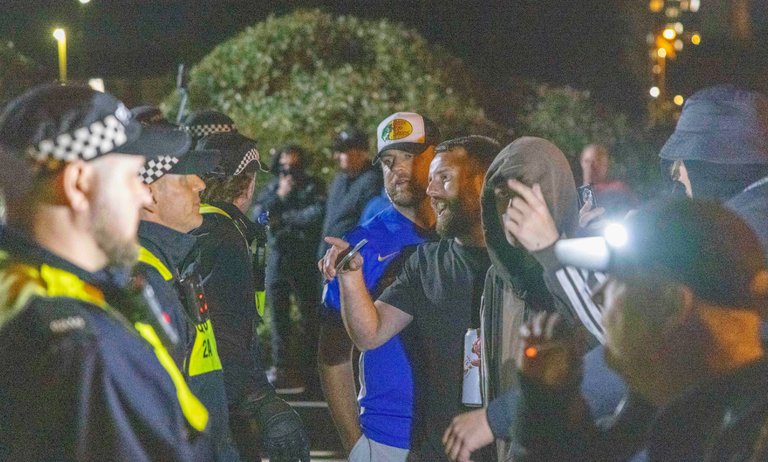
The identitarian currents within the broader Right, which place civilisational continuity and demographic change at the absolute centre, are not a transient fringe that can easily be marginalised or wished away. Thus far, attempts to exclude them from debate have only led to growing street protests. Continued attempts to police these voices, to drag the entire Right back inside Establishment-respectable guardrails or to dismiss stronger positions on belonging as inherently ‘extreme’ certainly do not encourage consolidation and are not building a coalition.
Purists exist on every side: technocratic managerialists, uncompromising small-state libertarians and identitarian hardliners alike. None will be easily won over to a compromise. But meaningful compromise on the new axis of realignment cannot emerge without serious, sustained dialogue that engages these positions on their own terms rather than through thought-terminating clichés or boundary enforcement. A refusal to engage that insists on narrowing the Overton window to the managerial centre only drives the unresolved questions underground or into parallel vehicles, producing the very vote-splitting and volatility that ‘unite the Right’ rhetoric aims to avoid.
The gap may not, in fact, be as large as advertised. I have heard mainstream Right-wing commentators express distinctly identitarian views and then go on to show a disdain for ‘ethnonationalists’ in the same interview. There are prominent voices dismissed as extremists by Establishment figures who are also criticised for being ‘milquetoast’ on the more stridently nativist side of the debate. A lot of presuppositions seem to have been formed about people’s intentions and character, which are actively preventing dialogue from taking place. Such moves, whatever their short-term tactical intent, reinforce the perception that the deeper conversation about what kind of nation Britain can realistically remain is being dismissed rather than resolved.
In the kind of genuine structural realignment that Stephen Davies has described, these tensions must be contested openly. Forcing electoral consolidation before the dialectic has done its work risks creating coalitions that collapse under the weight of unresolved first principles. More than mere indiscipline, the Right’s fragmentation is the surface expression of a society working through fundamental questions about identity, governance and continuity that the post-war order left unresolved. Pretending otherwise will not make those questions disappear. The temptation must be enormous to drift towards the centre, as it brings more positive coverage in the media and some opportunity to pick up votes, but the centre has governed for many years, and the national problems remain.
Electoral logic makes ‘unite the Right’ appeals understandable. Under first-past-the-post, a divided Right hands seats and power to a fragmented but often better-coordinated Left, and the system as a whole lends itself best to pre-election coalitions. However, the deeper structural reality is that unity cannot be imposed from above while first principles remain unresolved. Attempts to manufacture a broad coalition by suppressing or side-lining certain views, or by insisting that people vote tactically, simply try to recreate the old Conservative broad church on terms that no longer fit the new axis. Arguably, it was the Conservative Party’s own failure to understand this realignment and accommodate itself to the changed organising logic that broke its historic grip on the Right-of-centre vote in the first place.
The most likely results of such forced unity are threefold. First, the party or vehicle positioned as the natural hegemon on the Right will struggle to generate the energy and enthusiasm needed to secure a working majority, since voters who feel side-lined will just stay at home or support parallel efforts. Second, even if it reaches office, it will lack a coherent, worked-out programme capable of delivering the fundamental restructuring and renewal Britain urgently needs; the internal contradictions on identity, migration and the scope of the state will produce muddled compromises rather than decisive action against the expansive state. In the process, it’s likely to alienate more voters, as they make the now-familiar journey from hope to frustration to despair. The third likely result is a fragile coalition which struggles to survive a stress-test once in government because it has not properly debated its ideas beforehand.
The repeated insistence on drawing lines against ‘that lot’, ruling out accommodation with emerging vehicles or dismissing demographic realism as fringe thinking does not consolidate the Right but fragments it further. It tells a significant and growing constituency that their deepest concerns about the pre-political ‘we’ are outside the acceptable conversation. In doing so, it makes more likely the very vote-splitting and disillusionment that unity advocates fear.
The last time British politics underwent a genuine shift in its organising axis was in the 1920s and 1930s. A century ago, with the rise of Labour, the move was along class lines, driven by the extension of the franchise, the Great War and the Great Depression. That realignment was resolved in the end not by enforced unity but through open contestation and the gradual forging of new principles. To succeed today, the Right must engage in that same dialogue, treat one another as good faith actors and aim to achieve a synthesis. There can be no resolution otherwise. Without it, the deeper fractures will persist, the Right will remain fragmented and the risk of prolonged Left-wing governance will only grow.
With a background in history and political philosophy and after a long corporate career, Matt Roberts now writes on the political system and current affairs. Find him on his Substack page, the Traditional Pragmatist, and on X.



Discussion
Comments
This week across the site:
To join in with the discussion please make a donation to the Daily Sceptic.
Profanity and abuse will be removed and may lead to a permanent ban.
What a nauseating photo, her head reflecting Her Bloated Sense of Entitlement!
We don’t need to unite the right!!! And patriots do not need to “debate” the Third World Invaders and their Marxist/Fabian Enablers, because it’s a total waste of time. Their aim is to make Patriots backtrack on what they truly believe.
Each political party just needs to lay out its policies and plans clearly for the voters to decide which one suits them best, and vote for that one.
And as others have noticed, Rupert Lowe’s RESTORE BRITAIN just keeps quietly getting on with battling the corrupt, entrenched LibLabConGreen establishment, and getting things done.
They already have over 140,000 members, more than the Decrepit Tories, who don’t yet realize that their time is over.
Notice the Photographic Propaganda tricks of using a black & white photo, lightening the Ethnic African’s photo to make her look less African, and slightly darkening the two Ethnic European men, who are also shrunken down to look smaller in the background.
Badenoch is too abrasive to unite anyone. Her language the other day was downright disgraceful.
Should she be using language like “They don’t like it up them” in the chamber? That’s childish, immature and insulting.
She’s just awful, the worst choice imaginable, and the Imbecile Tories who voted for her need their heads examined.
I watch things from 6000 miles away but I can tell you It’s a depressing outlook for someone who was once a pure patriot. The UK is like a spoilt child in dire need of a good beating in order to face up to the reality of life in the real world.
The “right” needs to join forces urgently in order to save the country from becoming a Communist-Marxist-Socialist state.
Restore might, to some extent, be a one-man Party but I believe is crucial to the process of joint working. That would, however, depend on those who get upset by Rupert Lowe’s frankness and his “I don’t care” attitude getting over it. Egos don’t help either.
Rupert Lowe doesn’t beat about the bush like far too many others. In doing so he is successfully distilling widespread, right-minded public opinion and gives hope to many.
Like all the other Parties, Restore’s members might be a mixed bunch but with Lowe’s presence on, for instance, the Public Accounts Committee and his Rape Gang Report he is seen as someone who doesn’t just talk but gets things done.
Con/Ref/Res need to get their heads together – urgently.
In last weekend’s Mail on Sunday Badenoch declared that she was not interested in uniting the Right. So argument over. It won’t wash making her photo larger than the other two. Since Cameron, there’s nothing right about the Conservative Party in any sense of the word.
Splitting the Right’s vote made no difference in Makerfield. The objective of getting Starmer out and keeping Farage out was enough to entice people to vote Labour who would otherwise have not. Does Badenoch think she can revive the Tory Party on the 2% in Makerfield? Or the zero percent in one ward in Bradford?
And what is this centre-Right that ‘sees immigration as mostly a matter of velocity and identity as a question of assimilation’? Who is assimilating to whom? Velocity? As long as the public are taken on that journey to a country unified by common values rather than history and ethnicity, a journey that is slow instead of being fast, no one will notice the milestones. But you can be anything as long as you’re a centrist.
Politics is contrast. The success of the Three in the photo depends on the contrast between them, not on some unifying formula of words.
I struggle to see how people see the Makerfield vote as anything but remove Starmer. The record by-election turnout should tell you this. Knock 25% off the turnout and off Prince Andrew’s votes and see a close election with possibly a Reform win. We will see how the mayor election goes in a month.
I stopped reading at the point where right of centre politicians in the “Conservative”
were mentioned
Are Reform and the Tories actually on the right? The tories, despite Kemi’s best efforts are still little better than Limp dems, and Reform whilst better, has a number of left wing politics and various dodgy ex-tories including the execrable Jenrick, the appalling Dorries and Zahari.
So I think we need more time for Restore to drag both these lot to the right on the most essential problems facing the country first and foremost of course mass immigration and Net stupid zero, but also the lack of action on rape gangs, the shittification of town centres up and down the country, the general uselessness of the police, the hideous, chronic waste in the public sector where Lowe is doing a good job in various committee rooms but doesn’t get the publicity he deserves.
The forecast is bleak, according to professional doom-monger: Pete North. But how many agree?
”There’s considerable disquiet on X among Restore Britain supporters. They are slowly coming to terms with the fact that Rupert Lowe is not whatever they assumed he was.
Earlier this week he denounced ethnonationalists, and another interview has emerged where he makes it clear that he is a boomer conservative civic nationalist. This is counter to the direction his lieutenants are taking his party in.
Consequently, the party as a whole is incapable of settling on a consistent message, where the leader, largely unaware of what is being done in his name, undermines the efforts of his top people who are always in damage control mode. They can’t get Lowe to stick their script. As with Reform, the party ideology is whatever the leader says it is, and however hard Restore activists attempt to project an alternate interpretation, they can’t get away from the fact that Rupert Lowe is what he is.
Ultimately, the hardline ethnonationalists will have to learn that if they want a party that sings their tune; that wants full remigration, and is explicitly “anti-zionist”, then they will have to start one.… Read more »
For what it’s worth, this is part of my point in the article – and the Black Horse podcast controversy blew up after I submitted. There’s been a tendency for the right to find a messiah, find him wanting and then discard him (you could argue this goes back to Boris). Reform are very, very keen to court the approval of the MSM, which is keeping them within the old Overton window and losing their base, without gaining them much. They’re also desperate to prove their establishment credentials, which is a problem for a nominally anti-establishment party. The Conservatives are hamstrung by the fact that most of the post-Cameron intake are Lib-Dems in reality. Neither party really seems to get what’s going on around them, in terms of the change in the axis. Lowe seems to be on the right side of the paradigm shift, but he was never going to be what his more ardent supporters thought he was.
This is why I say the unification can’t happen, at least yet. One or more party needs to develop a proper understanding of what’s actually going on in the minds of the voters, and then try to find a… Read more »
The Conservatives (Big C) are RINOs (Right In Name Only) and have been since Cameron, and quite possibly since Major, and have over that time abandoned most of their traditional core – myself included.
Kemi Badenoch is talking the talk, but we’ve had that in bucketloads from the Tories since Blair certainly. Assuming she is sincere in her intent – and there is nothing currently to suggest she may not be – there are now a lot in the Tory MP ranks, who are clearly not looking to change direction!
Its fair to say a lot of Tory MP’s, and those who wish to become or return as Tory MPs, who still support Net Zero, love “renewables”, cheered the Covid response, pay lip service to “stopping the small boats”, wish to return to the EU and countless other non conservative (small c) policies.
Kemi certainly has her work cut out trying to unite the Tories behind her vision.
If you look at the reality of the Conservative party since before WW2 there was only a period of about 15 to 20 years up to the end of 1990 when actual conservative policies were enacted. The Tory grandees from the 50s and 60s absolutely hated Keith Joseph and Margaret Thatcher because they upset their cosy existence where the boat wasn’t rocked too much and they could retire to their clubs and be far removed from the electorate. The same people were keen on being in Europe because it meant rubbing shoulders with others who had absolutely no intention of taking any notice of their voters, Monnet ensured that the construction of the EEC/EU would keep the power where it couldn’t be challenged.
Despite my loathing for all of those traitors to Britain I don’t know how to beat them, I think the truth is that our country was only successful when we were led by people who followed their instincts but were not controlled by the electorate because that was a very narrow part of society and agreed with them. Universal suffrage sounds wonderful until you discover what it engenders.
Winston Churchill said that 5 minutes with an ordinary voter was enough to make you see the massive flaw in our democracy – thick voters.
First the Treasonous Commonwealth Voting Rights in British Elections must be ABOLISHED, and ONLY BRITISH CITIZENS allowed to vote, as in all other normal, SANE countries in the world !!!
The only way I might even start to think she means what she says is when she kicks the following out of the Party:
Major, Hague, Cameron, Osborne, May, Barwell, Hammond, Hunt, Sunak, Wallace, Mitchell, Goldsmith (and others).
Since she can’t / won’t the Not-a-Conservative-Party simply cannot be trusted.
You missed out Boris.
Can’t be trusted at all.
The Conservative Party are not the Right – haven’t been since Blair became their patron saint, they are very Left. Restore is a mutual support group for Farage-haters and evidently a magnet for fringe loonies, homeless because the BNP and EDL no longer exist.
So that leaves us with Reform UK.
Where unification is needed is within the electorate. What do people want? More of the same leading to total social and economic collapse?
Just look! According to the polls over 60% of the population will vote for the Lunatic Left, 15%+ still clinging to the Tory Party.
We are not a united electorate.
How many people would vote for a Party with a manifesto to abolish the welfare-state, return the public services including the NHS to the private and voluntary sector?
I’ll bet you could count them on one hand. Whilst we still have a population who want a Socialist State, that’s what we shall get more and more.
Until that is done we cannot recover our economy. The entire income tax take goes on welfare, wealth is being transferred from wealth creators to an increasing number who create no wealth, the NHS… Read more »
I agree. The unproductive living off the looting of the productive are probably too numerous and powerful to defeat.
Sadly I have to agree
What a waste
All it would take (and say ‘all’!) is a clear vision and inspiring leadership and the voters who believe they need socialism is what they need will have the fog lifted from their eyes. We who were around in the 80’s know what that looks and sounds like. Why cannot it be found again? Cameron flunked it, May and Boris were joint disasters and confirmed the Left’s open door to harder and faster economic decline through net zero – which is destroying our economy at an accelerating rate. That was on top of Blair’s constitutional vandalism that has been clearly identified by David Starkey.
It is very clear what has to be done. All we need are the right people to get us there. The voter will follow as it is made clear to them what has gone and is going wrong.
This article is limited to Westminster. There have been recent shifts in Wales & Scotland, with different voting systems. We can observe the effects in Cardiff & Edinburgh along those lines.