

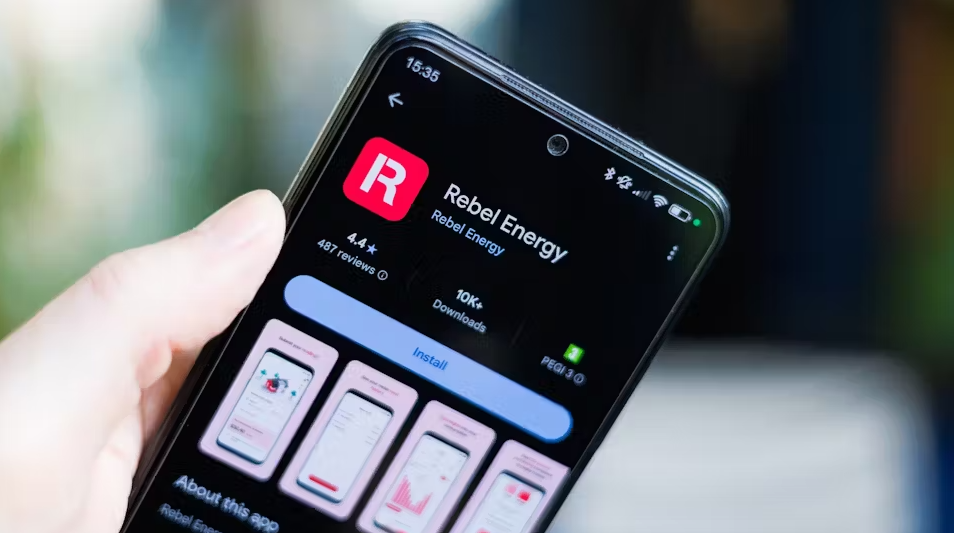
This week, Rebel Energy posted a notice on its website announcing that it had ceased trading. According to the Telegraph, around 90,000 customers of the energy retailer will be moved by the regulator, Ofgem, to another supplier. Central to the newspaper’s story is Rebel’s failure to maintain a ‘ring-fenced’ account, from which payments under the Renewable Energy Obligation green energy subsidy mechanism are supposed to be made. This is a surprise, because one of Rebel’s main marketing gimmicks was its commitment to green energy, another being social justice. “We’re fighting for fairness in energy,” exclaims the company website’s “mission” page, which claims to battle “the injustices that burden our customers and the planet”. Maybe if its directors weren’t larping as white knight, planet-saving superheroes, the energy company might still be a going concern.
Rebel joins 31 energy retailers that have gone bust since 2020 – almost all of them in 2021. Many of them were, by the standards of competitors, tiny boutiques with 10,000 or fewer customers. The largest was Bulb Energy, with 1.7 million customers. The late 2010s were also bad years for the energy upstarts. Twenty-nine firms went bust between 2015 and 2021. The most notable of these were Bristol Energy and Robin Hood Energy, with 155,000 and 112,000 domestic customers respectively.
Bristol Energy was established by Bristol City Council as a publicly-owned enterprise, which failed and ended up costing the public £35 million. Similarly, Robin Hood Energy was a


Discussion
Comments
This week across the site:
To join in with the discussion please make a donation to the Daily Sceptic.
Profanity and abuse will be removed and may lead to a permanent ban.
“The claims on Rebel Energy’s website help to make the case that something is deeply wrong. “We’re doing things differently,” claims the bankrupt supplier, in big bold capital letters.”
Its CEO was formerly an accountant at BP.
The golden rule of (successful) business is never, never, ever let an accountant run a business.
Government at work.
”… First, that the putative monopoly of the ‘Big Six’ energy retailers could be broken.”
Which is meaningless if the wholesale market is not a free market and Government has created a cartel of wind and solar companies, with wholesale prices guaranteed by Government, where gas and nuclear (or coal if we still had it) cannot compete on price.
“… proposed that prices be controlled with a price cap. In 2017, the Tories adopted the policy, which became active in 2019. And since energy prices since 2021 have been subject to a cap…”
If prices are capped above what the market rate would be, consumers pay more; if they are capped below what market rate would be, there will be a shortage of supply, because businesses will go belly up since their costs are not capped but selling prices are. Oh look!
So Government has distorted the wholesale market with price guarantees and subsidies for the cartel it has made, then has distorted the retail market and eliminated price competition by capping prices (but not capping costs).
Well done! Because central economic planning and control always works so well, Comrade.
Rebel Energy… Read more »
I’m prohibited from switching energy suppliers by my rent contract. As that’s a standard contract, the chances are good that most or at least many other people who rent are as well. So, where’s the competitive market here? My landlord (or rather, I guess, the agency working on his behalf) chooses the supplier. And I have to pay the bills. Insofar there’s competition here, it’s energy suppliers competing for contracts with home owners who pass the cost of the contract on to somebody else. This suggests that incentives for home owners to choose a particular supplier instead of another suppliers exist (less nicely worded, that the market operates based on corruption) and that there’s zero incentive to lower end user prices. That the government has chosen to cap them is a tacit admission of this.
NB: Everything after This suggests is purely speculative. It seems plausible to me but I don’t have a proof for it.
If you are responsible for paying the energy bill to the retailer, you may want to look into either the legality or enforceability of that part of the contract. Tenants have a right to choose their own supplier and tariffs, the same as home owners. What difference it would make is debatable, however. Ofgem and Citizens Advice both have guidance on this.
Thanks.
Indeed. As an ex landlord I can confirm that the option to change suppliers for gas and ‘leccy was always available to tenants.
I’m a landlady. A tenant has the legal right to switch energy suppliers and doesn’t require agreement from their landlord. What they don’t have is the right to do anything which causes the energy supply to be cut off (ie fail to pay the bill, or vandalise the meters).
As I’ve just read this again: I indeed do. However, I’m obliged to switch back to the original supplier at the end of the tenancy. Which basically means – as I understand it – that I need some kind of contract with the present supplier that he’s willing to take over the account again whenever I ask for that before I can legally change to another supplier. For me, that’s enough of a hassle that I didn’t consider this so far. Which is presumably exactly the point of it: Don’t prohibit but deter.
Bear in mind that the so-called energy suppliers do no such thing, that is done by power stations and transmission lines. These companies just supply bills, and collect money, hence why it is no big deal when one of them goes bust, though we all pay for the resulting admin costs.
Ever wondered why there are no stories in the press about people being cut off for non-payment of bills? That is because these companies are obliged to act as arms of Social Services for people who can’t/won’t pay their bills. So who does pay for these people? No prizes for getting the right answer.
https://www.conservativewoman.co.uk/public-accounts-committee-worried-about-blackouts/
Renewable subsidies will cost us £17.9 billion next year. Mugged-off doesn’t come close.
Thanks to Paul Homewood at TCW.
“Cheap energy is social justice. Abundant energy is fairness. Cheap and abundant energy makes the world a better place.”
Exactly. And this message should be at the front of any discussion concerning energy.
Straight to the heart of the matter.
👍👍
I doubt most of those pushing “green” energy have much interest in justice and fairness.
I am absolutely sure you are right on this tof but because that is the case it decidedly destroys the Nut Zero arguments before they have started.
Another small bankruptcy. In recent years, some companies have sold off their retail trade to others, notably SSEN sold theirs to OVO. I used to be an SSE customer, and thus moved to the other. SSEN is still the District Network Operator in central southern England ( powertrack.ssen.co.uk ), but do not do retail sales at all, with lots of those little ones scrabbling through their network.
Shell Energy was sold to Octopus so I ended up there for my electricity. Apart from infantile emails and trying to force a dumb ‘smart’ meter on you, they have not pissed me off enough to move elsewhere…so far.
Who covers their debt?
Added to daily standing charge across suppliers, which never ever goes down when the debt is paid off, hence multi-fold increase in daily standing charge since mass supplier-failures of 2015-21.
Nice racket if you can run it – Ofgem gone rogue decades ago.
Can we have three guesses?
😀😀
More green grifting getting its comeuppance.
What a bummer reality is for the lofty fallacies and follies of “green energy” and “social justice.”
Keep up the good work, Dr Nemesis (and Mr Pile).
(Typo – 2011 Coalition Energy Minister “Christopher Hohn” should be Christopher Huhne, correct on second citation but not on first).
You can’t make green profits with red ink.
thanks, corrected
Go woke..?