

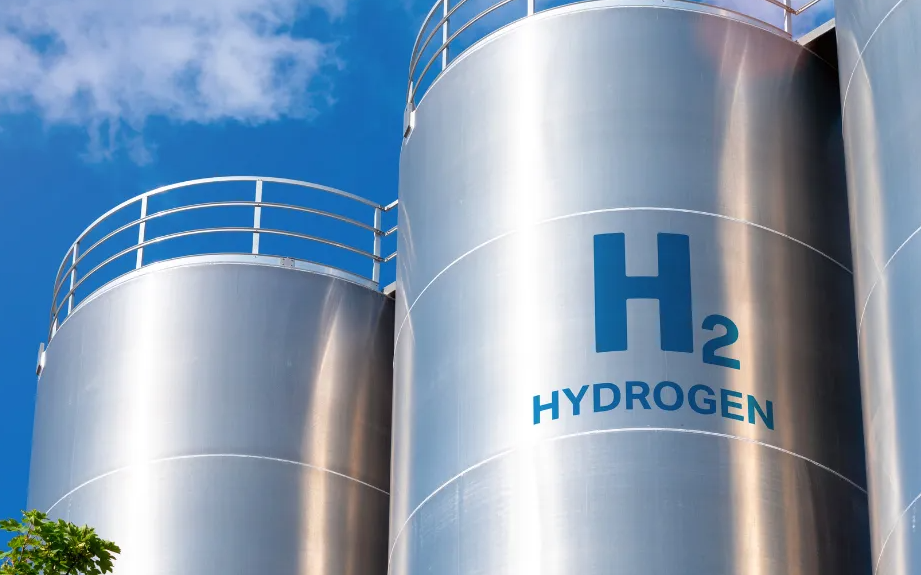
Labour is set to load a new green levy on to household energy bills to help subsidise hundreds of millions of pounds for hydrogen projects despite pledging to cut bills by £300. The Telegraph has the story.
The gas shipper obligation (GSO), which will be introduced in 2027, will initially add up to £7.10 to average gas and electricity bills.
The money raised will be used to fund an initial round of 10 green hydrogen schemes, aiding Labour’s efforts to replace fossil fuels with clean power.
Another 27 projects have already been shortlisted, meaning the levy’s costs will keep rising to fund them.
The GSO will also join a raft of other green levies being added to power bills, threatening Andy Burnham’s pledge to tackle the cost of living crisis by reducing household energy costs.
The Prime Minister has vowed to save families £45 a year by removing VAT from electricity bills but these savings are set to be wiped out by Ofgem’s price cap, which will rise by £60 from October.
Britain’s biggest energy companies have frequently blamed green levies as one of the main factors driving bills higher.
The GSO will start off small but its costs are expected to surge as green hydrogen production scales up to industrial levels.
It will be imposed on companies moving natural gas through the UK distribution system, which will then be able to recoup the costs from domestic and commercial energy bills.
A report from the Joint Office of Gas Transporters, an industry body, said: “The gas shipper obligation costs will ultimately be passed to consumers based upon their consumption so will have an effect on existing gas consumers and will entail a large number of consumers incurring this additional cost.”
The GSO money will fund the first “hydrogen allocation round (HAR1)”, under which an initial 10 trial schemes will get about £150 million for projects to generate 115 megawatts (MW) worth of green hydrogen.
This is produced by splitting water into hydrogen and oxygen using renewable electricity. The hydrogen produced can then be used as a clean fuel.
The subsidy will be rapidly scaled up over successive allocation rounds in the same way that wind and solar have been expanded using a similar subsidy system.
Officials are already preparing to expand the GSO subsidy schemes to help fund more projects in the coming years.
Worth reading in full.




Discussion
Comments
This week across the site:
To join in with the discussion please make a donation to the Daily Sceptic.
Profanity and abuse will be removed and may lead to a permanent ban.
Wind and solar should be using their unwanted generation periods to produce and store hydrogen and then sell or use it in a gas turbine to generate electricity when there is no wind or sun, rather than getting paid subsidies to switch off turbines etc when lack of demand. This would show whether the green model is sustainable – no external financial input.
They won’t, and it isn’t!…
You have to laugh
Every hydrogen project around the World has collapsed once the subsidies have been harvested.
Hydrogen has low energy density, so it needs to be stored and/or transported compressed (good luck with that) or liquified cryogenically (expensive).
It is the smallest molecule we know, the Houdini of elements, corrodes metals, so storing, piping it at high pressure safely and without loss, cheaply is impossible.
Producing it from Ruinables is impractical for all the same reasons these intermittent energy suppliers are impractical to serve the grid.
Hydrogen has been known and manufactured for many decades. If it really were THE wonder-fuel, we already would have been using it for ages in place of natural gas, motor fuels. We have not because it has none of the benefits of these, all the drawbacks they don’t have, and costs more.
Net Zeroids lack any understanding of physics and economics. No common sense either!
And even a small inadvertent ignition will be reminiscent of the Hindenburg
Hydrogen has a very low flash-point, burns at over 2 000C, is colourless, odourless and the flame invisible.
People have walked into hydrogen flames unknowingly until they start burning.
Sounds certain then that our betters will start forcing it into the homes of a grateful public
Spot the gross thermal inefficiency in making “green” hydrogen by using surplus renewable electricity.
It’s claimed that the process will use renewable energy. I’m sure I’ve read that renewables wouldn’t cut it because of intermittency. More gaslighting?
Correct.
Electrolysis stops when the electric current stops, then restarts when current flow again, which would be the case with wind/solar.
This reduces efficiency, will cause degradation of the electrodes, produce impurities in the gas, and can increase safety risks.
And as with everything to do with Ruinables, will be very expensive.
And on top of that… who’s actually going to use all this hydrogen and for what? I assume they are planning to pipe it straight into storage at / near a hydrogen burning power plant so it can be used similar to natural gas for the national grid?…
Save us from politicians who understand naff all about energy.
“Save us from politicians who understand naff all about” anything
Gosh, who would have thought that the pledge to cut bills was a load of bollocks?
Reposting this survey link from earlier which Myra kindly posted. Lots of free format boxes: Zero emission vehicle mandate review – GOV.UK
Please name one Labour (or Tory) Prime Minister or Energy Secretary who has NOT lied to us about the cost of so-called ‘Green’ Energy and Unreliables over the past 15 years.
I’m pretty sure Harold Wilson hasn’t lied about anything in the last 15 years. 🙂