JCVI

JCVI Remains Opposed to Vaccination of Younger Teenagers

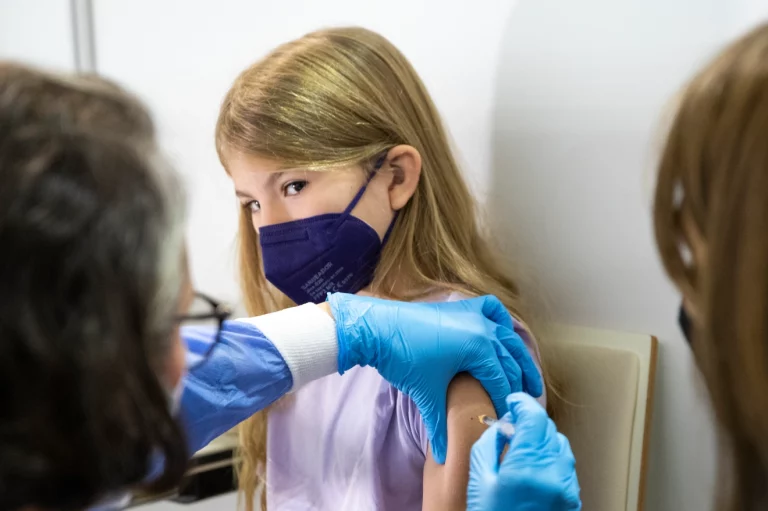
The Joint Committee on Vaccination and Immunisation (JCVI) may have changed its mind on the vaccination of healthy 16 and 17 year-olds but reports suggest that it remains largely opposed to the vaccination of non-clinically vulnerable younger teenagers and children. The Guardian has the story.

Several members of the JCVI said the mainstream sentiment on the body is still extremely cautious about expanding the programme to 12 to 15 year-olds, even though a Deputy Chief Medical Officer has suggested that outcome is high [sic] probable and politicians have said they would like the issue to remain under review.

The JCVI recommended on Wednesday that all over-16s be offered jabs, just two weeks after saying children should not routinely be given Covid vaccinations. The U-turn provoked alarm at what was described as a “shambolic” vaccine roll-out for older teenagers, with doctors saying they were being “left in the dark” about the details of the roll-out to younger people.

The JCVI has moved to “refresh” the membership of its Covid subcommittee in recent weeks, with one prominent critic of Covid jabs for children, Professor Robert Dingwall, leaving the body.

Dingwall and others on the committee said his views were not the reason for the shake-up, and that sentiment on the body is still that the risks outweigh the benefits for 12 to 15 year-olds. …

Jonathan Van-Tam, a Deputy Chief Medical Officer, has said it was “more likely than less likely” that the list of eligible children would be broadened.

However, one expert who remains a member of the JCVI said the overriding opinion of the body was still against expanding vaccinations to 12 to 15 year-olds and argued that the committee was more likely to recommend removing categories of vulnerable children who are currently offered vaccines.

Committee members said they had not felt political pressure to change their views when it came to changing its advice on 16 and 17 year-olds. However, two members on the committee said there had been a fear that Scotland could go its own way on vaccinating older teenagers, even though the Scottish First Minister, Nicola Sturgeon, has consistently said her Government will follow JCVI advice.

Worth reading in full.

16 and 17 Year-Olds Will Be Able to Get Covid Vaccine Without Parental Consent

Some U.K. vaccination clinics have been giving 16 and 17 year-olds a Covid ‘jab’ in recent weeks, provided they were accompanied by a parent or guardian, but it is now understood that children in this age bracket will not require parental consent when the vaccine roll-out is extended in the coming weeks. MailOnline has the story.

The Joint Committee on Vaccination and Immunisation (JCVI) recommended the 1.4 million youngsters should be offered Pfizer jabs, marking a dramatic U-turn on guidance the same panel issued two weeks ago.

Health Secretary Sajid Javid said the NHS would dish out invites “as soon as possible”, with the goal of getting the oldest teenagers protected before they return to classrooms in September.

Professor Jonathan Van-Tam, England’s Deputy Chief Medical Officer, said there was “no time to waste”.

He also laid the groundwork for ministers to expand the inoculation drive to all over-12s in the near future, saying that the JCVI would “continually review” the evidence. …

Pfizer’s vaccine has been linked to a rare side effect called myocarditis – inflammation of the heart muscle. Data from the U.S., which has been giving the jab to children for months, shows the complication affects one in 100,000 teenage boys after the first dose, but this rises to about one in 15,000 after the second dose.

Officials close to the programme said a child would be able to give consent for the jab if they were able to understand the risks and benefits of any medical treatment. …

Boris Johnson today called on families to listen to the advice from No 10’s top scientists, saying that the committee was “among the best in the world” and that the country should “take our lead from them”.

Professor Van-Tam… told a Downing Street press conference today that the first inoculations for 16 and 17 year-olds would be given “in a very short number of weeks”.

He said: “Children are going to start going back to colleges and sixths forms from September, and in Scotland that will be slightly earlier, so there is no time to waste in getting on with this.” …

More than eight in 10 Britons… support the move, polling suggests, including more than 50% of people who strongly support offering jabs to the younger age groups.

Worth reading in full.

Stop Press: According to the ONS, nearly 80% of 16-24 year-olds have Covid antibodies. Why, then, do 16 and 17 year-olds need to be double jabbed? MailOnline has more.

More Than 220,000 Under-18s in England Have Already Been ‘Jabbed’

As the debate on the vaccination of children against Covid hots up, it has been revealed that nearly a quarter of a million under-18s in England have been ‘jabbed’ already. The Evening Standard has the story.

Across the nation 223,755 under-18s have received a first dose, according to NHS data to July 25th.

The figures come as it emerged that the offer of a vaccine is expected to be extended to include all 16 and 17 year-olds.

In June, Vaccines Minister Nadhim Zahawi announced that a number of under-18s would be eligible for the jab if they had certain health conditions, lived with someone who is immunocompromised, or were approaching their 18th birthday.

He said at the time that the vaccine experts who advise the Government, the JCVI, did not currently recommend that children should be routinely given the jab, but that the matter was being kept under constant review.

However, the PA news agency has learned that some clinics have already begun vaccinating 16 year-olds at walk-up appointments, provided that they attend with their parent or guardian.

NHS data shows that 79,616 children have had both doses.

Worth reading in full.

Stop Press: All 16 and 17 year-olds will start being invited to get vaccinated against Covid “in a very short number of weeks indeed”, Professor Jonathan Van-Tam, England’s Deputy Chief Medical Officer, has confirmed.

JCVI Could Recommend Giving 16 and 17 Year-Olds Covid Vaccine “In Days”, Says Nicola Sturgeon

16 and 17 year-olds in the U.K. could soon be called up to get vaccinated against Covid, according to Nicola Sturgeon. The Scottish First Minister suggested that the Joint Committee on Vaccination and Immunisation (JCVI) could offer new advice “in the next few days” on the vaccination of this younger age group. The Guardian has the story.

Just two weeks after the [JCVI] recommended against routine vaccination of children, the Scottish First Minister revealed that she “hoped” over-16s would get the go-ahead to receive it after all.

Two Government sources confirmed that the JCVI was looking again at widening its recommendation for children over 12. Jabs for this age group are currently limited to those who are clinically vulnerable or live with someone at risk.

Anthony Harnden, a member of the committee, said: “JCVI is in the process of finalising updated advice on the offer of vaccination of children and young people.”

Ministers are believed to have been in favour of older children getting access to the Pfizer or Moderna vaccines, but the JCVI said they should not routinely be available to children who do not have a specific risk factor.

One of the concerns that the scientists raised, linked to the Pfizer jab, was about inflammation around the heart, with the JCVI concluding that the benefits did not outweigh the risk to those who would be receiving the jabs. …

Professor Rowland Kao, a participant in the the Scientific Pandemic Influenza Group on Modelling (SPI-M) and an Epidemiologist at the University of Edinburgh, said: “Per capita, older teenagers currently have the highest risk of Covid infection, and vaccinating 16 and 17 year-olds should reduce this.” …

Making a statement to the Scottish parliament on Tuesday afternoon, Sturgeon said she was “hoping” to get the updated advice from the JCVI “over the next day or so”.

During the subsequent question-and-answer session with MSPs, Sturgeon said: “The JCVI are our advisory body so they have to give us the advice they think is right and I respect that. I am hoping it will recommend going further on the vaccination of young people.

“I am particularly concerned if possible to get vaccinations to 16 and 17 year-olds, which is obviously important for those who will be, for example, going to college and university and mingling with older young people who are vaccinated. But we’ll see what that advice brings and we stand ready to implement that as quickly as possible.”

She later said she was hoping and “veering towards expecting” the committee to recommend further vaccination of people in the 12 to 18 year-olds age group, and in particular “hopeful that we will see some updated recommendations in relation, as a priority as a first part of this, for 16 and 17 year-olds”.

Worth reading in full.

All U.K. Children Could Be Offered Covid Vaccines by the End of the Year

The Government will announce its plans for the vaccination of children against Covid later today and is expected to say that only clinically vulnerable children and those living with vulnerable adults will be included in the national roll-out – for now. It hasn’t taken long for reports to emerge suggesting that all children could be offered a vaccine by the end of the year. The argument is that it will be difficult to reach herd immunity if children remain unvaccinated. The Telegraph has the story.

The Joint Committee on Vaccination and Immunisation (JCVI) is expected to announce that only vulnerable youngsters between the ages of 12 and 15, and 17 year-olds within three months of their 18th birthday, will be offered a jab amid concerns there is too little data on safety and efficacy in young people.

But the JCVI is expected to leave the door open for more children to be vaccinated once trials conclude later this year, the Telegraph understands.

In June, the Medicines and Healthcare products Regulatory Agency approved the Pfizer jab for 12 to 15 year-olds in Britain following early trial results in teenagers, but there is still no data for younger children. 

Pfizer is expected to release results on trials for five to 11 year-olds in September and two to five year-olds by November, with the company expecting regulator approval within a month of releasing positive data. AstraZeneca is also conducting trials in children aged six to 17, with the British team likely to release results before the end of the year.

On Sunday, experts warned that it may be difficult to reach herd immunity in Britain if children are not vaccinated. Nearly one in five people in the U.K. are under 16 and, despite everyone being offered a vaccine, around 12% of adults have not had a first jab.

Professor Neil Ferguson, of Imperial College, a member of SAGE, told the BBC: “In the absence of vaccinating it’s inevitable that we’re going to have very high numbers of cases in teenagers, and we will not be able to reach herd immunity without significant immunity in people under 18.”

The JCVI is expected to keep the situation under review and will be watching the results from trials closely. 

Scientists are particularly concerned that vaccination may damage the developing immune system of younger children. Different age groups may require different doses, further complicating the roll-out, and companies must show it will not make children who get Covid more ill – which has happened with other vaccines in the past. 

Experts are also worried that the benefits to children may not outweigh the risks, making vaccination ethically dubious and leaving the Government vulnerable to legal challenges.

A Department of Health spokesman said: “The Government will continue to be guided by the advice of the JCVI, and no decisions have been made by ministers on whether people aged 12 to 17 should be routinely offered Covid vaccines.”

Worth reading in full.

JCVI to Advise Government Against Vaccinating Children Over Safety Concerns

The Joint Committee on Vaccination and Immunisation (JCVI) is to recommend against the vaccination of under-18s until there is more safety data, according to the Telegraph.

Experts on the Joint Committee on Vaccination and Immunisation (JCVI) are expected to make a recommendation against the vaccination of under-18s in the immediate future.

The committee is understood to be preparing an “interim” statement for release as soon as the end of the week following a meeting on Tuesday.  

At a meeting, members are understood to have voiced serious ethical concerns about vaccinating children, given that they rarely suffer serious illness from Covid.

The statement is set to say more time is needed to assess studies of vaccine rollouts in other countries where children are being vaccinated – including the US and Israel – before deciding whether such a programme should be launched in the U.K.

A Whitehall source said: “Nobody is going to green light the mass vaccination of children at this stage. Scientists want to see more data from the U.S. and elsewhere before taking a firm stand either way. Nobody is going to make a final decision at this point. The JCVI will want to weigh up the benefits against the risks before vaccinating children, and it wants more data.”

Under-18s very rarely suffer serious disease with COVID-19 and younger people are also affected more strongly by some of the rare-but-serious vaccine side-effects such as blood clots, meaning the risk-benefit calculation is less likely to be favourable. With data on children, who were not included in the trials, very sparse, this is the right advice. Let’s hope the Government follows it.

The Telegraph report is worth reading in full.

Scottish Children Will Be Vaccinated “as Quickly as Possible”, Says Nicola Sturgeon

The Joint Committee on Vaccination and Immunisation (JCVI) is expected to tell U.K. leaders this month that the vaccination of children against Covid is a “political” decision, without offering a firm recommendation either way. If the use of the Pfizer vaccine in 12-16 year-olds is approved by the body, Nicola Sturgeon says Scottish children will be vaccinated “as quickly as possible”. The Telegraph reports that planning on a vaccine roll-out scheme for children aged 12 and over has started already.

In a statement at Holyrood, [the First Minister] acknowledged that giving children Covid jabs could provide them with greater protection and minimise any further disruption to schooling.

However, she refused to guarantee that any rollout would be completed by the start of the new school year in August, noting that vaccine supplies “are not limitless”.

Ms Sturgeon also pointed out that the Medicines and Healthcare products Regulatory Agency (MHRA), the U.K.’s medicines regulator, has so far only approved the Pfizer vaccine for use among 12 to 15 year-olds.

Pfizer said its trials had shown 100% efficacy and a strong immune response in children between 12 and 15, and also suggested that the vaccine was safe with no unusual side effects.

Its use among children in the U.K. was approved by the MHRA last Friday, with the regulator saying it had carried out a “rigorous review” which showed the vaccine was safe and effective in adolescents.

The JCVI must now advise governments on whether this age group should be vaccinated as part of the U.K. roll-out.

Ms Sturgeon told MSPs: “Vaccination may well be an important way of giving children greater protection, minimising any further disruption to schooling and further reducing community transmission of the virus.

“And so I can confirm that if the JCVI recommends the use of the vaccine for children aged 12 and over, we will move as quickly as possible to implement the advice.”

She later said: “In anticipation of the JCVI giving the go-ahead to vaccination of over-12s, we’ve already started that planning.”

Ms Sturgeon said children with underlying health conditions may be vaccinated first but she could not yet provide a timescale for when pupils would get their jabs. However, she emphasised that the focus remained on vaccinating the adult population.

The First Minister’s announcement came as she refused to reduce Covid restrictions in any part of Scotland, blaming a 50% rise in cases over the past week due to the Indian variant.

School leaders in England have also called on Boris Johnson to vaccinate schoolchildren against Covid before the start of the summer holidays, citing concerns over the Indian Delta Covid vaccine. 

The Telegraph report is worth reading in full.

Stop Press: The U.K. Medical Freedom Alliance has raised “grave concerns” about the emergency authorisation of the Pfizer vaccine for children in an urgent open letter to the MHRA.

Given that these vaccines will have virtually no benefit to the children themselves, it is profoundly unethical and indefensible to vaccinate children, especially with an experimental vaccine using novel technology, in what appears to be a misguided attempt to protect adults and achieve herd immunity. We call on the MHRA to exercise caution and immediately reverse their decision.

The letter is worth reading in full.

School Leaders Say Children Should Be Vaccinated before the Start of the Summer Holidays

Following the approval of the use of the Pfizer vaccine in those aged 12-15 by the U.K. medicines regulator, school leaders have called on the Government to vaccinate schoolchildren against Covid before the start of the summer holidays. Their hope is that pupils will be fully vaccinated before returning to the classroom in September. The MailOnline has the story.

Ministers have asked the Joint Committee on Vaccination and Immunisation (JCVI) whether to give the jab to teenagers – the current rollout is set to stop at age 18 except for children with serious health conditions. 

The JCVI – which normally rules who should get a vaccine – is expected to tell Number 10 that jabbing children is a “political” decision and will leave the ball in ministers’ court. 

Teaching unions and school leaders today said starting vaccinating children soon could ensure they have had both jabs by the time they start the school year in September.

But vaccinating children against the virus is a controversial issue because youngsters only have a tiny risk of getting seriously ill and their immunity would likely only protect older adults. 

More than 100 cross-party MPs and the World Health Organisation have said the priority should be to get vaccine doses abroad to poorer countries where vulnerable people still haven’t been jabbed before giving them to low-risk children.

Hamid Patel, Chief Executive of the Star Academies school trust based in Blackburn – the area of the country with the most cases of the Covid Indian variant – said schoolchildren should be vaccinated as a matter of priority.

He said there would be a much higher uptake if children were given the jab during term time before the school holidays…

And Patrick Roach, General Secretary of the NASUWT teaching union, also urged the JCVI to consider expanding the rollout to teenagers.

He said offering them the vaccine would “protect the wider adult population who are at greater risk from Covid”.

There are “ethical dilemmas” to be considered when it comes to the decision on whether or not to vaccinate children against Covid, an expert has said.

Professor Anthony Harnden, Deputy Chairman of the JCVI, said while a “very small minority” of children have been severely affected by the virus, children “in the main” do not get severe illness.

He told BBC Breakfast: “I think the vast majority of benefit won’t be to children, it will be an indirect benefit to adults in terms of preventing transmission and protecting adults who haven’t been immunised, for whatever reason haven’t responded to the vaccine and therefore that presents quite a lot of ethical dilemmas as to whether you should vaccinate children to protect adults.”

He added: “We need to be absolutely sure that the benefits to them (children) and potentially to society far outweigh any risks.”

Worth reading in full.

Stop Press: Health Secretary Matt Hancock says vaccinating children in the U.K. against Covid will take priority over donating doses to other countries.

End of Lockdown Unlikely to Bring an End to Face Masks and Work from Home Guidelines

Professor Anthony Harnden, the Deputy Chair of the Joint Committee on Vaccination and Immunisation (JCVI), says that the unlocking of society will be a “gradual process” requiring a “cautious” approach – even if the June 21st date for the end of lockdown is met. He told BBC Breakfast (as quoted in WalesOnline):

Even if we do un-lockdown, if you are in a vulnerable position, particularly if you’ve not been vaccinated, you do need to carry on being cautious, even if the June 21st date goes ahead.

So I think we’ve all got used to living within boundaries at the moment and I think it’s not an all or none, I think it will be a gradual process even if the June 21st date goes ahead.

According to the Times, the Government is prioritising ending social distancing guidelines, but will likely leave guidance around masking and working from home in place.

The Treasury is prioritising the end of the “one metre plus” distancing rule and the “rule of six” indoors, which is viewed as crucial to supporting hospitality and retail and helping the economy to recover. Ministers also want to end rules that limit mass gatherings so that festivals, concerts and sporting events can go ahead…

In an attempt to reduce the spread of the virus, masks could still be required on public transport and in indoor public spaces. Guidance stating that people must work from home if they can may also remain in place. Boris Johnson is expected to make a decision on which restrictions can be lifted within the next fortnight.

For some Government advisers, even unlocking partially on June 21st would be going too far. According to SAGE member Professor Andrew Hayward, there is a “good argument” for delaying the end of lockdown until a “much higher proportion” of the population has been fully vaccinated (a sentiment recently echoed by Health Secretary Matt Hancock).

He told Today on BBC Radio 4: “It’s still going to be a few weeks yet until we’ve got all of the highly clinically vulnerable double-vaccinated and that will probably coincide with the plans to open up more fully. When we do open up more fully, instead of [cases of the Indian variant] doubling every week, it’s likely to double more frequently than that. I think there is a good argument for caution until we’ve got a much higher proportion double-vaccinated.”

The Times report is worth reading in full.

We Shouldn’t Vaccinate Children as a Matter of Principle Because of the Side Effects, Says Government Vaccine Adviser

Adam Finn, Professor of Paediatrics at the University of Bristol and a member of the Government’s Joint Committee on Vaccination and Immunisation (JCVI), was on BBC Radio 4’s Today programme this morning (around the 50 minute mark) taking a surprisingly strong line against vaccinating children because of the “side effects”. Here’s an edited transcript of what he said:

The main priority at the moment is to try and immunise as many people as possible who are at risk of getting really sick with this virus, because that’s the one thing we want avoid is another big surge of hospitalisations and deaths, and that isn’t going to happen in children. … Children are very rarely seriously affected by this infection. …

The evidence we’ve got with children, particularly young children, is that they are not very infectious to each other or to adults around them and that the majority of the transmission of the infection is in the adult population in fact. …

There is a certain amount of transmission going in secondary schools, so in teenagers, but in fact we’ve been surprised about how little transmission we’ve picked up in schools and of course this time around there’s been a lot more testing and awareness of what’s going in schools. …

In normal times, just as in pandemic times, we simply wouldn’t want to immunise anybody without needing to. It’s an invasive thing to do, it costs money, and it causes a certain amount of discomfort, and vaccines have side effects. So if we can control this virus without immunising children we shouldn’t immunise children as a matter of principle. …

I’m optimistic that we in particular in the U.K., with the high coverage we’re achieving and the extremely effective vaccine we’ve got, that we can achieve population immunity and I’m afraid it’s an open question as to whether we need to immunise any children at all and if we do how many children we need to immunise.

This is quite a change of tune for Professor Finn, who last month told BBC Breakfast that children had been “left behind” in vaccination and vaccine trials, saying: “We’re impatient now to get on and do the necessary trials in children so that these vaccines can start to be used, and actually circumstances are holding us back so it’s a very frustrating situation to be in.”

He did add, though, that side-effects appeared to be worse in younger people: “There is evidence for more or less all of the vaccines against Covid that the side-effect rate, the reactogenicity that we see, basically goes up the younger you are.”

At the time of these earlier comments the AstraZeneca trials in children were paused while the MHRA investigated blood clot links. What has Professor Finn seen since then that persuaded him that maybe vaccinating children isn’t so pressing after all? Is this a sign that the side-effects, at least in the young, are beginning to be taken seriously by the Government?