

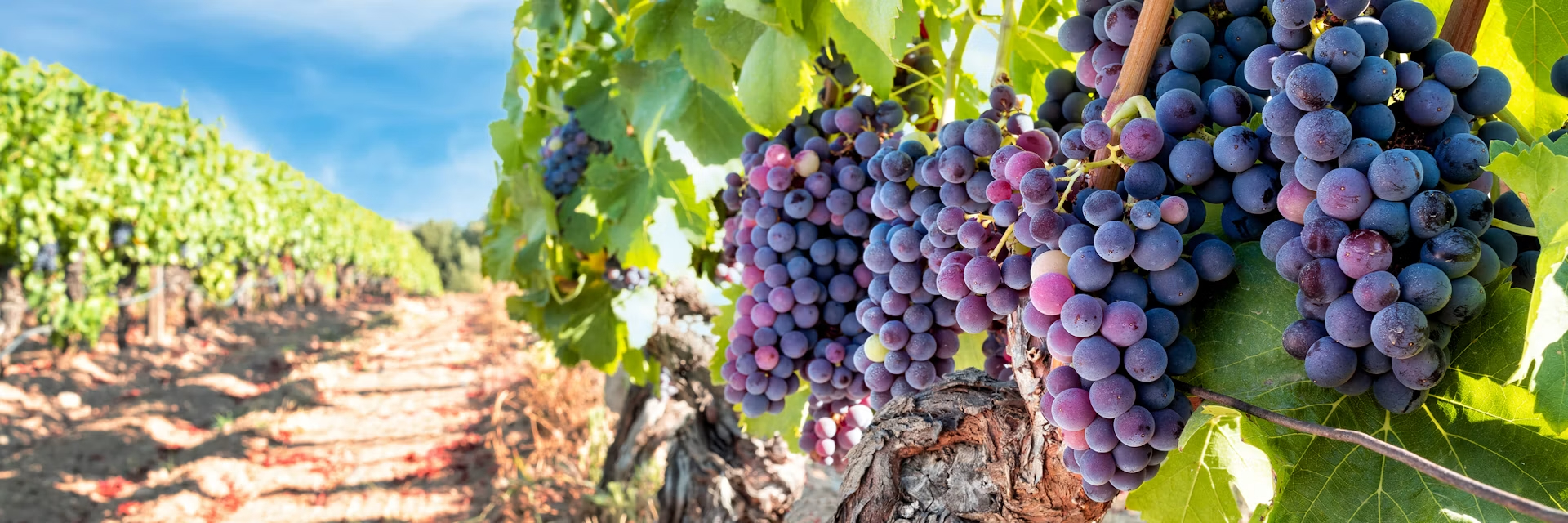
It has become one of the settled rituals of the climate-activist press: almost any hardship afflicting any agricultural sector, anywhere in the world, is now reflexively laid at the door of “climate change”. No mention of ordinary weather variability, market economics, pests or poor planning. The latest instalment arrived via the Conversation, under a headline declaring that climate change is putting the squeeze on the world’s grape-growers, dressed up as fresh research. It was duly amplified across social media as further proof that the planet’s vineyards are dying on the vine. This should be duly mocked by those weary of seeing every inconvenience – from frost and floods to a merely disappointing harvest – blamed on “climate change”. The truth, as usual, lies in the data – and the data on grape and wine production tell a rather different story from the one being sold to a public primed to expect climate catastrophe in every news cycle.
A narrower study than the headline admits
Read past the headline and the underlying research turns out to be considerably narrower than the framing suggests. The paper behind the Conversation piece is a modelling exercise by Australian researchers projecting how warming and drying trends could, over coming decades, alter the suitability of Australia’s wine regions for viticulture. It is a study of possible future risk – among many future risks – in one country. It is not a documented account of a global industry currently in decline, though it comes across as such.
Even the article’s own examples cut against the doom framing: it notes that warming has allowed English growers to expand sparkling wine production in areas once thought unsuitable for anything but hedgerows, and that Tasmania stands to benefit as conditions there become more favourable. An industry that is simultaneously said to be collapsing in one hemisphere and blossoming in another is not evidence of crisis. It is evidence of what agriculture has always done in response to a changing climate: move, adapt and substitute varietals.
What the hard production data actually show
The relevant test of an existential ‘squeeze’ on grape-growers is not a projection but the actual harvest. On that score, the figures compiled annually by the International Organisation of Vine and Wine (OIV) – the industry’s own statistical authority – are unambiguous. World fresh grape production has been on a broadly rising trend since the 1990s and stood at roughly 77.7 million tonnes in 2024, according to the OIV’s 2024 statistical brief – a level that has essentially held or grown even as the area under vine has shrunk, reflecting steady gains in yields and viticultural technique rather than any climate-driven contraction.
Production has shifted geographically, away from a shrinking European vineyard area and toward China, the Americas and other emerging producers, as documented in the OIV’s historical releases. The geographic reshuffling is driven substantially by economics and land-use policy and is not the same thing as a climate-induced collapse in supply. The Climate Realism project at the Watts Up With That? website reached a similar conclusion when it dug into UN Food and Agriculture Organization data in response to Canadian media claims of a climate-driven wine crisis: both grape and wine output have risen sharply worldwide since 1990, during the very period of modest global warming that is supposedly squeezing growers out of business.
The real pressure is demand, not climate
If the wine business is genuinely under strain – and in places it is – the industry’s own trade body points to a very different culprit than the one making headlines via the Conversation’s cited Left-leaning academic experts. The OIV reported that global wine consumption fell for a seventh straight year in 2025, down 2.7% to roughly 208 million hectolitres and some 14% below 2018 levels – the lowest volume in a quarter of a century. Nine of the world’s 10 largest markets saw demand fall, led by steep declines in China, France and the United States. Asked to explain the slide, the OIV’s Director General did not reach first for the catch-all “climate change”. He pointed to structural shifts in mature markets, changing generational habits, reduced alcohol consumption among younger drinkers, tariff disruption and squeezed household budgets after years of inflation. Production, meanwhile, actually rose slightly in 2025 after a weak prior vintage. In other words, to the extent growers and vintners are under genuine commercial pressure today, the evidence from the industry’s own statisticians points overwhelmingly to a demand-side story about shifting tastes and stretched wallets – not a supply-side story about vines withering in a hotter world.
This is not the first time the wine-apocalypse story has been told, and it will not be the last. Canada’s public broadcaster ran essentially the same segment twice within two months in 2023, and was debunked twice – once by pointing out that the varietals Canada is well suited to growing have expanded output even as the country remains poorly suited to others. American audiences, meanwhile, were treated to a CBS 60 Minutes segment built around France’s genuinely poor 2021 vintage – a year of frost, hail and summer humidity that French winemakers themselves attributed to unfavourable weather, not a climate change trend, and one in which other major producers simply made up the shortfall. A single bad season, cherry-picked and stripped of context, is a typical mainstream media headline: find the worst year on record for one region, attribute it to climate change and ignore the global aggregate that shows the opposite.
The European summer of 2026
Summer 2026 was hot in western Europe but it is not historically unique as the headlines would have us believe. Continent-wide, Copernicus ranked it only third among recent summers, behind 2024 and 2022, while “record” headlines often refer to a single station or month in a short modern network. Longer instrumental series still put 1976, 1947, 1911 and even 1826 among Europe’s great hot summers; France’s 1947 canicule – the French term for a sustained heatwave – put 40°C on the Paris record for 72 years.
But even here, the alarmist framing that treats every fire as a direct emission of carbon dioxide from SUV tailpipes and power plants obscures an inconvenient human element. French authorities reported that close to 500 people had been arrested on suspicion of starting wildfires across the country by the end of July, with roughly seven in 10 suspected of deliberate arson rather than accident. The vines around Bordeaux were threatened that summer rather less by an abstraction called “climate change” than by matches, cigarette ends and, in a meaningful share of cases, deliberate criminality.
Even on the heatwaves themselves, the single-cause story that dominates headlines is misleading. In a two-part analysis, the climate scientist Roger Pielke Jr. has argued that “climate change” is properly understood as an outcome – a detected shift in the statistics of weather – rather than a single cause, and that Europe’s accelerated warming reflects several interacting factors, prominently including the sharp post-1980 reduction in aerosol pollution over the continent, alongside the direct and indirect effects of greenhouse gases. Pielke has separately cautioned that even an aggressive near-term push to Net Zero would do little to alter European heat trends on any policy-relevant timescale, given the physics of the climate system and the other forces at work. None of this is a claim that nothing is happening; it is a caution against the lazy shorthand – repeated uncritically by outlets from the Leftist academics cited in the Conversation to the wire services – that collapses a set of causal factors into a single “climate change” narrative.
Agriculture has always adapted
Grape-growing has never been a fixed, immovable enterprise pinned to one patch of soil for all time; it has shifted with climate for as long as it has existed, from Roman-era vineyards in a warmer southern Britain during the Roman Warming Period to the retreat of continental viticulture during the Little Ice Age and its subsequent recovery. That English sparkling wine and Tasmanian pinot noir are now expanding is not a symptom of catastrophe but a textbook case of adaptation. It is the response that economists in the tradition of William Nordhaus, rather than the catastrophist school associated with Nicholas Stern, would predict from an industry facing a gradual, foreseeable shift in growing conditions over decades.
Growers substitute varietals, move up in altitude or latitude, adjust irrigation and canopy management, and in some cases relocate entirely. This is what farmers of every crop have done since agriculture began at the dawn of time. Treating each such adjustment as proof of an unfolding emergency, rather than evidence of a resilient and adaptive industry, inverts the actual lesson of the data. The Nordhaus approach to a gradually warming world (as it emerges out of the Little Ice Age) was never premised on warming being costless. Most industries, agriculture included, adjust incrementally and at manageable cost when they are left to respond to price signals and changing conditions over time, rather than being frog-marched toward a predetermined transition on the timetable of NGO activists and Al Gore-type alarmists.
Wine is, if anything, an unusually favourable case: it is a high-value, adaptable crop grown by sophisticated producers with every commercial incentive to track shifting conditions closely and to invest accordingly. This is, unsurprisingly, precisely what the industry’s own investment patterns – new plantings in southern England, Tasmania, higher-altitude Andean valleys and elsewhere – show it doing.
Read the harvest data, not the press release
This is a pattern this column has traced before in other domains – wildfires attributed reflexively to global warming while arson and land-management failures go unmentioned, insurance losses attributed to climate change when rising property values and denser coastal development are the primary causes, extreme-weather deaths cited in isolation from the sharp long-term decline in weather-related mortality that better forecasting, infrastructure and adaptation have delivered. The grape-growers story fits the template precisely. A narrow, speculative modelling study is packaged as proof of an ongoing global collapse, amplified by outlets with every institutional incentive to find the climate angle in each week’s news, and left largely unchallenged by a mainstream media in search of bleeding, leading stories.
Readers who want to know whether the world’s wine supply is being ‘squeezed’ by climate change would do better to consult the OIV’s harvest tables than the latest alarming headline. None of this is to deny that a warming world poses genuine, gradual challenges to which growers must respond, as they always have. Indeed, most growers in general would rejoice at a greening world brought about by an increase in atmospheric concentrations of carbon dioxide. The distinction between a real and manageable long-term adjustment and a fabricated emergency is often erased in modern climate journalism.
Grape-growers who have spent centuries chasing the right slope, the right soil and the right microclimate will go on doing so, altitude by altitude and varietal by varietal, largely indifferent to the press releases written in their name. The vines, as it happens, are doing rather well. I just had a very nice Shiraz vintage this evening. Cheers!
Dr Tilak K. Doshi is the Daily Sceptic‘s Energy Editor. He is an economist, a member of the CO₂ Coalition and a former contributor to Forbes. Follow him on Substack and X.



Discussion
Comments
This week across the site:
To join in with the discussion please make a donation to the Daily Sceptic.
Profanity and abuse will be removed and may lead to a permanent ban.
Well, yesterday’s “Countryfile” programme on the beeb was pretty positive about English vineyards in the south. Maybe they’ll be grumbling about a market price fall next year based on high production? Historically, there have been problems with vineyards to do with infections ( such as phylloxera ) and not necessarily related to temperature. The usual suspects would try to do a causation job, though!