

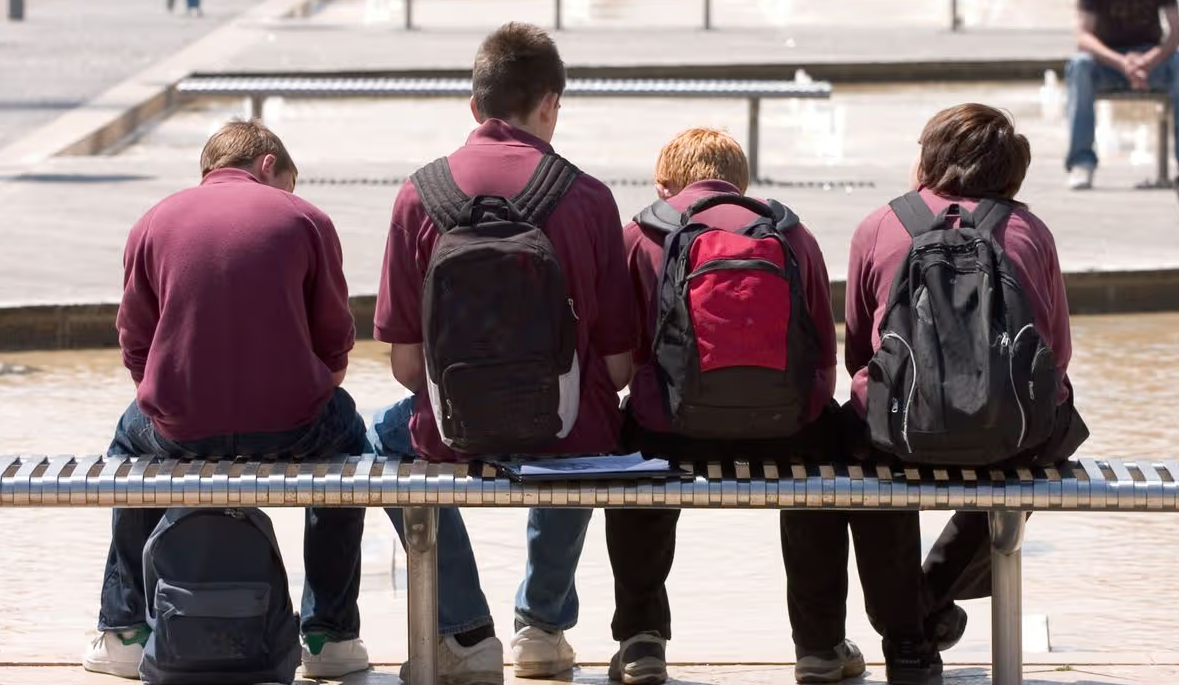
What used to be known as ‘truancy’ has had a smart rebrand to EBSA. Pronounced ebbsah, EBSA stands for Emotional Based School Avoidance. It is the latest woolly mental health acronym to proliferate amongst education-dodgers and those seeking to profit from them.
As nearly nine million children return to school in September there are over 200,000 children who remain at home, generally in their bedrooms scrolling on their phone or gaming. In 2025, 2.12% of pupils were severely absent, missing 50% or more of school. It’s a troubling figure that continues to climb.
What was introduced as a term by West Sussex Educational Psychology Service (WSEPS) in 2018, has mushroomed across the education and mental health sectors. WSEPS defined Emotionally Based School Avoidance (EBSA) as: “A broad umbrella term used to describe a group of children and young people who have severe difficulty in attending school due to emotional factors, often resulting in prolonged absences from school.”
Professionals, GPs, parents and social workers now authoritatively state that so-and-so ‘has EBSA’ even though it is not an officially diagnosable medical condition. Though it does not appear in any medically approved diagnostic manual, EBSA has somehow gained the imprimatur of respectability.
Parents of school-avoidant children have enthusiastically embraced this new ‘condition’. Google searches for Emotional Based School Avoidance have increased by a breakout 5,000% in the past five years. The BBC has a parenting tips page dealing with the issue.
The theory around the pseudo-diagnosis of EBSA is that a child is anxious and upset about going to school; attending school is detrimental to his or her mental health; therefore he or she does not attend.
The local authority, however, is still legally obliged to provide education for that child. A wrap-around service of Alternative Provision, Non-School Education Providers or home tutors is arranged. The majority of Alternative Provision providers servicing the needs of so-called EBSA are privately owned, and their employment by county councils has escalated sharply, costing councils billions of pounds.
I work for one such operation. However, the figures for such children attending even these gentle alternatives are even worse than school attendance. Official figures report that overall absence rose in Alternative Provision to 41.35%, up from 40.94% in autumn 2024-25, with both persistent and severe absence continuing to climb.
This tallies with my experience. Every morning I will look at my timetable and see I am set to visit three children that day, but invariably I will receive such messages from parents as: “No session today, she’s feeling overwhelmed.” “He’s still sleeping so won’t be awake for session.” “Not feeling it today.”
The tragedy about the whole non-medical confection around EBSA is that there are indeed a great number of children who are anxious and do not enjoy going to school. They generally have a collection of conditions around them: ADHD (attention deficit and hyperactive disorder), PDA (pathological demand avoidance), ASD (autism spectrum disorder), anxiety and of course EBSA. The children that I work with live very narrow, limited lives within the terrifying space of the internet and their own minds. Their suffering is real even if the description of it is not.
The EBSA enthusiasts have it the wrong way round. The way to improve mental health is to attend rather than avoid school.
A widely ignored study conducted by Loughborough University and the Office for National Statistics revealed that absence from school causes deteriorating mental health. Based on a sample of 1.1 million children, the study reports:
The probability of presenting at hospital with mental health issues more than doubles (increases from 1.82% to 3.77%) when absences increase from 0% to 20%, and nearly triples (increases to 5.27%) at 30% absence.
Rather than saddling children with yet more spurious medical terms, it would be refreshing if educators, GPs, teachers, social workers and parents addressed the real issues that are enabling over 200,000 children to avoid school. Significantly: lack of sleep caused by phones and gaming kit in bedrooms, and insufficient exercise and nourishing food. Most importantly: lack of meaningful connections with real-life human beings. In other words: friends. These can be found at school.
Mary Gilleece is an educational support worker; her name is a pseudonym.


Discussion
Comments
This week across the site:
To join in with the discussion please make a donation to the Daily Sceptic.
Profanity and abuse will be removed and may lead to a permanent ban.
For me, my secondary school was my sanctuary. Both of my late parents were abusive – physically abusive father who I thought would one day kill me, NPD mother whose speciality was psychological abuse. My wonderful headmistress tried to find out what was the matter, because my academic performance went through the floor, but I was too frightened to tell her, and I just had to get on with life. Where would I fit in with all this ludicrous “mental health” victimhood nowadays? As someone who has genuinely suffered, I find it grossly insulting.
Training for a long life of welfare dependency?
None of the “conditions” mentioned (ADHD, PDA, ASD) existed when I went to senior school in the ’70s.
That’s strange, isn’t it.
It’s almost like the massive increase in (mainly girls) studying Psychology and the feminisation of education has resulted in a great many kids exploiting the mental ‘elf nonsense and therefore created a great many job opportunities for people like the author of this article.
Ultimately what this is demonstrating is that people are being conditioned into believing that anything other than perfection is a serious condition that requires more money and more sympathy. Anything but having to cope.
As someone who was at schools where there was corporal punishment in the 60s through to the early 80s I find this extraordinary, in my day the terror came from what the staff would do if poor behaviour occurred then what parents would do to back that up. I learned to behave, and I have never forgotten how.
When I tried truancy I got a slippering at home from Dad and then three strokes of the cane from the deputy headmaster at school. Yes, I think the old this is going to hurt me more than it hurts you cliché was true in this case. I’m sorry Sir.
Off-topic: Please can we set a personal preference for the sort order of comments under a new article? Or is it just the way I’ve got my browser configured that it doesn’t remember?
Having survived the horrors of boarding school in the 1970s (state run grammar, so not too posh) where all but the hardiest hated the end of the holidays and the return to torture from masters, prefects and bullies without authority, I have little sympathy for those that can’t survive day school. Even those who scream that social media bullies mean you cannot switch off from their abuse out of school get little truck from me, as physical and mental abuse by bullies was literally 24/7 within the confines of a boarding house. Incredibly, despite the horror, boarders had zero truancy and nearly all made it through the seven years to the upper sixth and A levels – some less academically gifted departing after the fifth remove.
I went to a pretty rough “working class” state SecMod school in the ’70s. I was one of a small cohort of pupils from the local middle class village who hadn’t been able to get into the village’s new Comp school due to a boundary issue. I was also short, skinny, ginger and perceived as “the clever kid.”
I went through years of intimidation and bullying – but I still turned up every day and if I’d dared play truant my parents would have dealt with me very firmly indeed.
Indulging these manipulative kids is the worst possible response to “a reluctance to go to school.”
We should be celebrating the fact that we are breeding an entire generation who, when they hit the jobs market, have so little to offer that they’ll undercut the migrant labour force!
Clearly the purpose behind EBSA is to increase the numbers of children “suffering” with a perceived mental ‘elf issue. The purpose is to encourage parents to claim benefits intended to reduce the impact of this dreadful affliction ie PIP. The children will grow up with the stigma of a mental ‘elf affliction which will stay with them throughout their lives and make them wholly dependent on state largesse and useless to the rest of society.
Sheer bloody evil.
Every sensible person knows this is insanity.
However, the issue isn’t that. The issue is that as of now there is no valid ideological basis to stand up to this relentless push to pathologise every human failing.
There is no ideological force to promote individualism and fight collectivism. The good of the collective reigns supreme and the power of the technocrats has no resistance.
It’s just getting ridiculous. Just having a bad day is now ‘mental health’ when in fact just stuffing your face with chocolate and kicking the wall would be enough. It’s quite insulting to people with actual mental health conditions too.
That’s the real issue. All those who genuinely need help are being lumped in with the shirkers and wasters.
A very important point.
“The EBSA enthusiasts have it the wrong way round. The way to improve mental health is to attend rather than avoid school.”
I think consciously or not the EBSA enthusiasts have it absolutely the right way round. If you make attending school a matter of personal responsibility, there’s not much for “EBSA experts” to do. If you make every unwanted or unhelpful or undesirable behaviour a medical issue that “experts” are needed to intervene in, it’s ££££s and kudos and power and saving the world credits for the “experts”. All part of the wider socialist project to turn us all into infants in need of “help”.