

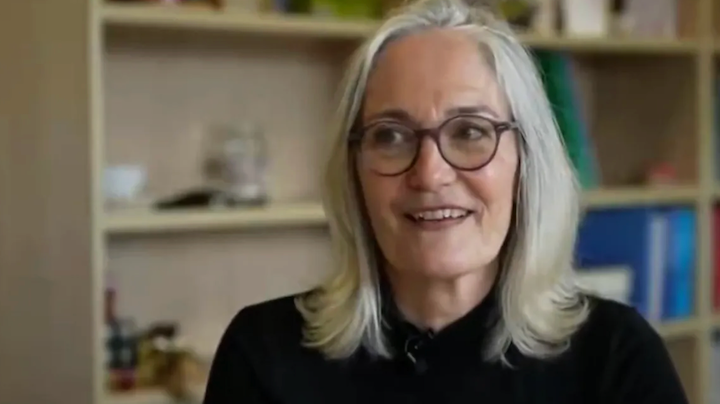
The controversy over Professor Jason Arday and Cambridge University’s role in his appointment drew attention to the Head of Cambridge’s Faculty of Education, Professor Hilary Cremin, whose latest book Education Rewilded: Rethinking schools now and in the future was published last year. Although acclaimed on publication by a few academics and senior teachers, and endorsed by our elite-approved ‘national treasure’ Sandi Toksvig, its reception outside the professional world of education has been damning. Michael Gove – one of Cremin’s targets – has accused her of “peddling toxic nonsense” and “dancing on the grave of learning”.
In the Daily Sceptic Joanna Gray drew attention to state-funded ‘wild’ learning activities that already exist in England for SEND students, pointing out that where children are just “poking around with a stick in a pond” this is unlikely to make them scientifically literate.
In her book, Hilary Cremin anticipates being “dismissed and ridiculed by many” for the views within it, with her “position in Cambridge and the fact that I am a woman (drawing) down a particular kind of vilification”. Quite why she should anticipate criticism as a woman is beyond me, though I suppose this would be the result of the “structural and cultural violence” towards oppressed groups she sees everywhere in our education system.
As someone whose views as head of national education bodies attracted vilification from professors of education (as ‘neo-racist’ and ‘cultural imperialist’) I normally avoid reading their books. In this case the author invites readers to join a “far-reaching debate” and, despite the cost (a snip at the price for hardback at £151.26 and paperback at £23.36), I was keen to do so not least because Cremin appears to share many of the views of the radical progressive elite dominant in so many of our educational and cultural institutions that I dislike and am keen to combat.
Education Rewilded is one of the most dystopian books I have read, in terms of its author’s view of the world in which we have lived for the last few centuries and still live today. Cremin dismisses the Enlightenment and “modernity” as a backward step, their legacy an unhealthy obsession with rationality and empirical truth, a cult of “humanism” (redefined by the author to mean patriarchy and white dominance), an obsession with profit, financial markets and economic growth, and a world ravaged by industrialisation, mechanised agriculture, capitalism and neoliberalism (the latter a term of abuse used as vaguely as Andy Burnham does) and the aftermath of colonialism.
“Modernity” she sees as a period in which men saw the world as one to be “mastered”. The consequences of this have taken us into a new geological era, the Anthropocene, in which human activity is the main influence on the Earth’s climate and environment, with the “toxic planetary degradation”, “climate emergency” and “global mental health crisis” that result from this.
Our contemporary world is also one of “violence”, that word being redefined to cover anything the author does not like: hence the “slow violence” of the degradation of the environment and the “structural and cultural violence” of rule by white male elites. In a book of 190 pages the word “violence” occurs 81 times and “emergency” 48 times. Nowhere are the massive improvements that “modernity” has brought to people’s standard of living, health and longevity even mentioned.
Reading the book one is struck by its unrelenting negativity about both present and past. The past, at least in the European or Western world, appears not to exist for Professor Cremin. Does our rich Hebraic, Greco-Roman, Christian, Renaissance and Enlightenment heritage, and the benefits of industrialisation and economic growth, have nothing to tell us as we look forward? It would seem not. “Western” ways of thinking are only mentioned negatively. In looking to the future are we therefore in Year Zero and needing to create a new world from scratch? It would seem so. That sounds remarkably close to the world picture of Lenin, Mao Zedong and Pol Pot and the many European intellectuals who supported them.
What therefore does Cremin offer us in her brave new world? A great deal because, although a dystopian when she looks backwards she is – even more terrifying for a conservative like myself – a rampant utopian marching towards a beautiful future.
The future, she says, needs to be post-human, post-modern and post-truth. It will be post-human because it will put an end to “speciesism”. Human beings will no longer be seen as the pinnacle of evolution and other “living beings including insects, trees, animals… [will be] treated as having a right to life, irrespective of their potential value (or danger) to humans”, with “non-living things like lakes, rivers, oceans, air and mountains… treated with the same care and respect”. A growth economy will be replaced by one aimed at “degrowth”.
It will be a post-modern future because it will have recognised perspectives on the world that differ from those of people who are “white, European, neuro-typical, heterosexual, middle class and male”. It will “foreground the epistemologies of the South” and challenge “the Eurocentric thought of the global North”. It will be “post-truth” in privileging the “lived experience” of the humble as against the dogmatic truths and blind rationality of the powerful. In doing so it will draw on the “wisdom traditions” in Taoism, Buddhism, the Song Lines of the aboriginal peoples of Australia, and European Paganism. Apart from a passing reference to another writer’s book on St Francis, Christianity is only mentioned once in the book as the source of negative body images. It would appear to have nothing to offer the utopia we are urged to embrace.
Cremin’s views on the current state of education mirror those on our current world. “Most schools are pretty awful places most of the time,” she writes. They are “intolerable institutions… beyond redemption in the usual sense of school improvement”. Structural and cultural violence are built into their routines. In the rat race to gain credentials they cause psychological harm to both winners and losers, but above all to those oppressed because of ethnicity, gender and culture. Schools are “poison”, make pupils ill and contribute to “the global mental health crisis”. The exercise of authority within them can even be seen as “a contemporary form of fascism” exercised through Foucauldian “biopower” (no, me neither!) There are many major criticisms I can make of the current state of schools in this country and around the world, as I have experienced it, but I do not recognise Cremin’s dystopia.
How then does she propose to replace educational dystopia with the utopia on which she is seeking her readers’ views? Education in the future, she says, would combat speciesism, prepare pupils to respond to the climate emergency with positive actions, draw on the “wisdom traditions” mentioned above (Druids and witches will doubtless be competing with drag queens for school visits), and promote social justice and sustainability. It would turn children into activists ‘solving problems’ in their own communities. Learning would be adapted to the needs of individuals and teachers would have freedom in how they teach, so by implication no timetable or curriculum.
Formal schooling would cease at the end of the primary phase. Children thereafter would be free to chart their individualised educational programme, guided by a teacher whom they would meet weekly. A wide range of courses would be available either at hubs – which would be in community, educational and workplace settings – or online. Adults of all kinds would take communal responsibility for the education of the next generation.
Some of this sounds pleasantly Arcadian. Elements of it might even work in a small homogeneous society with a strong sense of its identity and values, but are unthinkable in Western countries swamped by mass migration from fundamentally different cultures in which the mantra ‘diversity is our strength’ has turned into a standing joke and in which radical progressives in university education departments, of which the Cambridge Faculty of Education is only the latest iteration, insist that we should not teach our children to have pride in their country and its past.
Having read Cremin’s book and concluding “Letter to an education policymaker” (long retired in my case) I have no alternative utopia to propose. In reply to her letter all I would say is that, instead of searching in the Song Lines of Australian aborigines, can we not focus on re-establishing and modifying for our current world the European tradition of a ‘liberal education’ that goes back to Plato and Aristotle, with its focus on ‘The True, The Beautiful and The Good’? It is an education for a free man (from Latin ‘liber’ meaning ‘free’) that informed the education of European elites for two millennia.
A liberal education rejects utilitarian purposes and aims to transmit to the next generation the knowledge (Matthew Arnold’s “the best that has been known and thought”), virtues and ability to think independently that will enable pupils to make what they wish of their lives.
It is an education that Professor Cremin in this appalling book denounces as “toxic”. Some form of this education is possible for most pupils up to early adolescence, not least to equip them for citizenship in a democracy, after which separate pathways must be offered. The National Curriculum aimed to achieve this, but was progressively watered down. Michael Gove and Nick Gibb did their best in the 2010s to make it more robust, but with Starmer and Burnham having landed us with two philistine (see Matthew Arnold for a definition) secretaries of state for education in succession, things can only get worse.
Incidentally, I would love all children to experience as much ‘wild nature’ as possible – beaches, woods, mountains, the dark sky at night, wild animals. But we don’t need to throw Western civilisation into the garbage bin to make this happen.
Dr Nicholas Tate was Chief Executive of the School Curriculum and Assessment Authority (1994-97) and the Qualifications and Curriculum Authority (1997-2000), and Director General of The International School of Geneva (2003-11). His latest book is Education for Virtue and Other Essays.

Discussion
Comments
This week across the site:
To join in with the discussion please make a donation to the Daily Sceptic.
Profanity and abuse will be removed and may lead to a permanent ban.
“From each according to his ability, to each according to his needs” – but for education?
Sounds a bit totalitarian to me.
I’ll stick with the centrally heated house, clean drinking water and local Tesco.
She is clearly completely insane.
Does her department receive government funding?
Has anyone bothered to check out this racial sycophant’s CV and associated claims? If not, why not?
Her view would have been welcomed by historic industrialists. Hiring youngsters at cheap rates to work long hours in factories as cheap labour would be just the ticket.
I think Ms Kremlin, sorry, Ms Cremin, is absolutely entitled to her ideas and her vision. No issue there.
In a world of free exchange, she has all the opportunity to go out pitch her idea to investors, set up a school and see how many people sign up to it. In other words, she should go out and put her vision to the test in a competitive environment where people can freely chose to take her up on it.
But these academics would never have the balls nor the ability nor the wherewithal to put themselves to a real test. Instead, they do what so many of these people do which is, knowing that their kooky, social engineering ideas have no chance in a world of free choice, they try to impose them on us through the state apparatus, which of course doesn’t need to rely on free market discipline but can instead force it on us.
Those who can, do. Those who can’t preach.
I can’t help but feel that the likes of Cremin might feel more ‘fulfilled’ were they to work ‘in the field’. By ‘the field’ of course I do not mean places where one can easily fall from grace by having a quick shower first thing in the morning, grabbing a coffee on the way to work, a burger and coke at lunchtime, a drink with friends after the office closes or going to the theatre in the evening. No, I mean the sort of place where such grim manifestations of the neo-colonialist, patriarchal hegemony hasn’t yet stifled men’s and women’s creativity by providing them with more things than they can possibly consume in a day, or even a lifetime. No. I’m thnking of such places as Mali, Haiti, the DRC or even North Korea. They’d surely be happier. So would we to be rid of them.
Her surname appears to have a surplus “m”, and a missing “t”, which has absolutely nothing to do with her being a woman, just a woke leftist idiot.
Despite being a white, heterosexual male, I don’t deny insects, trees and animals have a right to life, and “non-living things like lakes, rivers, oceans, air and mountains should be preserved, protected, free of pollution and valued.
clearly a butty short of a picnic. in urgent need of medical help.
No. That was voted down by MPs just the other day.
Just ONE butty short?
She’s also short one professor, if memory serves.
This woman is terminally naive, or so encapsulated in her Utopian/New Age mumbo-jumbo thought bubble that reality and historical fact are completely alien concepts at this point.
It seems to me that she has very little understanding of how the world functions or how empirical reasoning improves quality of life and drives progress (actual progress, not “progressivism”).
“Some ideas are so absurd that only an intellectual could believe them”.
The thing this Cremin person seems to conveniently ignore is that most non white peoples on the planet are busy either trying to come and live in white countries or trying to imitate what they see as the advantages that white countries have enjoyed. If she gets her way and destroys the white culture she hates so much, she will find billions of non white people dancing on our graves and despoiling the planet (as she sees it) just like we did.
I would like to see her ideas get much wider publicity so more people can see how much certain sections of the mad left hate white people and humans in general
You’d think that, after that skin-crawling welcome of Arday (and the associated explosion) she might keep her head down, but no…
This is what happens when you are isolated from reality, and from the consequences of your actions.
She probably can’t even change a lightbulb.
…but she could write a paper on ‘Coping with darkness’.